


ESS Electrical Supply Solutions: Powering a Resilient and Sustainable Future
Have you ever wondered what keeps the lights on during a grid outage, or how businesses manage soaring energy costs? The answer increasingly lies in advanced ESS electrical supply solutions. These systems are no longer a niche technology but a cornerstone of modern energy strategy, transforming how we generate, store, and consume electricity. For homeowners, businesses, and entire communities, they offer a powerful answer to instability, expense, and environmental impact. As a global leader in this space since 2005, Highjoule is at the forefront of designing intelligent ESS that deliver reliability, savings, and true energy independence.
Table of Contents
The ESS Imperative: More Than Just Backup Power
The global energy landscape is shifting. We're seeing more frequent extreme weather events causing prolonged power outages, volatile energy prices impacting household and operational budgets, and a collective push toward decarbonization. This isn't just speculation; data tells the story. For instance, the U.S. experienced a 70% increase in major power outages from weather-related events in the last decade. Simultaneously, the integration of intermittent renewable sources like solar and wind creates new challenges for grid stability. This is where sophisticated ESS electrical supply solutions step in, evolving from simple battery banks to integrated energy management hubs.

Image Source: Unsplash - A modern grid-scale battery storage installation.
How Modern ESS Electrical Supply Solutions Work
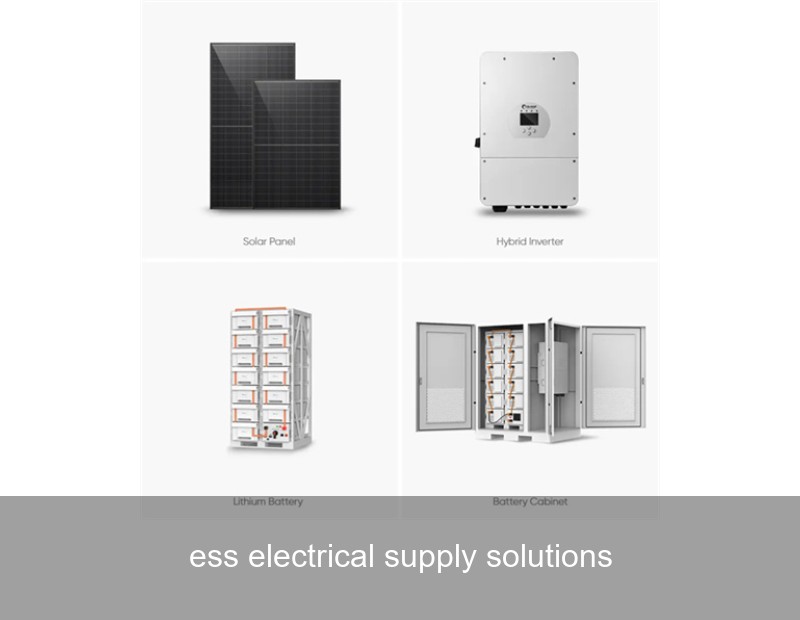
Think of an ESS as a sophisticated energy bank account. You "deposit" energy when it's plentiful and cheap (or when your solar panels are producing excess), and "withdraw" it when you need it most. A complete system comprises several key components working in harmony:
- Battery Bank: The core storage unit, typically using lithium-ion technology for its high density and long cycle life.
- Battery Management System (BMS): The brain of the battery, ensuring safety, monitoring health, and optimizing performance.
- Power Conversion System (PCS)/Inverter: The translator, converting stored DC battery power to AC power for your home or business, and vice-versa.
- Energy Management System (EMS): The strategic commander. This intelligent software analyzes energy usage patterns, electricity rates, and weather forecasts to make automated decisions on when to charge, discharge, or hold.
Key Benefits: From Cost Savings to Grid Support
Implementing the right ESS delivers tangible value across multiple dimensions:
| Benefit | Explanation | Impact |
|---|---|---|
| Bill Savings & Peak Shaving | Use stored energy during peak rate periods, avoiding the highest electricity tariffs. | Significant reduction in demand charges for commercial users; lower overall bills for homeowners. |
| Backup Power & Resilience | Provides seamless power during grid outages, keeping critical loads operational. | Business continuity, safety, and comfort during blackouts or extreme weather. |
| Renewable Integration | Stores surplus solar/wind generation for use when the sun isn't shining or wind isn't blowing. | Maximizes self-consumption of clean energy, reducing reliance on the grid. |
| Grid Services | Large-scale ESS can provide frequency regulation and voltage support to stabilize the public grid. | Enables higher penetration of renewables and improves overall grid reliability. |
A Real-World Case Study: ESS in Action
Let's move beyond theory. Consider a mid-sized dairy processing plant in Germany facing two major challenges: high "peak demand" charges that made up 30% of its electricity bill and a need for uninterrupted power to prevent spoilage during any grid disturbance. The facility had a rooftop solar PV system, but much of its generation happened during off-peak hours.
The solution was a tailored 500 kWh / 250 kW ESS electrical supply solution, integrated with their existing solar. The system's intelligent EMS was programmed with the plant's operational schedule and the utility's complex tariff structure. Now, during times of high energy demand in the factory, the system draws from the batteries instead of the grid, effectively "shaving" the peak load. It also stores excess solar energy from midday for use in the evening production shift.
The results were clear within the first year: The plant achieved a 22% reduction in its overall electricity costs, primarily by slashing demand charges. It also gained a 4-hour backup power supply for its critical refrigeration units, securing its operations and product. This project, similar to solutions Highjoule provides across Europe, demonstrates the direct financial and operational ROI of a well-designed ESS.

Image Source: Unsplash - An engineer monitoring industrial energy management systems.
Choosing the Right ESS for Your Needs
Not all ESS are created equal. The optimal solution depends heavily on your primary objective. Here’s a quick guide:
- For Residential Resilience & Savings: Look for a system that integrates seamlessly with your solar panels, offers a user-friendly app for monitoring, and provides enough capacity to cover essential loads (refrigeration, lighting, comms) for your desired backup duration.
- For Commercial & Industrial (C&I) Cost Management: The focus shifts to power (kW) capacity for peak shaving and sophisticated EMS software that can navigate time-of-use rates and demand charges. Scalability and robust cycle life are critical.
- For Microgrids & Utilities: These applications require utility-grade, containerized solutions focused on grid stability services (like frequency response), long-duration storage, and extreme durability.
The Highjoule Approach: Intelligent, Integrated Solutions
At Highjoule, we believe an ESS should be a seamless, intelligent asset, not a complex burden. Our philosophy is built on three pillars that define our electrical supply solutions:
- Adaptive Intelligence: Our proprietary energy management platform doesn't just react; it learns and predicts. By analyzing historical consumption, real-time weather data, and grid signals, it optimizes every kilowatt-hour for maximum economic and operational value.
- Uncompromising Safety & Quality: With nearly two decades of experience, we engineer safety into every layer—from cell-level monitoring in our battery packs to advanced thermal management and grid-compliant protection systems.
- Full-Spectrum Integration: We provide more than hardware. Our solutions are designed to integrate smoothly with new or existing solar PV, generator sets, and building management systems, creating a cohesive energy ecosystem. Whether it's our compact Highjoule HOMe series for residences or our modular, scalable Highjoule INDUSTRIAL platform for C&I and microgrid applications, we deliver a complete, vendor-agnostic package from consultation and design to commissioning and ongoing support.
This integrated approach is why businesses from California to Bavaria trust Highjoule to not only supply equipment but to become a long-term partner in their energy transition. We navigate the complexities of distributed energy resources integration so our customers don't have to.
Looking Ahead: The Role of ESS in a Decarbonized Grid
The journey towards a resilient, low-carbon energy future is accelerating. As electric vehicle adoption grows and renewable mandates expand, the demand for flexible, clean storage will only intensify. ESS electrical supply solutions are the critical enabler, turning the challenge of intermittent generation into an opportunity for a smarter, more decentralized grid. The question is no longer if storage will be needed, but how to implement it most effectively for your specific goals.
Is your organization ready to analyze its load profile and uncover the potential savings and resilience that a tailored ESS could deliver?
 Inquiry
 Online Chat