


Unlocking Grid Independence: The Strategic Power of a 6.2 MW Energy Storage Cabinet
a manufacturing facility humming with activity, its energy bill soaring with every peak demand charge, all while the sun beats down on a vast, unused rooftop. This is the modern energy paradox faced by countless commercial and industrial (C&I) operations across Europe and the US. The solution is no longer a futuristic concept; it's a tangible, powerful asset arriving on-site in the form of a 6.2 MW energy storage cabinet. This isn't just a big battery; it's a sophisticated energy management powerhouse, and it's redefining how businesses consume, store, and control their electricity.
What is a 6.2 MW Energy Storage Cabinet?
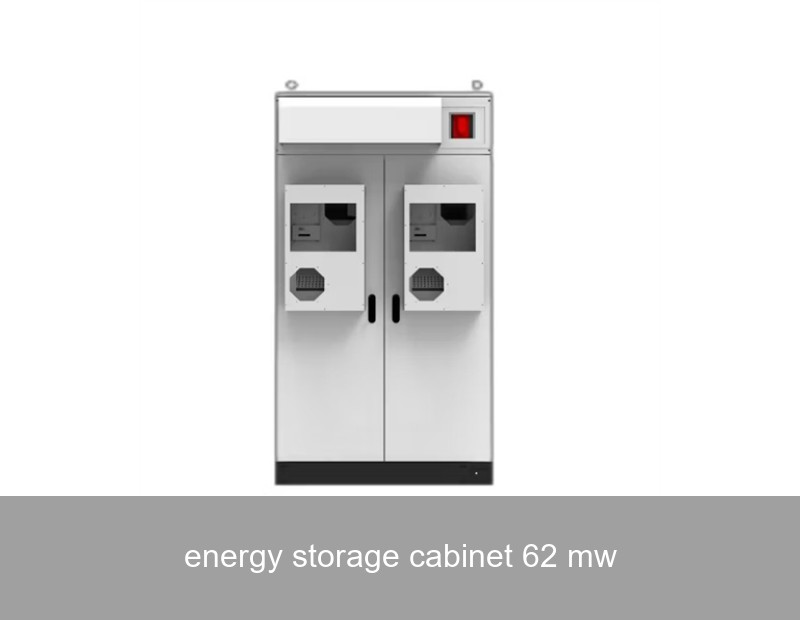
Let's demystify the terminology. A 6.2 MW energy storage cabinet is a containerized, all-in-one system designed to store a massive amount of electrical energy. The "6.2 MW" refers to its power rating—how much electricity it can deliver or absorb at any given moment, akin to the horsepower of an engine. This power level is typically paired with a significant energy capacity (often in the range of 12-24 MWh), which is the total amount of electricity it can hold, like the size of a fuel tank.
These systems are not science projects; they are engineered, UL-certified or IEC-compliant products built for durability and safety. They integrate lithium-ion battery racks (increasingly using stable, long-life LiFePO4 chemistry), advanced power conversion systems (PCS), thermal management, and fire suppression into a secure, walk-in enclosure. For a business, this translates to a predictable, on-demand energy reserve sitting right on their property.

Image Source: Unsplash (Representative image of industrial energy equipment)
Why 6.2 MW is a Commercial & Industrial Sweet Spot
You might wonder, "Why 6.2 MW specifically?" Through years of deploying solutions globally, we at Highjoule have identified this capacity as a strategic tipping point for medium-to-large C&I applications. Here’s why:
- Peak Shaving Mastery: Utility demand charges are based on your highest 15 or 30-minute power draw each month. A 6.2 MW system can seamlessly "shave" these peaks by discharging during high-load periods, potentially slashing this portion of your bill by 30-50%. The financial payback can be astonishingly swift.
- Solar Optimization: It pairs perfectly with a 5-8 MW solar PV array. Instead of curtailing excess solar generation at noon, the energy storage cabinet stores it for use in the evening, maximizing your self-consumption and ROI on solar assets.
- Grid Services Participation: In many markets (like the UK or parts of the US), a 6.2 MW asset is large enough to participate in lucrative grid service programs like frequency response, generating a new revenue stream simply by being a good grid citizen.
- Scalability and Modularity: This scale is often achieved through the aggregation of smaller, modular units. Highjoule's H-Cube 6000 series, for instance, uses a modular 500kWh cabinet design. A 6.2 MW system might be configured with 12-13 such units, offering unparalleled flexibility for site layout and future expansion.
Real-World Case Study: Powering a German Manufacturing Plant
Let’s move from theory to hard data. A prominent automotive parts supplier in Bavaria, Germany, faced volatile energy costs and sought to secure its power supply for critical, continuous production lines. Their goal was threefold: reduce demand charges, integrate a planned 4.5 MW rooftop solar farm, and ensure backup power for essential loads.
The Solution & Results: Highjoule deployed a turnkey system featuring our H-Cube 6250 Energy Storage Cabinet (6.25 MW/12.5 MWh), coupled with our proprietary Neuron Energy Management System (EMS). The system was commissioned in Q3 2022.
| Metric | Result (First 12 Months) |
|---|---|
| Peak Demand Reduction | From 8.1 MW to 5.9 MW (27% reduction) |
| Annual Demand Charge Savings | €182,000 |
| Solar Self-Consumption Increase | From 55% to 89% |
| Grid Service Revenue (Frequency Containment Reserve) | €45,000 (ancillary income) |
| CO2e Emissions Avoided | Approx. 1,850 tonnes |
The EMS intelligently decides every second whether to charge from solar, discharge to shave peaks, or bid capacity into the grid market. This case, documented in a Fraunhofer ISE study on storage economics, illustrates the multifaceted value proposition of a well-engineered 6.2 MW energy storage cabinet.
Key Components of a High-Performance 6.2 MW System
Not all cabinets are created equal. Here’s what to look for inside:
- Cell Chemistry: Highjoule primarily utilizes Lithium Iron Phosphate (LFP) cells. They offer a superior safety profile, longer cycle life (often over 6,000 cycles), and better thermal stability than older NMC chemistries, which is critical for indoor or densely sited installations.
- Thermal Management: A liquid cooling system is non-negotiable at this scale. It maintains optimal cell temperature uniformly, ensuring performance in desert heat or Scandinavian cold, and dramatically extends battery lifespan compared to simple air cooling.
- Grid-Forming Inverters: The latest advancement is the move to grid-forming inverters within the power conversion system. These allow the storage system to "create" a stable grid microgrid if the main grid fails, enabling seamless islanding for critical operations—a feature once exclusive to diesel generators.
Beyond Batteries: The Intelligence Inside
The hardware is just the body; the software is the brain. The true differentiation of a modern energy storage cabinet lies in its Energy Management System (EMS). A sophisticated EMS like Highjoule's Neuron platform uses AI and real-time market data to perform multi-objective optimization. It constantly answers: Should I store energy now, sell it, or use it? Should I prioritize bill savings or carbon reduction today? This intelligent dispatch is where 80% of the system's lifetime value is captured.

Image Source: Unsplash (Representative image of data analytics dashboard)
The Highjoule Integrated Solution: From Cabinet to Comprehensive Partnership
At Highjoule, we understand that procuring a 6.2 MW energy storage cabinet is a major capital decision. That's why we offer more than just hardware. Our approach is a full lifecycle partnership:
- Precision Engineering & Design: Our team conducts detailed site and load analysis to tailor the system configuration—ensuring the 6.2 MW power and accompanying energy capacity perfectly match your load profile and financial goals.
- The H-Cube 6000 Series: Our flagship C&I product line. Each cabinet is a pre-assembled, tested unit featuring LFP batteries, liquid cooling, and integrated safety systems. The modular design allows us to configure a 6.2 MW system that fits your spatial constraints and can be scaled later.
- Neuron EMS & Ongoing Optimization: We provide the intelligence. Our cloud-connected Neuron EMS includes ongoing software updates and algorithmic tuning to adapt to changing utility tariffs and market rules, protecting your investment for the 15-20 year lifespan of the system.
- Financial Modeling & Support: We help you navigate incentives, like the Investment Tax Credit (ITC) in the US or various EU member state programs, and can connect you with financing partners.
Our service is about delivering a guaranteed outcome—energy cost reduction, resilience, and sustainability—not just delivering equipment.
The Future of Industrial-Scale Storage: What's Next for 6.2 MW and Beyond?
The technology is advancing rapidly. We are moving towards even denser cabinets, reducing the footprint per MWh. Second-life EV batteries are beginning to enter this space for specific applications, offering a compelling sustainability story. Furthermore, the integration of hydrogen as a seasonal storage companion to lithium-ion batteries is on the horizon for the most energy-intensive industries. The 6.2 MW energy storage cabinet of today is the foundational building block for the net-zero industrial microgrid of tomorrow.
As you consider the volatile energy landscape and your own sustainability commitments, the question becomes not just about cost, but about control. Is your business ready to transform its energy from a variable expense into a strategic, manageable asset? What would the ability to predict and lock in 80% of your energy costs for the next decade do for your operational planning and competitive edge?
 Inquiry
 Online Chat