


Energy Component Software: The Invisible Brain Maximizing Your Renewable Investment
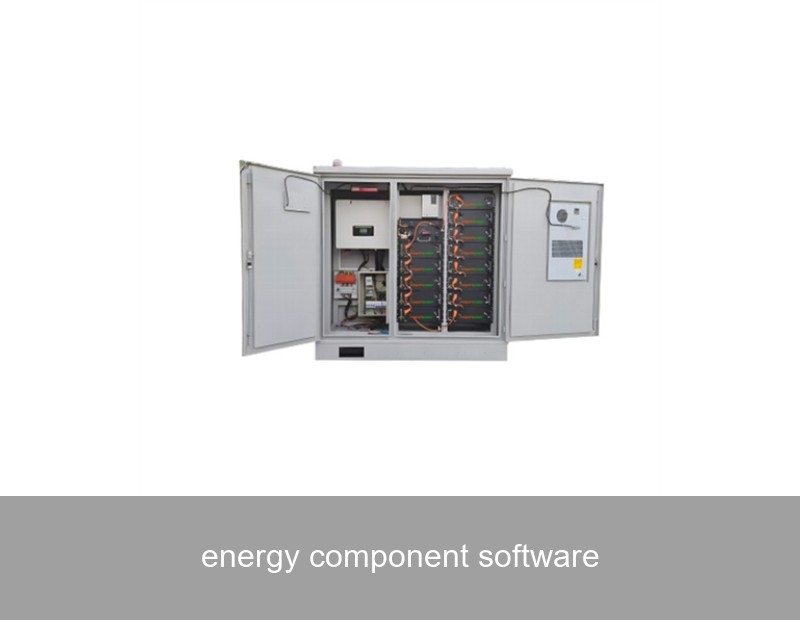
You've made the smart decision to invest in solar panels or a battery storage system. The hardware is impressive, promising energy independence and lower bills. But here's a question you might not have considered: what ensures all those sophisticated energy components work together intelligently? The answer lies not in the physical hardware, but in the energy component software – the digital brain that orchestrates every kilowatt-hour. Without it, even the most advanced system is just a collection of expensive parts. This article dives into why this software is the true hero of modern energy management, transforming passive assets into active, revenue-generating tools for homes and businesses across Europe and the US.
Table of Contents
- What is Energy Component Software?
- The Phenomenon: From Dumb Hardware to Smart Energy Ecosystems
- The Data: Quantifying the Software Advantage
- Case Study: A German Bakery's Recipe for Resilience
- Key Insights: What to Look for in a Software Platform
- The Highjoule Approach: Intelligence Built-In
- The Future is Orchestrated
What is Energy Component Software?
Think of your energy system like a symphony orchestra. The photovoltaic (PV) panels, the battery storage units, the inverter, and the grid connection are the individual instruments—each brilliant in its own right. Energy component software is the conductor. It doesn't produce sound itself, but it interprets the score (energy tariffs, weather forecasts, consumption patterns), cues each section (when to charge, when to discharge, when to import), and ensures the entire ensemble performs in perfect harmony to create a masterpiece: optimal, cost-effective, and resilient power.
Technically, it's a suite of algorithms and communication protocols that integrate, monitor, and control the various physical components of an energy asset. Its core functions include:
- Predictive Analytics: Using weather data and historical usage to forecast solar production and energy needs.
- Real-Time Optimization: Making split-second decisions to either store solar energy, use it immediately, or sell it back to the grid based on dynamic electricity prices.
- Health Monitoring & Diagnostics: Continuously checking the status of each component, flagging inefficiencies, and predicting maintenance needs before a failure occurs.
- Grid Services Interaction: Enabling advanced systems to participate in grid-balancing programs, providing frequency regulation or virtual power plant (VPP) services for additional revenue.

Image: Modern energy management software provides a clear dashboard for system performance. (Source: Unsplash)
The Phenomenon: From Dumb Hardware to Smart Energy Ecosystems
The energy landscape is shifting from a one-way street (grid to consumer) to a complex, multi-directional network. Ten years ago, a solar installation was largely a "set-and-forget" system. Today, with volatile energy prices, the rise of electric vehicles as mobile batteries, and grid instability, passive systems leave significant value on the table. The phenomenon we're witnessing is that the financial and operational success of a renewable installation is now overwhelmingly determined by the intelligence of its controlling software. The hardware provides the muscle; the software provides the strategy.
The Data: Quantifying the Software Advantage
Let's move beyond theory. Studies and real-world deployments show the dramatic impact of sophisticated energy component software. According to a report by the National Renewable Energy Laboratory (NREL), advanced control software can increase the value derived from a solar-plus-storage system by 20-40% compared to basic, rule-based control. How?
| Optimization Area | Typical Improvement with Advanced Software |
|---|---|
| Self-Consumption of Solar Power | Increase from ~30% to 70%+ |
| Bill Savings (Time-of-Use arbitrage) | Additional 15-25% savings on top of solar |
| Battery Lifespan | Up to 30% extension via intelligent cycling protocols |
| Grid Services Revenue | Can generate hundreds to thousands in annual revenue for C&I sites |
These numbers make a compelling case. It's no longer just about generating green energy; it's about managing it with surgical precision.
Case Study: A German Bakery's Recipe for Resilience
Consider "Bäckerei Schmidt," a mid-sized bakery in Bavaria with high, consistent energy needs for ovens and refrigeration. They installed a 100 kWp solar array and a 120 kWh battery system in 2021. Initially, with basic firmware, they achieved a 35% self-consumption rate for their solar power.
In 2023, they upgraded to a comprehensive energy component software platform. The new software integrated real-time electricity price signals from the EPEX Spot market, their precise production/consumption data, and even the bakery's production schedule. The results after one year were striking:
- Self-consumption rate jumped to 82%. The software learned to pre-chill cold rooms and pre-heat ovens using midday solar excess.
- Energy costs reduced by an additional 28% by strategically avoiding grid purchases during high-price periods and even selling small amounts of stored energy during price peaks.
- The system automatically provided primary control reserve (PCR) to the German grid for 30 minutes per day, generating an average of €1,200 in annual ancillary service revenue.
The bakery's payback period for the entire system was cut by nearly four years, thanks primarily to the intelligence layer added by the software.
Key Insights: What to Look for in a Software Platform
Not all energy software is created equal. Based on industry expertise, here are the non-negotiable features for a future-proof platform:
1. Openness and Interoperability
Avoid "walled gardens." The software should communicate via standard protocols (like Modbus, SunSpec, IEEE 2030.5) to integrate components from various manufacturers, protecting you from vendor lock-in.
2. True AI-Driven Forecasting
It must go beyond simple schedules. Look for machine learning algorithms that improve prediction accuracy for local weather and your unique consumption patterns over time.
3. Scalability and Cybersecurity
The platform should be architected to grow with your needs—from a single home to a multi-site industrial portfolio—and must have robust, certified cybersecurity measures to protect your energy data and controls.

Image: Technicians rely on advanced software for monitoring and optimizing large-scale storage. (Source: Unsplash)
The Highjoule Approach: Intelligence Built-In
At Highjoule, we recognized the pivotal role of software from our inception in 2005. We believe the hardware and its digital brain should be designed as one cohesive unit. This philosophy is embedded in our Highjoule Apex Optimizer™, the proprietary energy component software at the core of all our commercial, industrial, and residential storage solutions.
The Apex Optimizer™ isn't an afterthought or a third-party add-on; it's the foundation. It delivers:
- Multi-Layer Optimization: Simultaneously manages for self-consumption, tariff arbitrage, and grid service participation, finding the most profitable mix every day.
- Fleet Management for Enterprises: For businesses with multiple sites, our software provides a single pane of glass to monitor and control an entire distributed energy fleet, aggregating capacity for larger market opportunities.
- Proactive HealthGuard™ Diagnostics: Our software continuously analyzes performance data to predict potential component issues, scheduling maintenance before it impacts your operations—a key feature for our industrial clients where downtime is costly.
For a residential client in California navigating complex NEM 3.0 rules, or a factory in Italy participating in a national demand response program, the Highjoule Apex Optimizer™ ensures their storage asset is not just a cost center but a dynamic, value-generating investment.
The Future is Orchestrated
The trajectory is clear. As our grids become more renewable and decentralized, the value will increasingly be captured not by the generators of energy, but by the smart managers of energy flows. Your solar panels and battery are the instruments. The question is, who—or what—is conducting them? Are you content with a simple metronome, or do you want a maestro that can adapt to the changing rhythms of the market, weather, and your own needs?
What is the first question you will ask your next energy provider about the intelligence of their system?
 Inquiry
 Online Chat