


Beyond Backup: Why an Electric Generator with Solar Panels is the Smart Choice for Modern Energy Independence
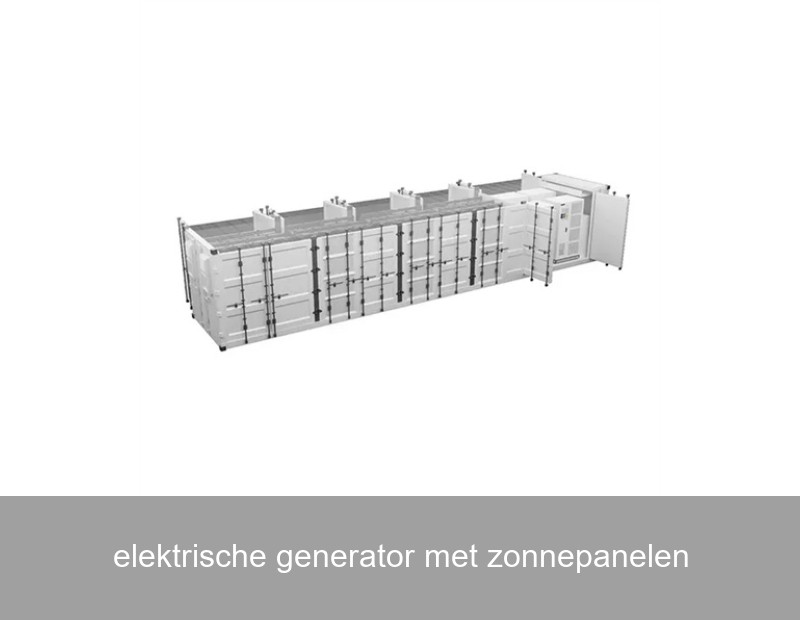
For decades, the electric generator has been the go-to solution for backup power. But as energy prices soar and climate concerns grow, homeowners and businesses are asking: is there a smarter, more sustainable way to ensure reliability? The answer lies in a transformative pairing: the modern elektrische generator met zonnepanelen (electric generator with solar panels). This isn't just about having a backup; it's about creating a resilient, cost-saving, and intelligent energy ecosystem. Let's explore how this combination is redefining power security across Europe and the US.
Table of Contents
- The Limitation of the Standalone Generator
- The Solar-Storage Synergy: More Than Just Backup
- Case Study: A Dutch Dairy Farm's Journey to Energy Autonomy
- Key Components of a High-Performance Solar Generator System
- Making the Switch: Considerations for Your Property
The Limitation of the Standalone Generator
Traditional diesel or gas generators serve a single purpose: they kick in when the grid fails. While reliable, this model has significant drawbacks. They are purely reactive, sitting idle until a problem occurs. When running, they burn expensive fossil fuels, emit noise and pollution, and require regular maintenance. In an era of volatile energy markets, relying on a fuel-dependent generator is a costly and environmentally taxing insurance policy.
Consider this: the U.S. Energy Information Administration notes that the average U.S. customer experienced just over 5 hours of major power interruptions in 2021. For a business, even minutes of downtime can mean massive financial loss. A generator solves the outage, but it does nothing to address the other 8,755 hours of the year when you're paying high, and often fluctuating, electricity rates from the utility.
The Solar-Storage Synergy: More Than Just Backup
This is where the integrated system shines. An elektrische generator met zonnepanelen is fundamentally different. Here, the "generator" is actually a battery energy storage system (BESS), paired with solar PV panels. This system works in a continuous, proactive cycle:
- Solar Generation: Panels produce clean DC electricity during the day.
- Storage & Immediate Use: A smart inverter converts it to AC power for your home or business. Excess energy charges the battery system instead of being sent back to the grid at low rates.
- Intelligent Discharge: When the sun sets or during peak rate periods, the system seamlessly draws power from the batteries, reducing reliance on the expensive grid.
- Grid Backup: During a blackout, the system islanding capability instantly disconnects from the grid and powers critical loads from the battery bank—silently and without emissions.

Image Source: Unsplash. A modern home integrating solar panels with a wall-mounted battery storage unit, representing the complete system.
The result? You leverage your solar investment 24/7, achieve significant bill savings through peak shaving and load shifting, and gain peace of mind with clean, silent backup power. It's a triple win: economic, environmental, and practical.
Case Study: A Dutch Dairy Farm's Journey to Energy Autonomy
Let's look at a real-world example from the Netherlands. A medium-sized dairy farm with high energy demands for milking machines, cooling, and lighting faced rising energy costs and concerns over power stability. They installed a 95 kWp solar array on their barn roofs, coupled with a 120 kWh battery storage system.
| Metric | Before System | After System (First Year) |
|---|---|---|
| Grid Electricity Purchased | 100% | ~35% |
| Energy Cost Savings | Baseline | €8,400 |
| Self-Consumption of Solar | N/A | Increased from 40% to 85% |
| Backup Power Coverage | None (Reliant on Old Diesel Gen.) | Critical loads for 18+ hours |
The battery storage allowed the farm to store midday solar surplus and use it during the evening milking and cooling cycles. During a winter grid outage, the system automatically powered the essential cooling tanks, preventing spoilage of thousands of liters of milk. The old diesel generator is now a true last resort, saving on fuel and maintenance costs. This case perfectly illustrates the operational and financial resilience an integrated solar-storage "generator" provides.
Key Components of a High-Performance Solar Generator System
To build a robust elektrische generator met zonnepanelen, you need more than just panels and a battery. The intelligence lies in the integration.
- High-Efficiency Solar Panels: The primary energy harvesters. Modern monocrystalline panels offer the best space efficiency and longevity.
- Smart Hybrid Inverter: The brain of the operation. It manages energy flow between solar panels, batteries, the grid, and your home, converting DC to AC and vice-versa with high efficiency.
- Lithium-Ion Battery Bank: The heart of your new "generator." Lithium Iron Phosphate (LFP) chemistry is now the standard for its safety, long cycle life (often 6,000+ cycles), and stability.
- Energy Management System (EMS): The nervous system. This software learns your consumption patterns, weather forecasts, and utility rate schedules to autonomously optimize when to charge, discharge, or export energy for maximum savings.
How Highjoule Enables Smarter Energy Independence
At Highjoule, we've been at the forefront of this energy evolution since 2005. We understand that a truly reliable electric generator with solar panels is a seamlessly integrated system, not a collection of parts. Our solutions are designed for this exact purpose.
For residential applications, our HomePower Stack series offers scalable LFP battery storage (from 10 kWh to 30 kWh per unit) paired with our intelligent Hub-Inverter. The system features automatic islanding for instant backup and integrates with existing or new solar arrays. Our app gives homeowners clear visibility and control over their energy flows, helping them maximize self-consumption.
For commercial and industrial clients, our GridMax C&I solutions are engineered for scale and durability. These modular, containerized or skid-mounted systems can provide hundreds of kWh to MWh of storage. They are perfect for peak shaving, demand charge reduction, and providing critical backup for manufacturing processes, data centers, or agricultural operations—just like the Dutch dairy farm. Highjoule's proprietary EMS software can be configured for complex tariff structures common in European and U.S. markets, ensuring the system pays for itself faster.

Image Source: Unsplash. An engineer inspecting a large-scale commercial battery energy storage system.
Making the Switch: Considerations for Your Property
Transitioning to a solar-powered energy system requires careful planning. Key questions include:
- Energy Audit: What are your daily and seasonal consumption patterns? What loads are critical during an outage?
- Solar Potential: Does your roof or property have good, unshaded exposure to the south (in the Northern Hemisphere)?
- Financial Incentives: Many regions in the EU (e.g., via national schemes) and the US (Federal Investment Tax Credit) offer significant subsidies for solar and storage.
- Future-Proofing: Are you considering an electric vehicle? Your storage system can often be configured to support EV charging, further increasing your energy independence.
The old paradigm of a noisy, fume-belching generator is fading. The future is intelligent, quiet, and sustainable. It's a system that doesn't just wait for failure but actively works every day to lower your costs and carbon footprint.
Is your current backup power plan merely a cost center, or is it ready to become a strategic asset for your home or business? What would total energy security, powered by the sun, look like for you?
 Inquiry
 Online Chat