


Unlocking Solar's Full Potential: How EKO ESS Transforms Renewable Energy
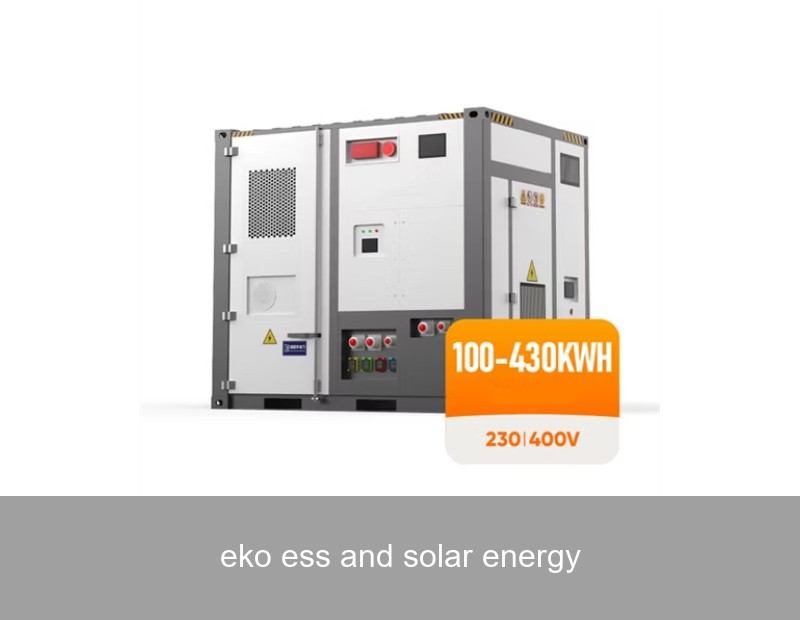
If you've invested in solar panels, or are considering it, you've made a powerful choice for sustainability and energy independence. But let's be honest, have you ever wondered about the energy produced when the sun isn't shining? This is the central question facing modern solar adopters. The answer lies not just in capturing sunlight, but in mastering its flow. This is where EKO ESS (Energy Storage Systems) and solar energy form an unbeatable partnership. It's a synergy that moves solar from being a part-time power source to becoming the reliable, round-the-clock backbone of your energy needs.
The Solar Energy Dilemma: Intermittency & The Duck Curve
The sun, while abundant, is not a 24/7 employee. Solar generation peaks in the middle of the day and falls to zero at night. This creates two significant challenges:
- Intermittency: Your home or business is most active in the mornings and evenings when solar generation is low or nonexistent. This forces a reliance on the traditional grid, often during peak tariff hours.
- The "Duck Curve": This is a real phenomenon observed by grid operators, notably California's CAISO. It describes the sharp dip in net grid demand during sunny afternoons (when solar floods the grid) followed by a steep, rapid ramp-up in demand as the sun sets. This "neck" of the duck is problematic, requiring fossil-fuel "peaker" plants to quickly come online, undermining solar's environmental benefits and creating grid instability.

Image Source: U.S. Department of Energy, illustrating the "Duck Curve" challenge for grid operators.
Why EKO ESS is the Perfect Partner for Solar Energy
Think of an EKO ESS as a high-tech energy bank. Your solar panels are the income, and the battery is your savings account. Instead of sending surplus midday solar energy to the grid for minimal compensation, you store it. This simple shift in logic unlocks a cascade of benefits:
| Benefit | For Homeowners | For Businesses & Industry |
|---|---|---|
| Energy Independence | Power through grid outages, keep lights on at night. | Ensure critical operations continue, avoid costly downtime. |
| Maximized Self-Consumption | Use 70-90% of your solar power, slashing electricity bills. | Dramatically reduce peak demand charges, a major commercial cost. |
| Grid Support & Revenue | Participate in grid-balancing programs for extra income. | Provide grid services, creating a new revenue stream. |
| Sustainability | Truly minimize carbon footprint by displacing fossil-fuel grid power. | Meet ESG goals and enhance corporate sustainability credentials. |
The Technology Behind the Synergy
Modern EKO ESS, particularly those using Lithium Iron Phosphate (LFP) chemistry, are ideal for solar pairing. They offer long cycle life, excellent safety profiles, and high efficiency, meaning more of your precious solar energy is stored and used, not lost in conversion. Advanced inverters and energy management systems (EMS) act as the brain, intelligently deciding when to charge, discharge, or hold based on weather forecasts, usage patterns, and tariff schedules.
Real-World Impact: A Case Study from Bavaria
Data and theory are compelling, but real-world results are definitive. Consider a mid-sized dairy processing plant in Bavaria, Germany. Facing high energy costs and a commitment to sustainability, they installed a 500 kWp solar array. However, their processing and cooling loads ran heavily in the early morning and evening, misaligned with solar production.
The Solution & Outcome: They integrated a Highjoule H4 Commercial EKO ESS with a capacity of 600 kWh. The system's intelligent EMS was programmed to:
- Store excess midday solar energy.
- Discharge during high-tariff evening peaks to avoid demand charges.
- Provide backup power for critical refrigeration units.
The Results (12-month period):
- Grid Energy Consumption Reduced by 68%: Self-consumption of solar power jumped from 35% to over 90%.
- Peak Demand Charges Cut by 42%: The ESS shaved peaks by strategically discharging stored energy.
- ROI Period: Projected to be under 5 years, thanks to combined savings and German subsidy programs for commercial storage.
This case, documented in a report by the Fraunhofer Institute for Solar Energy Systems, exemplifies the transformative power of pairing solar with a sophisticated EKO ESS.
The Highjoule Solution: Intelligent, Scalable EKO ESS
As a global leader in advanced energy storage since 2005, Highjoule designs systems specifically to solve the challenges we've discussed. Our philosophy is that an EKO ESS should be more than just a battery; it should be an intelligent energy asset.
For residential clients, our HomePower Stack series offers modular, wall-mounted LFP systems that seamlessly integrate with existing or new solar installations. Their sleek design, quiet operation, and intuitive app control give homeowners complete command over their energy flow, maximizing savings and peace of mind.
For commercial, industrial, and microgrid applications, the Highjoule H-Series is engineered for performance and durability. These containerized or rack-mounted solutions feature:
- Advanced Battery Management System (BMS): Ensures safety, longevity, and optimal performance of every cell.
- AI-Powered Energy Management Software: Our platform, GridSynergy, analyzes data in real-time, predicting energy patterns and optimizing dispatch for the greatest financial and operational return.
- Scalable Architecture: From 100 kWh to multi-MWh installations, systems can be scaled as your needs grow.

Image Source: Highjoule - A scalable H-Series EKO ESS installation at a manufacturing facility.
Our systems are designed to not only store solar energy but also to participate in grid services like frequency regulation, creating potential additional revenue streams for our clients—a concept known as "value stacking."
Building the Future Grid: Your Role in the Energy Transition
The transition to a renewable-powered grid isn't just about utility-scale wind farms and solar parks. It's about creating a decentralized, resilient network of prosumers—consumers who also produce and store energy. By pairing your solar investment with a robust EKO ESS like those from Highjoule, you're not just saving on your bill. You're becoming an active node in a cleaner, more stable energy grid. You're smoothing out the Duck Curve, reducing the need for fossil-fuel peaker plants, and accelerating our collective path to net-zero.
The technology is proven, the economics are increasingly favorable, and the environmental imperative is clear. The question is no longer if energy storage is needed, but how to choose the right system for your specific solar profile and energy goals. What will your first step be in moving from passive consumption to active energy management?
 Inquiry
 Online Chat