


How EEMB Energy Power Co Ltd and Modern Battery Tech Are Shaping a Reliable Grid
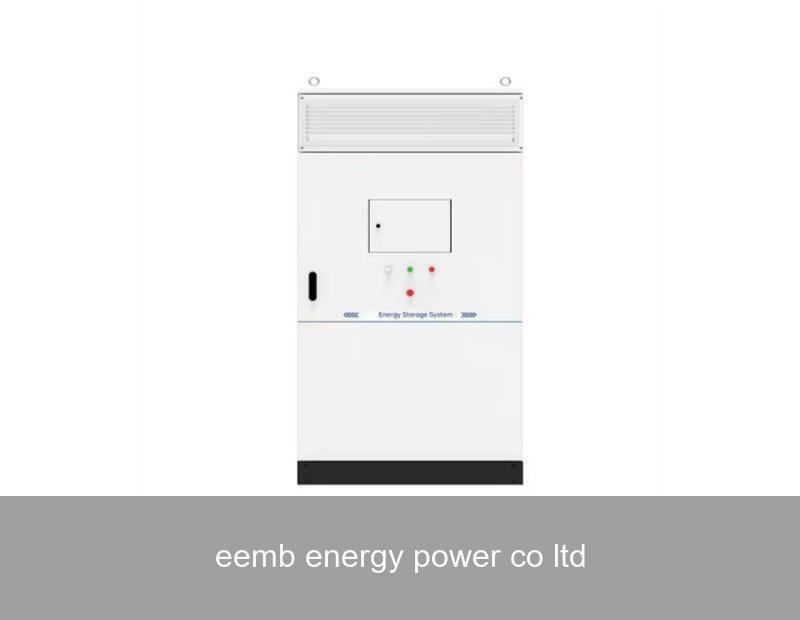
Have you ever wondered what keeps the lights on during a storm or powers a factory when the sun isn't shining? The answer increasingly lies in advanced battery energy storage systems (BESS). While component manufacturers like EEMB Energy Power Co Ltd provide essential lithium battery cells, the true magic happens when these cells are integrated into intelligent, large-scale systems. This is where the expertise of global system providers becomes critical, transforming raw energy potential into stable, dispatchable power for homes, businesses, and entire communities.
Table of Contents
- The Challenge: An Intermittent Grid in Need of a Buffer
- The Solution: Battery Energy Storage as the Grid's Swiss Army Knife
- Case Study: A German Industrial Park's Journey to Energy Independence
- Key Components of a High-Performance BESS
- Beyond Hardware: The Intelligence That Makes Storage Smart
- The Future Horizon: What's Next for Grid Stability?
The Challenge: An Intermittent Grid in Need of a Buffer
Our energy landscape is undergoing a radical transformation. The rapid deployment of renewable sources like solar and wind is fantastic for decarbonization, but it introduces a fundamental challenge: intermittency. The sun sets, the wind calms, but our demand for electricity remains. This creates a volatile grid, prone to frequency fluctuations and even blackouts. According to the International Energy Agency (IEA), the world needs to add nearly 600 GW of grid-scale battery storage by 2030 to meet climate targets and ensure reliability. The old model of ramping up a gas plant to meet peak demand is no longer sustainable or economical.

This is the core problem that companies across the energy spectrum, from cell producers to system integrators, are solving. High-quality cells from manufacturers like EEMB Energy Power Co Ltd form the foundational building blocks. However, a cell alone is like a single brick; it takes a master architect and builder to create a sturdy, functional building.
The Solution: Battery Energy Storage as the Grid's Swiss Army Knife
Modern battery energy storage systems are remarkably versatile. They are not just "big batteries" but sophisticated grid assets that perform multiple services simultaneously. Think of them as the Swiss Army knife for grid operators and energy consumers.
- Peak Shaving: For a factory or commercial building, BESS can store cheap energy overnight and discharge it during expensive peak hours, slashing demand charges—a major portion of electricity bills.
- Renewable Firming: A solar farm paired with storage can deliver a smooth, predictable output to the grid, even when clouds pass by, making solar power a more reliable resource.
- Frequency Regulation: BESS can respond to grid frequency dips or surges in milliseconds, providing critical stability services far faster than any traditional power plant.
- Backup Power: For critical infrastructure like hospitals or data centers, BESS provides seamless backup during outages, bridging the gap until generators start or grid power is restored.
This multi-functionality is where companies like Highjoule excel. Founded in 2005, Highjoule specializes in designing and deploying intelligent, containerized BESS solutions for commercial, industrial, and utility-scale applications. We don't just supply hardware; we provide a complete, optimized power solution. Our systems integrate top-tier battery cells (including those from partners like EEMB) with advanced power conversion systems (PCS), thermal management, and a proprietary energy management system (EMS) that decides the most profitable and efficient use of every kilowatt-hour stored.
Case Study: A German Industrial Park's Journey to Energy Independence
Let's look at a real-world example from Bavaria, Germany. A mid-sized manufacturing park, housing several precision engineering firms, faced two major issues: skyrocketing electricity costs (with peak demand charges exceeding €50,000 monthly) and concerns over grid reliability during winter peaks.
The Highjoule Solution: A turnkey 2.5 MW / 5 MWh battery storage system was deployed. The system was strategically connected behind-the-meter at the park's main distribution point.
| Metric | Before Highjoule BESS | After Highjoule BESS (Annual Avg.) |
|---|---|---|
| Peak Demand from Grid | 3.8 MW | 2.1 MW |
| Monthly Demand Charge Cost | ~€52,000 | ~€28,000 |
| Grid Reliability | Vulnerable to DSO curtailment | Seamless backup for critical loads |
| CO2 Footprint | 100% Grid Mix | Optimized consumption, increased self-use of on-site PV |
The system uses a sophisticated algorithm to "learn" the park's load profile. It discharges predictively to shave peak loads and even participates in the German primary control reserve market, generating additional revenue by stabilizing the national grid. This dual-income stream (savings + revenue) delivered a return on investment in under 5 years. The park's manager noted, "It's like having a silent, automated power trader and plant manager working 24/7 in our backyard."
Key Components of a High-Performance BESS
Understanding a BESS requires looking under the hood. It's a symphony of components where each must be perfectly harmonized.
Battery Cells and Modules
This is the energy reservoir. Quality and consistency here are non-negotiable. Manufacturers like EEMB Energy Power Co Ltd produce the lithium iron phosphate (LFP) cells prized for their long cycle life, safety, and stability. Highjoule's engineering team rigorously tests and selects cells from trusted partners to ensure our systems meet a 10+ year lifespan with minimal degradation.
Power Conversion System (PCS)
The PCS is the heart, acting as a bidirectional inverter. It converts AC grid power to DC for storage and DC from the batteries back to AC for use. Highjoule uses high-efficiency (>98.5%) PCS units to minimize energy loss in conversion.
Energy Management System (EMS)
This is the brain. Highjoule's proprietary EMS is what differentiates a simple battery from an intelligent asset. It uses real-time data and forecast algorithms to make millisecond decisions: store, discharge, or hold. It can optimize for self-consumption, peak shaving, or grid services, often juggling multiple value streams at once.
Beyond Hardware: The Intelligence That Makes Storage Smart
The hardware—the cells, the racks, the inverters—is crucial. But the software and ongoing support are what unlock lasting value. A Highjoule installation is not the end of a transaction; it's the beginning of a partnership. Our cloud-connected platform allows for remote monitoring, performance analytics, and firmware updates. We can proactively identify potential issues and optimize system settings as electricity market rules or on-site load patterns evolve.
This holistic approach—combining robust hardware from suppliers like EEMB with intelligent software and deep domain expertise—is essential for projects in regulated markets like Europe and North America. It ensures compliance with strict grid codes, safety standards like UL 9540, and cybersecurity protocols.
The Future Horizon: What's Next for Grid Stability?
As we move towards grids dominated by renewables, the role of storage will only expand. We're looking at the emergence of virtual power plants (VPPs), where thousands of distributed assets—home batteries, EV chargers, industrial BESS—are aggregated to act as a single, large power plant. Technologies are also evolving, with discussions around solid-state batteries and alternative chemistries. The constant will be the need for intelligent system integration.
So, whether you are a utility planner, a factory owner, or a municipality planning a microgrid, the question is no longer *if* you need storage, but *how* to implement it most effectively. How will you evaluate not just the cost of the hardware, but the intelligence of the system and the track record of the partner that stands behind it?
 Inquiry
 Online Chat