


The Dyness 5kW Lithium Battery: A Deep Dive for Home and Business Energy Independence
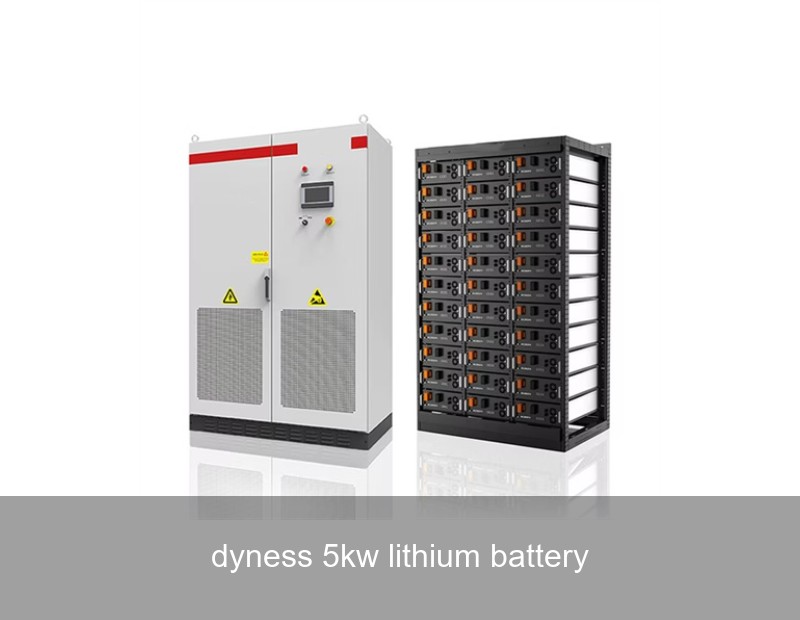
Have you ever watched your electricity meter spin wildly during peak hours, or felt a pang of anxiety during a storm warning, knowing the power could go out for hours? You're not alone. Across Europe and the US, homeowners and business operators are increasingly seeking control over their energy. This quest often leads to a pivotal question: which battery system is right for me? A name that frequently surfaces in this search is the Dyness 5kW lithium battery. But what makes this specific battery size and chemistry so popular, and how does it fit into a larger, smarter energy ecosystem? Let's unpack the technology, the real-world performance, and what you should consider for a truly resilient power setup.
Table of Contents
- The 5kW Power Sweet Spot: Why Size Matters
- Lithium Iron Phosphate (LFP): The Chemistry of Safety and Longevity
- Beyond the Battery: The Critical Role of the Battery Management System (BMS)
- Real-World Performance: A Case Study from Southern California
- Choosing a System, Not Just a Battery: The Highjoule Integration Advantage
- Future-Proofing Your Investment
The 5kW Power Sweet Spot: Why Size Matters
When we talk about a "5kW battery," we're primarily referring to its power rating—how much electricity it can deliver at one moment. Think of it like the flow rate of a hose. A 5kW battery can simultaneously power a significant portion of a typical home's critical loads.
- Typical 5kW Load Capability: Refrigerator (0.8kW) + HVAC fan (1.5kW) + Lights & outlets (1kW) + Home office setup (0.5kW) = ~3.8kW. This leaves headroom for a microwave or other short-duration appliance.
- Backup vs. Self-Consumption: A 5kW inverter/battery system is excellent for essential load panels during an outage. For whole-home backup, pairing multiple units is common.
- The Capacity Factor: Crucially, power (kW) is different from energy (kWh). A Dyness 5kW lithium battery often comes paired with a usable energy capacity, like 9.6kWh or more. This determines how *long* it can power those loads. A 9.6kWh battery running a 2kW load would last roughly 4.8 hours.
This balance of power and capacity makes the 5kW-class battery a versatile choice for average residential and small commercial applications, from managing time-of-use rates to providing meaningful backup.
Lithium Iron Phosphate (LFP): The Chemistry of Safety and Longevity
Not all lithium batteries are created equal. The Dyness 5kW lithium battery typically utilizes Lithium Iron Phosphate (LFP) chemistry, which has become the industry benchmark for stationary storage, and for good reason.
| Feature | LFP (LiFePO4) | Traditional NMC |
|---|---|---|
| Thermal & Chemical Stability | Exceptionally high; much lower fire risk. | Moderate; requires more robust BMS cooling. |
| Cycle Life (to 80% capacity) | 6,000+ cycles | 3,000 - 4,000 cycles |
| Operational Tolerance | Wider temperature range, can be stored at full charge. | More sensitive to high temps and full-state storage. |
For a battery that's installed in your garage or basement, expected to last 15+ years, and cycle daily, LFP's inherent safety and long life translate directly to peace of mind and a lower cost per cycle. It's a chemistry designed for the marathon of daily energy storage, not just the sprint of high energy density. You can read more about LFP's safety advantages from research institutions like the U.S. Department of Energy.

Image: Modern LFP battery modules offer compact, safe energy storage. (Source: Unsplash, representative image)
Beyond the Battery: The Critical Role of the Battery Management System (BMS)
Here's a professional insight: the battery cells themselves are only half the story. The true intelligence and guardian of any lithium battery system is its Battery Management System (BMS). A high-quality BMS does the invisible but vital work:
- Cell Balancing: Ensures every cell in the pack charges and discharges evenly, preventing premature aging.
- Protection: Guards against over-voltage, under-voltage, over-current, and short circuits.
- Thermal Management: Monitors temperature and can regulate cooling or heating systems.
- Communication: Provides real-time data on state-of-charge, health, and power flow to the inverter and user.
A robust BMS is what allows companies to offer extended warranties. When evaluating any battery, including the Dyness 5kW lithium battery, inquire about the sophistication and safety certifications of its BMS.
The Integration Imperative
This leads to a crucial point: a battery is not a standalone product. Its performance is inextricably linked to the inverter and the overall system design. Mismatched communication protocols or under-sized components can cripple even the best battery's capabilities.
Real-World Performance: A Case Study from Southern California
Let's move from theory to practice. Consider a real-world scenario in Southern California, USA, where high electricity rates and wildfire-related Public Safety Power Shutoffs (PSPS) are a major driver for storage adoption.
The Setup: A 2,200 sq. ft. home with a 8kW solar array. The homeowner installed a Dyness 5kW/9.6kWh lithium battery system coupled with a compatible hybrid inverter.
The Goals: 1) Reduce reliance on the grid during peak hours (4-9 PM, when rates exceed $0.50/kWh). 2) Provide backup power for essential loads during outages.
Data & Results (Over 12 Months):
- Self-Consumption Rate Increased: From 35% to 80%. The battery stored excess solar produced midday for use in the evening.
- Peak Grid Draw Reduced: During summer months, peak grid consumption dropped to near zero, saving an estimated $90-$120 per month on time-of-use charges.
- Backup Performance: During a planned 8-hour PSPS event, the system seamlessly powered the home's essential circuit (lights, refrigeration, internet, garage door) for the full duration, with 15% state-of-charge remaining. The homeowner reported no disruption to daily life.
This case illustrates the tangible benefits: financial savings, increased energy independence, and resilience. Data from the California SGIP program shows thousands of similar installations contributing to grid stability.
Choosing a System, Not Just a Battery: The Highjoule Integration Advantage
This is where the conversation evolves. While component-level products like the Dyness 5kW lithium battery are important, the ultimate value lies in a seamlessly integrated, intelligent system. This is the core philosophy at Highjoule.
Since 2005, Highjoule has moved beyond simply supplying hardware to providing holistic, smart power solutions. For residential and commercial clients, we offer:
- Highjoule HES Series: Our all-in-one energy storage systems that intelligently integrate LFP battery banks, a hybrid inverter, and our proprietary energy management software into a single, sleek unit. Think of it as a "brain and brawn in one box" that can be easily expanded.
- Advanced Energy Management System (EMS): The true differentiator. Our EMS doesn't just react; it learns. It forecasts weather and your consumption patterns, automatically optimizing when to charge from solar or the grid, when to discharge, and when to sell back—maximizing your ROI.
- Professional Design & Support: We provide system design services to ensure perfect component compatibility, from solar panels to the battery and inverter, and offer comprehensive warranties and remote monitoring.
In essence, while a reliable battery is the heart of storage, a system like Highjoule's provides the brain and nervous system, ensuring every component works in perfect harmony for years to come.

Image: A modern home energy system integrating solar and storage for full independence. (Source: Unsplash, representative image)
Future-Proofing Your Investment
The energy landscape is shifting rapidly. With the rise of electric vehicles and dynamic grid tariffs, your energy system needs to be adaptable.
- Modularity: Can you easily add more battery capacity later if your needs change (e.g., buying an EV)?
- Software Updates: Can new features and optimizations be added via over-the-air updates to your system's controller?
- Grid Services: In some markets, systems can participate in virtual power plants (VPPs) to earn revenue by supporting the grid. Is your hardware and software capable?
Choosing a forward-thinking provider means your investment continues to deliver value as technology and markets evolve.
A Final Thought to Power Your Decision
Selecting an energy storage system is a significant decision. The right choice empowers you, reduces your carbon footprint, and insulates you from volatile energy markets. It's not just about the specs on a datasheet; it's about the long-term partnership, the intelligence of the software, and the confidence that the entire system is designed to work as one.
So, as you consider the Dyness 5kW lithium battery or any other component, ask yourself this broader question: What kind of energy intelligence and long-term resilience do I truly want for my home or business, and who is best equipped to deliver that as a complete, future-ready solution?
 Inquiry
 Online Chat