


Navigating the World of Different Lithium Batteries: A Guide to Smarter Energy Storage
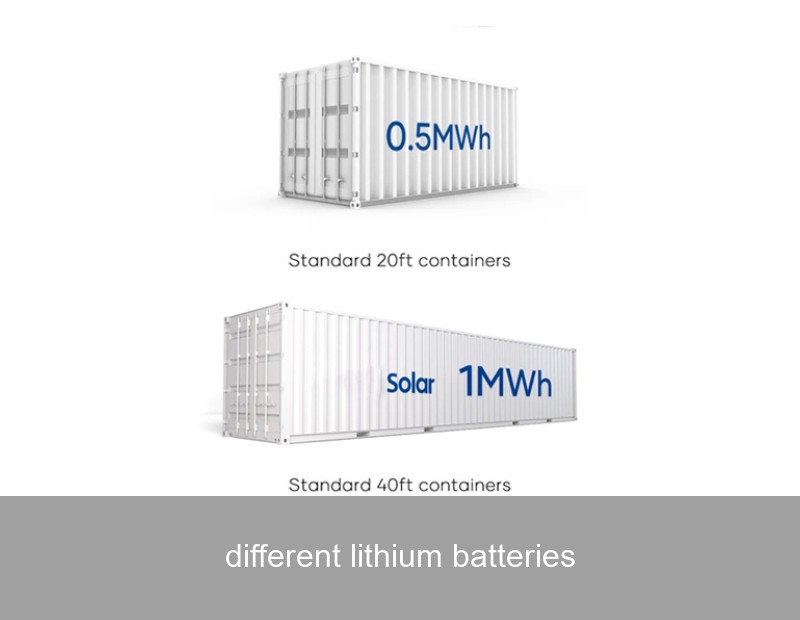
If you're exploring energy storage for your home, business, or community project, you've likely encountered a crucial question: which type of lithium battery is right for me? The term "lithium battery" isn't a one-size-fits-all solution. Understanding the different lithium batteries—their unique chemistries, strengths, and ideal applications—is the key to unlocking a reliable, efficient, and cost-effective power system. As a leader in advanced energy storage since 2005, Highjoule designs intelligent systems that match the perfect battery chemistry to your specific energy needs, ensuring sustainability and resilience for years to come.
Table of Contents
The Chemistry Behind the Power: Core Lithium Types
Think of lithium battery chemistries like different engine types. A diesel truck, a gasoline sports car, and a hybrid vehicle all perform distinct jobs optimally. Similarly, the different lithium batteries are defined by their cathode materials. Let's break down the three most prominent players in the stationary storage arena.
Lithium Iron Phosphate (LFP): The Safety and Longevity Champion
LFP (LiFePO4) batteries have become the cornerstone for modern residential and commercial storage. Their chemistry uses iron and phosphate, which are inherently stable and abundant. The key advantages? Exceptional thermal and chemical stability translates to superior safety—a top priority for installations in homes or businesses. Furthermore, LFP batteries boast an impressive cycle life, often exceeding 6,000 cycles while retaining 80% of their capacity. They are highly efficient and perform consistently across a wide temperature range. At Highjoule, our ResiCore Home and Commercio Pro series predominantly utilize LFP technology, prioritizing decades of safe, maintenance-free operation for our customers.
Nickel Manganese Cobalt (NMC): The Energy Density Leader
NMC batteries blend nickel, manganese, and cobalt to achieve a higher energy density. This means they can store more energy in a smaller, lighter package. This characteristic made them dominant in the electric vehicle industry and they are also used in storage applications where space is at a premium. Historically, they had a higher power rating (C-rate) than LFP, though that gap is closing. The trade-offs include a typically shorter cycle life compared to LFP and greater sensitivity to high temperatures and deep discharge, requiring more sophisticated Battery Management Systems (BMS).
Lithium Titanate Oxide (LTO): The Ultra-Fast, Ultra-Durable Specialist
LTO batteries replace the graphite anode with lithium titanate. This change brings remarkable benefits: incredibly fast charging and discharging rates, a phenomenal cycle life (15,000+ cycles), and outstanding performance in extreme cold. However, the lower energy density and significantly higher cost make them a niche solution. They excel in applications demanding rapid, frequent cycling, such as grid frequency regulation or heavy-duty industrial machinery backup, areas where Highjoule's GridSynch microgrid solutions can leverage their unique capabilities.

Image Source: Unsplash - Visual representation of various battery cell types
Head-to-Head: A Technical Comparison of Lithium Batteries
| Chemistry | Key Strengths | Typical Cycle Life (to 80%) | Best Use Cases | Considerations |
|---|---|---|---|---|
| LFP | Safety, Longevity, Thermal Stability, Cost-Effectiveness | 6,000 - 10,000+ cycles | Residential solar storage, Commercial backup, Daily cycling applications | Slightly lower energy density than NMC |
| NMC | High Energy Density, High Power Output | 3,000 - 5,000 cycles | EVs, Space-constrained storage, Applications needing high burst power | Requires robust thermal management, Cobalt supply chain considerations |
| LTO | Extreme Cycle Life, Ultra-Fast Charging, Wide Temperature Performance | 15,000 - 30,000+ cycles | Grid frequency services, Rapid transit, Extreme climate industrial backup | Premium cost, Lower energy density |
Data on cycle life is based on standard industry testing profiles and can vary based on depth of discharge and operating conditions (U.S. DOE VTO Battery Testing).
From Theory to Practice: A Real-World Case Study
The choice between different lithium batteries becomes crystal clear when applied to a real scenario. Let's examine a project Highjoule completed in Southern Germany.
Phenomenon: A Brewery's Energy Cost and Reliability Dilemma
A mid-sized brewery faced two problems: volatile energy prices cutting into profitability and the critical need for an uninterrupted power supply for its refrigeration and brewing processes. A power outage would result in massive product and financial loss.
Data & Analysis: Why LFP Was the Clear Choice
Highjoule's energy audit revealed the facility needed a 240 kWh storage system capable of at least one full daily charge/discharge cycle (365+ cycles/year) and instantaneous backup during grid failures. The priorities were: safety (within a food production area), longevity (to justify the investment over 15+ years), and total cost of ownership.
- NMC's higher energy density wasn't a primary need as space was available.
- LTO's ultra-long life was attractive, but the upfront cost was prohibitive for the daily cycling profile.
- LFP's safety profile (lower fire risk), 10,000+ cycle life expectancy, and lower per-cycle cost made it the optimal economic and technical solution.
Case Implementation & Results
Highjoule installed a customized Commercio Pro system with LFP batteries, integrated with the brewery's existing PV array and a smart energy management system. The results after 18 months:
- 85% reduction in grid peak power demand charges.
- 40% increase in self-consumption of onsite solar energy.
- Seamless backup power during two grid interruptions, saving an estimated €120,000 in potential spoiled inventory.
- Projected payback period: Under 7 years.
This case underscores that the "best" battery isn't about the highest specs on paper, but the perfect match for operational and financial goals.
Beyond Chemistry: The Highjoule Integration Advantage
Choosing between different lithium batteries is just the first step. The true value of a storage system lies in its integration and intelligence. A premium LFP cell alone doesn't guarantee performance. Highjoule's expertise lies in building complete, cell-to-grid solutions.
Our systems enhance the innate advantages of any lithium chemistry through:
- Proprietary Adaptive BMS: Our BMS doesn't just monitor; it learns usage patterns and optimizes charge/discharge strategies to actively extend battery life beyond standard expectations.
- AI-Powered Energy OS: The Highjoule operating system seamlessly orchestrates between solar production, battery storage, grid power, and building load, maximizing economic return automatically.
- Robust Thermal Management: A unified cooling/heating system maintains the battery at its ideal temperature range year-round, which is critical for performance and longevity, especially in diverse climates like those in Europe and North America.
This holistic approach is what makes a Highjoule system, whether for a ResiCore Home installation in California or an Industrio Max solution for a Swedish factory, more than just a battery bank—it's an intelligent energy asset.

Image Source: Unsplash - Representative image of a professional BESS installation
What's Next for Lithium Battery Technology?
The landscape of different lithium batteries is not static. Research is pushing boundaries on all fronts. Sodium-ion (Na-ion) batteries are emerging as a potential alternative, using abundant materials, though with currently lower energy density (Nature Energy, 2021). Within the lithium family, innovations like silicon-anode designs promise to significantly boost the energy density of LFP cells. Furthermore, continuous improvements in manufacturing are driving down costs across the board. At Highjoule, our R&D team continuously evaluates these advancements, not to chase trends, but to rigorously test and integrate technologies that deliver tangible, reliable benefits for our customers' long-term energy strategies.
Given the rapid evolution and the critical importance of a correct, future-proofed choice for your energy independence, what specific challenge in your energy consumption profile do you think a tailored battery storage system could solve first?
 Inquiry
 Online Chat