


How Much Does a Deye LV Battery Cost? A Complete Value Guide for 2024
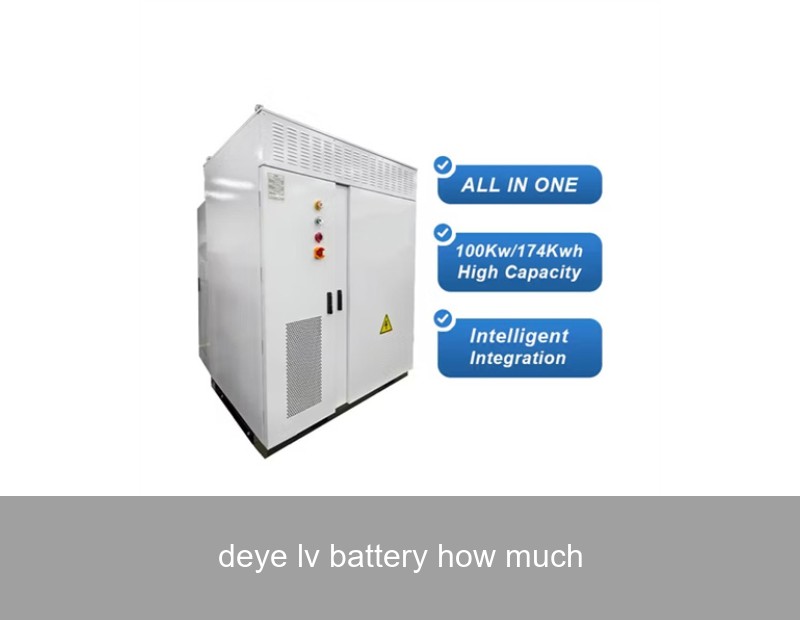
If you're researching solar battery storage, you've likely come across Deye LV batteries. They're a popular choice for their performance and compatibility. But the burning question on everyone's mind is: how much does a Deye LV battery actually cost? The answer isn't a single number. The final price tag is a blend of the battery unit itself, essential system components, professional installation, and the long-term value it brings to your energy independence. As a leader in smart energy storage since 2005, Highjoule understands that your investment is about more than just hardware—it's about a reliable, intelligent power solution for your home or business.
Table of Contents
The Real Price Breakdown: More Than Just a Battery Box
Let's address the core question directly. As of mid-2024, a single Deye LV battery module (typically around 5.1kWh capacity) can have a hardware-only price ranging from $1,500 to $2,500, depending on your region, supplier, and market fluctuations. However, purchasing a standalone battery module is like buying a car engine without the chassis, wheels, or transmission. For a functional system, you need a complete setup.
A fully installed Deye LV battery system often includes:
- Battery Modules: Multiple units stacked to achieve your desired capacity (e.g., 10.2kWh, 15.3kWh).
- Hybrid Inverter: The critical brain that manages energy flow between solar panels, the battery, and your home grid. Deye inverters are often paired with their batteries for optimal communication.
- Battery Management System (BMS) & Monitoring: Essential for safety, longevity, and allowing you to track your energy usage and savings.
- AC/DC Switchgear, Cabling, and Enclosure: All the necessary electrical components for safe installation.
- Professional Installation & Commissioning: Labor costs, which vary significantly by location and system complexity.
Therefore, a typical turnkey residential installation for a 10.2kWh Deye LV system (including a compatible hybrid inverter) in Europe or the U.S. can range from $8,000 to $15,000 before any applicable incentives or tax credits. This holistic view is crucial for accurate budgeting.
Key Factors Influencing Your Deye LV Battery System Cost
Why such a broad range? Several factors dictate the final investment:
| Factor | Impact on Cost | Highjoule's Approach |
|---|---|---|
| System Capacity & Scalability | More kWh of storage = higher upfront cost. Deye's modular LV design allows you to start smaller and expand later. | Our experts model your consumption patterns to right-size your initial system, preventing over-investment and planning a clear expansion path. |
| Inverter Choice & System Integration | A high-efficiency, high-power hybrid inverter is a major cost component. Seamless integration reduces long-term losses. | We provide fully optimized AC-coupled or DC-coupled systems, ensuring Dye batteries and inverters work in perfect harmony for maximum round-trip efficiency. |
| Installation Complexity | Electrical panel upgrades, distance between components, and local permitting fees can add thousands. | Our certified installers conduct thorough site assessments to provide a transparent, all-inclusive quote with no hidden costs. |
| Government Incentives | Substantial savings! The U.S. Residential Clean Energy Credit covers 30% of system costs. Many European states also offer generous rebates. | Highjoule's project teams assist customers in navigating incentive paperwork to secure the maximum financial benefit available. |
Real-World Value: A Case Study from Bavaria
Let's move beyond list prices and see how this translates into real value. Consider the Müller family home in southern Germany. Facing rising electricity costs and seeking backup power during grid outages, they installed a 15.3kWh Deye LV battery system coupled with a Deye hybrid inverter and an existing 8kW solar array.
- System Cost (2023): €18,500 fully installed.
- German Incentive (BAFA): €3,200 rebate received.
- Net System Cost: €15,300.
- Annual Energy Savings: By increasing self-consumption of solar power from 35% to over 80%, they slash €1,800 off their annual utility bill.
- Backup Power: The system provides essential circuit backup for up to 18 hours during a winter grid outage—a critical feature in their rural area.
In this case, the simple payback period is under 9 years, well within the battery's expected lifespan. More importantly, the system provides immediate protection from blackouts and volatile energy prices, which is a form of financial security. This is the true calculation of "cost" versus "value."

Image Source: Unsplash (Photographer: Andreas Gücklhorn) - A modern home with a solar installation similar to a residential storage project.
The Highjoule Advantage: Intelligent Integration & Lifetime Value
At Highjoule, we don't just sell battery boxes. We deliver optimized energy ecosystems. Our partnership with leading manufacturers like Deye allows us to provide their top-tier hardware, but our real differentiation lies in our proprietary energy management software and system design expertise.
For a Deye LV system installed by Highjoule, you're also getting:
- Highjoule EnergyOS™: Our AI-driven platform learns your habits and automatically shifts between grid, solar, and battery modes to maximize savings, even participating in virtual power plant (VPP) programs where available to generate income.
- Proactive Performance Monitoring: Our team monitors system health remotely, often identifying and resolving minor issues before you ever notice them, ensuring your investment performs optimally for decades.
- Warranty & Support: We bundle extended warranty options and offer single-point-of-contact support for the entire system, not just individual components.
This holistic service transforms the Deye LV battery from a commodity product into a smart, long-term asset. When you ask "how much does it cost?" with Highjoule, the answer includes peace of mind and guaranteed performance.
Finding the Right System for Your Budget and Needs
So, how do you navigate this landscape? Start by asking the right questions:
- What are my primary goals? (Bill savings, backup power, green energy maximization?)
- What is my current and future electricity consumption?
- What is the total installed quote including all hardware, software, and labor?
- What is the projected long-term value, including incentives and energy price inflation?
Remember, the cheapest upfront option may not offer the best software, integration, or support, potentially costing you more in lost efficiency and headaches over time.

Image Source: Unsplash (Photographer: American Public Power Association) - Technician monitoring energy system performance.
Ready to Move Beyond the Sticker Price?
The journey to energy independence is an exciting one. The question "how much does a Deye LV battery cost?" is the perfect starting point, but the more compelling question is: "What is the value of taking control of my energy, securing my power supply, and locking in long-term savings for my home or business?"
What energy challenge is driving you to explore battery storage today, and how can a truly intelligent system design address it?
 Inquiry
 Online Chat