


Unlocking Energy Independence: A Deep Dive into the 16kW Deye Lithium Battery System
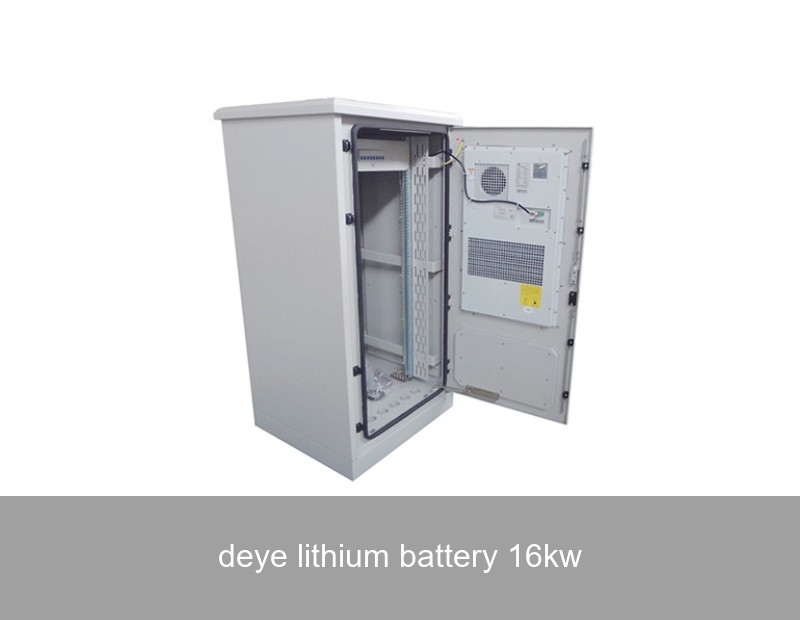
Imagine a world where your home or business is largely unaffected by grid outages and soaring electricity prices. This isn't a distant dream; it's the reality enabled by advanced energy storage. At the heart of this transformation are powerful systems like the Deye lithium battery 16kW. This specific capacity represents a sweet spot for many, offering substantial power to run essential circuits, major appliances, and even small workshops during a blackout. But what does "16kW" truly mean for you, and how do you ensure you're getting a reliable, integrated solution? Let's explore how this technology is reshaping energy use across homes and businesses.
Table of Contents
- Understanding the 16kW Power Rating: More Than Just a Number
- The Lithium Advantage: Why Chemistry Matters
- From Data to Reality: A European Case Study
- Beyond the Battery: The Importance of System Integration
- The Highjoule Approach: Intelligent Storage Solutions
- What Will Your First Step Towards Energy Resilience Be?
Understanding the 16kW Power Rating: More Than Just a Number
When we talk about a Deye lithium battery 16kW system, we're primarily referring to its power output, measured in kilowatts (kW). Think of this as the system's "muscle" – its ability to deliver energy at any given moment. A 16kW rating means the battery inverter can supply up to 16,000 watts of continuous power. To put that in perspective, here's what a robust system like this can typically handle simultaneously:
- Refrigerator (200-400W)
- HVAC system (3,000-5,000W)
- Lighting circuits (400-1,000W)
- Home office equipment (500W)
- Well pump (1,000-2,500W)
- And still have headroom for occasional high-draw appliances.
It's crucial to distinguish power (kW) from energy capacity (kWh), which is the battery's "stamina" – how long it can supply that power. A system might have a 16kW power output paired with, for example, a 30kWh energy capacity. This combination determines how many appliances you can run and for how long.
The Lithium Advantage: Why Chemistry Matters
Not all batteries are created equal. The shift from lead-acid to lithium-ion, particularly Lithium Iron Phosphate (LFP), is a game-changer for residential and commercial storage. LFP chemistry, commonly used in high-quality systems like those from Deye, offers distinct benefits that align perfectly with the demands of a 16kW application:
| Feature | Benefit for 16kW Systems |
|---|---|
| Long Cycle Life (6,000+ cycles) | Withstands daily charging/discharging for decades, making the high power investment last. |
| Enhanced Safety | Superior thermal and chemical stability, crucial for high-power applications in your home or business. |
| High Depth of Discharge (DoD) | Allows you to use 90%+ of the stored energy without damaging the battery, maximizing the usable 16kW power. |
| Compact Size & High Power Density | Delivers substantial power from a relatively small footprint, simplifying installation. |
According to a 2023 NREL report, the levelized cost of storage for lithium-ion batteries has fallen dramatically, driven by innovation and scale, making systems like these more accessible than ever.
From Data to Reality: A European Case Study
Let's move from theory to practice. Consider a medium-sized dairy farm in Bavaria, Germany. The farm faced two challenges: volatile energy costs and the critical need for uninterrupted power for milking systems and refrigeration.
The Solution: A tailored system centered around a Deye lithium battery 16kW inverter, coupled with 25kWh of LFP battery storage and an existing 20kW solar array. The system was designed for peak shaving (reducing grid draw during expensive periods) and backup power.
The Data-Driven Outcome (First 12 Months):
- Grid Independence: Achieved 78% self-consumption of solar energy, up from 35%.
- Cost Savings: Reduced grid electricity purchases by 62%, translating to over €4,800 in annual savings.
- Reliability: Provided seamless backup during three grid outages, preventing spoilage of perishable goods.
- ROI: Projected payback period of under 7 years, factoring in German subsidy programs.

This case illustrates that the value of a 16kW system isn't just in surviving an outage; it's in generating daily economic resilience.
Beyond the Battery: The Importance of System Integration
A battery is only as good as the ecosystem it operates within. The inverter, energy management software, and system design are critical. A 16kW battery inverter must intelligently manage energy flows between solar panels, the battery bank, the grid, and your home's circuits. Advanced features like zero-export control (for grid compliance) and time-of-use scheduling are what transform a simple battery into a smart energy asset.
The Highjoule Approach: Intelligent Storage Solutions
This is where expertise matters. At Highjoule, with nearly two decades of experience since 2005, we understand that delivering a Deye lithium battery 16kW solution is about more than hardware. It's about providing a cohesive, intelligent power system. Our offerings for residential and commercial clients include:
- Highjoule H-ESS Series: Fully integrated energy storage systems that seamlessly pair with high-power inverters like Deye's 16kW model. Our H-ESS features modular LFP battery packs, scalable from 10kWh to over 50kWh, ensuring your energy capacity meets your needs.
- AI-Powered Energy Management: Our proprietary platform doesn't just monitor; it learns. It forecasts weather and consumption patterns to autonomously optimize when to store solar energy, when to draw from the battery, and when to (rarely) pull from the grid, maximizing your savings.
- End-to-End Service: From initial site assessment and financial modeling to professional installation, grid compliance support, and remote monitoring, we ensure your system performs optimally for its entire lifespan.
For a commercial client in California, for instance, we integrated a 16kW-class system with their existing solar, implementing a sophisticated load-shedding scheme that prioritizes critical operations during outages, a feature programmable through our intuitive dashboard.

Navigating Regulations and Incentives
Markets like the US and Europe offer various incentives, such as the EU's support for energy storage or the US Investment Tax Credit (ITC) for solar-plus-storage. A qualified provider like Highjoule helps you navigate these programs, ensuring your system meets all local safety and grid interconnection standards (like UL 9540 in the US or CE marking in Europe), which is non-negotiable for a system of this power.
What Will Your First Step Towards Energy Resilience Be?
The journey to energy independence starts with a question. Is your primary driver financial savings, backup security, or reducing your carbon footprint? Understanding your "why" helps define the perfect system configuration. Perhaps a Deye lithium battery 16kW system is the robust core you need, or maybe your energy audit will point to a slightly different configuration.
We invite you to consider: What are the three electrical loads in your home or business that you simply cannot afford to lose power to, and how would securing them change your peace of mind or operational continuity?
 Inquiry
 Online Chat