


Devices That Store Electricity: The Unsung Heroes of Our Clean Energy Future
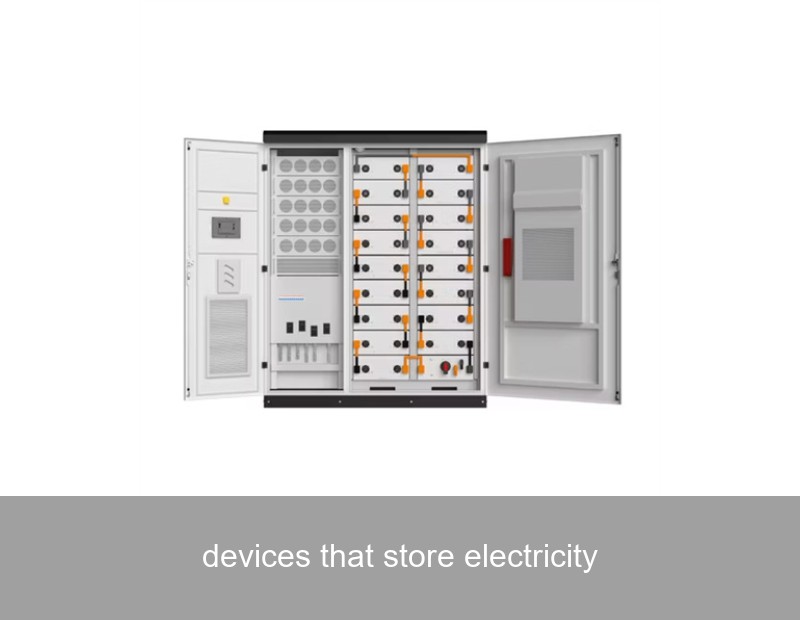
Have you ever wondered what happens to the surplus solar power your rooftop panels generate on a brilliantly sunny afternoon? Or how a hospital keeps its life-saving equipment running during an unexpected grid outage? The answer lies in a transformative category of technology: devices that store electricity. Far from being a niche concept, these systems are rapidly becoming the cornerstone of a resilient, efficient, and sustainable energy landscape. For nearly two decades, Highjoule has been at the forefront of this revolution, engineering intelligent battery storage solutions that empower businesses, industries, and homeowners to take control of their power.
Table of Contents
- The Phenomenon: Why We Can't Just Use Electricity as It's Made
- The Data: Quantifying the Storage Boom
- The Case Study: A German Factory's Journey to Energy Independence
- The Technology: How Do Modern Electricity Storage Devices Work?
- Key Applications: Where Storage Makes a Tangible Difference
- The Future Powered by Storage
The Phenomenon: Why We Can't Just Use Electricity as It's Made
Our traditional power grid operates on a delicate, second-by-second balance: generation must exactly match consumption. This works for predictable demand fueled by large, centralized power plants. But enter renewable energy. Solar and wind are inherently variable—the sun sets, the wind calms. This creates a fundamental mismatch. We often produce the most clean electricity when demand isn't at its peak. Without a "buffer," this precious energy is wasted. This is the critical challenge that devices that store electricity are designed to solve. They act as a reservoir, capturing excess generation and releasing it precisely when it's needed most.

Image: Modern battery storage systems, like those from Highjoule, are key to balancing energy supply and demand.
The Data: Quantifying the Storage Boom
The growth of energy storage isn't just anecdotal; it's a measurable global trend. According to the U.S. Energy Information Administration (EIA), the country's battery storage capacity is projected to multiply significantly by 2050, driven by both policy and economics. In Europe, the European Association for Storage of Energy (EASE) notes that storage is essential for the EU to meet its 2030 renewable targets. The financial driver is clear: by avoiding expensive peak-time grid electricity and participating in grid services, commercial storage systems can achieve compelling payback periods. For instance, a well-sized system can shift hundreds of megawatt-hours annually, translating to substantial cost savings and a stronger bottom line.
The Case Study: A German Factory's Journey to Energy Independence
Let's make this concrete with a real-world example. A mid-sized automotive parts manufacturer in Bavaria, Germany, faced two pressing issues: volatile energy costs eating into profits and a corporate mandate to reduce carbon footprint. Their rooftop solar array covered 60% of their daytime load, but surplus energy at noon was sold to the grid at low rates, while they bought power back at high rates in the early evening.
Their solution was a turnkey Highjoule Industrial Energy Vault (IEV) system. This integrated suite of devices that store electricity includes high-cycle lithium-ion batteries, advanced power conversion systems, and Highjoule's proprietary OptiGrid AI management software.
| Metric | Before Highjoule IEV | After Highjoule IEV |
|---|---|---|
| Grid Energy Consumption at Peak | 100% | 25% |
| Solar Self-Consumption Rate | 35% | 92% |
| Annual Energy Cost Savings | Baseline | €68,000 |
| CO2 Emissions Reduction | Baseline | 142 tonnes |
The system stores the factory's midday solar surplus and dispatches it during the expensive 4-9 PM window. Furthermore, the OptiGrid software allows the system to automatically participate in the German primary control reserve market, generating additional revenue by providing grid stabilization services. This case exemplifies how modern storage is not just a cost center but a strategic, revenue-generating asset.
The Technology: How Do Modern Electricity Storage Devices Work?
At their core, all devices that store electricity perform three basic functions: charge, hold, and discharge. But the intelligence lies in the integration. A complete system like Highjoule's Residential PowerBank or Commercial Stack series involves several key components:
- Battery Cells: The core storage medium, typically lithium-ion (like LiFePO4) for its high efficiency, long lifespan, and safety profile.
- Battery Management System (BMS): The "brain" of the battery pack, ensuring all cells operate safely, evenly, and within optimal parameters.
- Power Conversion System (PCS)/Inverter: The "translator" that converts the battery's direct current (DC) into the alternating current (AC) used by buildings and the grid, and vice-versa during charging.
- Energy Management System (EMS): The system-level commander. Highjoule's OptiGrid EMS uses weather forecasts, usage patterns, and real-time electricity prices to make intelligent, autonomous decisions on when to charge or discharge, maximizing economic and operational value.

Image: Centralized control is key for managing complex storage systems.
Key Applications: Where Storage Makes a Tangible Difference
1. Commercial & Industrial (C&I) Cost Management
For businesses, electricity is a major and often unpredictable expense. Storage systems provide "peak shaving" – discharging the battery during short periods of highest grid demand when tariffs are exorbitant. This directly reduces demand charges, which can constitute up to 50% of a commercial electricity bill.
2. Maximizing Renewable Investment
Pairing solar PV with storage transforms a renewable generator into a reliable 24/7 power source. Instead of exporting excess solar for minimal credit, you store it for your own use later. This dramatically increases your self-consumption and energy independence. Highjoule's solutions are designed for seamless integration with both new and existing solar installations.
3. Resilience and Backup Power
From data centers to dairy farms, power interruptions mean lost revenue and risk. Modern devices that store electricity can provide near-instantaneous backup power during an outage. Highjoule's systems can be configured to power critical loads or, with proper sizing, an entire facility, ensuring business continuity.
4. Grid Services and Stability
On a larger scale, aggregated storage networks can provide vital services to the electricity grid, such as frequency regulation and voltage support. This helps integrate more renewables and makes the entire grid more stable and efficient—a win for utilities and consumers alike. You can learn more about these services from the National Renewable Energy Laboratory (NREL).
The Future Powered by Storage
The evolution of devices that store electricity is accelerating. We're moving towards longer-duration storage, even more sustainable battery chemistries, and smarter, grid-interactive ecosystems. The future home or business will operate as a proactive "prosumer" node—generating, storing, managing, and even sharing electricity efficiently within a local community or microgrid. Highjoule is actively developing these next-generation platforms, focusing on open standards and interoperability to ensure our customers are ready for the energy markets of tomorrow.

Image: The future integrated energy home: solar, storage, and electric vehicles.
As you consider your own energy profile—whether it's the monthly bill for your factory, the sustainability goals of your community, or the desire for reliability in your home—what single energy challenge could a smarter, more responsive power asset solve for you first?
 Inquiry
 Online Chat