


Understanding Cryopeak Energy Solutions Corporation: A Pillar for Flexible Power
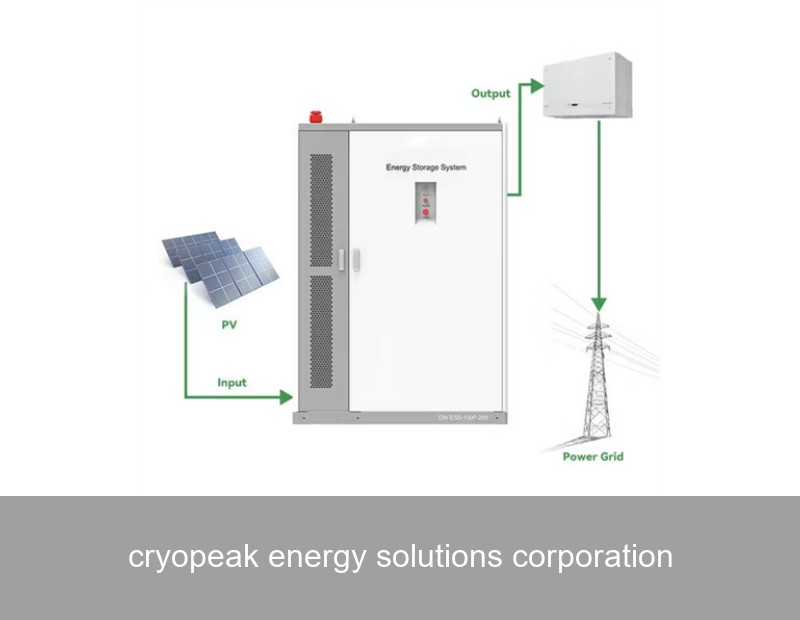
If you're involved in energy management, industrial operations, or simply follow the trends in power infrastructure, you might have come across the name Cryopeak Energy Solutions Corporation. But what exactly does this company do, and why is its role becoming increasingly critical in our evolving energy landscape? At its core, Cryopeak specializes in providing flexible, reliable, and lower-carbon energy solutions, primarily through liquefied natural gas (LNG) and related services. They act as a crucial bridge fuel provider, ensuring power stability during high demand or when intermittent renewables like solar and wind are not producing. Think of them as the agile, on-demand power supplier that keeps the lights on and factories running when the grid is under stress.
The Modern Grid Challenge: Peaks, Valleys, and Volatility
Let's paint a picture. A typical winter evening in Europe: the sun set hours ago, solar generation is zero, and a high-pressure system has left wind turbines still. Yet, demand for electricity is peaking as millions switch on heating, lighting, and appliances. This is the "duck curve" phenomenon on steroids—a drastic mismatch between supply and demand. According to the International Energy Agency (IEA), global electricity demand is set to grow at a faster rate over the next three years, with increasing volatility becoming the new norm.
This is where flexible energy solutions providers like Cryopeak step in. They don't build massive, always-on power plants. Instead, they provide modular, transportable, and rapid-response fuel supplies—often LNG—that can be deployed to power generators at industrial sites, remote communities, or peaker plants. LNG is cooled natural gas that takes up 1/600th of the volume of its gaseous state, making it efficient to transport by truck or ship to locations beyond the pipeline network. It offers a cleaner-burning alternative to diesel or coal, reducing sulfur and particulate emissions significantly.

Image: Flexible LNG infrastructure enables on-demand power generation. (Photo by Zbynek Burival on Unsplash)
The Data Behind the Need for Flexibility
| Challenge | Data Point / Trend | Impact |
|---|---|---|
| Renewable Intermittency | Solar & wind generation can vary by over 70% day-to-day in some regions. | Creates massive grid balancing challenges, requiring fast-ramping backup. |
| Peak Demand Spikes | Peak demand can be 40-60% higher than average demand in winter evenings. | Strains existing baseload capacity, risks blackouts without supplemental power. |
| Energy Security | Over 60% of EU's gas was imported pre-2022, highlighting supply vulnerability. | Drives need for diversified, decentralized, and storable fuel sources. |
Cryopeak in Action: A Real-World Case Study from California
Abstract concepts are one thing, but real data tells the true story. Consider the situation in California, a leader in renewable adoption with an aggressive decarbonization agenda. The state has faced well-publicized grid reliability challenges during heatwaves and wildfire seasons. In one project, Cryopeak was contracted to provide a complete LNG fuel solution for a peaking power plant in the San Joaquin Valley.
The plant's role was critical: to fire up within minutes when the California Independent System Operator (CAISO) issued a warning, preventing rolling blackouts. Over a critical 3-month summer period, the facility, powered by Cryopeak's LNG supply, was dispatched over 50 times. It provided a total of over 200,000 megawatt-hours (MWh) of emergency electricity to the grid, enough to power approximately 150,000 homes during peak events. This operation directly supported grid stability while emitting far fewer pollutants than the older diesel units it effectively replaced. This case exemplifies the "solution" in Cryopeak Energy Solutions—turning a grid vulnerability into managed reliability.
Beyond LNG: The Synergy with Advanced Battery Storage
While LNG provides hours to days of flexible energy, the future grid requires flexibility at all timescales—from milliseconds to seasons. This is where the synergy with cutting-edge battery energy storage systems (BESS) becomes undeniable. Imagine an integrated energy resilience plan: battery storage handles the second-by-second frequency regulation and the first hour or two of a peak event with instant response. Then, as the battery discharges, a firm resource like an LNG-powered generator can seamlessly ramp up to carry the load for an extended period. This hybrid approach maximizes efficiency, minimizes emissions, and provides bulletproof reliability.
This isn't just theoretical. Forward-thinking energy managers are already designing such hybrid microgrids for campuses, industrial complexes, and utilities. The battery acts as the shock absorber, while the firm fuel-based generation acts as the durable workhorse. Together, they create a cost-effective and resilient power asset that can also integrate higher levels of on-site renewables.
How Highjoule Complements the Cryopeak Energy Vision
At Highjoule, we view companies like Cryopeak not as competitors, but as essential partners in the broader mission to decarbonize and strengthen global energy systems. While Cryopeak excels at delivering flexible fuel solutions for longer-duration needs, Highjoule specializes in the smart, electrified side of the equation: advanced battery storage and integrated energy management software.
Our H-Series commercial & industrial (C&I) battery systems are designed precisely for the fast-response, short-to-medium duration storage that pairs perfectly with firm generation. For a manufacturing plant using Cryopeak's LNG for backup, a Highjoule BESS can:
- Slash Demand Charges: Peak shave the facility's grid draw, dramatically reducing monthly utility bills.
- Provide Uninterruptible Power Supply (UPS): Offer instantaneous backup during grid flickers, bridging the few minutes until the LNG generators are at full output.
- Optimize Energy Costs: Use our AI-driven Helios Energy Management Platform to automate charging (from grid or solar) and discharging based on real-time prices and demand.
For a utility or microgrid developer, combining Cryopeak's reliable fuel supply with Highjoule's modular, containerized M-Grid utility-scale storage creates a "best-of-both-worlds" solution. This integrated approach ensures not just seconds or hours, but days of resilient, controllable power. It's a pragmatic pathway to a sustainable grid, leveraging the strengths of different technologies to meet the complex demands of the energy transition.

Image: Advanced battery storage systems provide the fast-responding layer of grid flexibility. (Photo by American Public Power Association on Unsplash)
The Future Outlook for Integrated Energy Solutions
The energy landscape is moving away from siloed, single-technology solutions. The future belongs to integrated, intelligent portfolios. Companies like Cryopeak Energy Solutions Corporation provide an indispensable piece of this puzzle, especially in regions with aggressive renewable targets but lingering concerns about baseload and seasonal storage. As green hydrogen and renewable natural gas (RNG) technologies mature, the infrastructure and expertise companies like Cryopeak have developed will be pivotal in transporting and storing these future fuels.
Simultaneously, the plummeting cost of batteries, as tracked by sources like BloombergNEF, ensures that storage will play an ever-larger role in daily grid operations. The most resilient and cost-effective energy systems will be those that strategically layer these technologies.
So, as you evaluate your organization's energy resilience strategy, ask yourself: Are we prepared for both the instantaneous outage and the multi-day grid event? Is our approach flexible enough to adapt to both tomorrow's price signals and tomorrow's fuels? The collaboration between flexible fuel providers and smart storage innovators might just hold the key.
What combination of technologies—be it LNG, batteries, solar, or future fuels—is most viable for ensuring your operations are both sustainable and unshakeably reliable in the face of an uncertain energy future?
 Inquiry
 Online Chat