


Beyond the Meter: Why a Specialized CRM for Energy Companies is Your Key to a Sustainable Future
If you're in the energy business—whether you're a renewable installer, a utility managing the grid edge, or a storage provider like us at Highjoule—you know the landscape has transformed. You're no longer just selling kilowatt-hours or hardware; you're managing complex customer journeys, intricate project lifecycles, and two-way energy flows. This shift demands a new central nervous system for your business: a specialized CRM for energy companies. This isn't just a sales database; it's the operational core that aligns your technical expertise with your customers' evolving needs for control, sustainability, and resilience.
Why Your Energy Company Needs a Specialized CRM
Generic Customer Relationship Management (CRM) software often falls short in our industry. A solar installation involves site surveys, permitting, financing, interconnection agreements, and decades of maintenance. A battery storage system adds layers of energy data, grid service participation, and performance optimization. A standard CRM can't natively speak this language. A true CRM for energy companies is built on this unique workflow, integrating project management, asset performance data, and customer energy portals into a single source of truth. It turns customer interactions into intelligent insights that drive both satisfaction and recurring revenue.
The Phenomenon: From Kilowatts to Customer Relationships
The old, one-way model of energy delivery is over. The rise of prosumers—customers who both consume and produce energy—has created a dynamic, decentralized market. Customers now have choices: they can invest in rooftop solar, pair it with home batteries, sign up for virtual power plants (VPPs), or choose green energy tariffs. This complexity is a double-edged sword. It's a massive business opportunity but also a logistical and communication nightmare if managed with spreadsheets and disparate software. The phenomenon is clear: the winning companies will be those that best manage relationships and data, not just electrons.

Image Source: Unsplash - A modern energy operations center requires integrated data, much like a specialized CRM.
The Data Reality: A Sector in Flux
Let's look at the numbers that underscore this shift. According to the International Energy Agency (IEA), renewable capacity additions grew by almost 50% in 2023, with solar PV accounting for three-quarters of this expansion. In the U.S., the Solar Energy Industries Association (SEIA) reports that the residential solar segment alone installed enough capacity to power over 4 million homes in Q3 2023. This growth isn't slowing down.
But with growth comes churn and competition. A study by McKinsey & Company found that energy customers are increasingly open to switching providers for better digital experiences and clean energy options. The data reveals a critical gap: companies excelling at technical installation can fail at the long-term customer lifecycle, leaving value—and revenue—on the table.
| Business Challenge | Generic CRM Limitation | Energy-Specific CRM Solution |
|---|---|---|
| Managing 20+ year asset lifecycles | No native link to live performance data or warranty tracking. | Integrates with inverters & BMS for proactive maintenance alerts and warranty management. |
| Handling complex project timelines (permits, interconnection) | Rigid task management not tailored to regulatory steps. | Offers customizable workflow templates for specific regional permitting processes. |
| Monetizing grid services (VPP, demand response) | Cannot aggregate customer assets or track participation. | Asset registry and enrollment tracking to manage distributed energy resource (DER) portfolios. |
| Providing customer energy insights | Separate portal required; data siloed. | Built-in or easily connected customer portal showing production, consumption, and savings. |
Case Study: A European Solar & Storage Provider's Transformation
Consider "SunFlow Energia" (a pseudonym for a real Highjoule partner), a mid-sized installer in Southern Europe. They were successful but overwhelmed. Their sales team used one tool, project managers used another, and customer service had no visibility into system performance. This led to delayed projects, frustrated customers, and an inability to scale their new battery storage offerings.
In 2022, they implemented a vertically focused CRM for energy companies. The results within 18 months were striking:
- Project Cycle Time Reduced by 22%: Automated permit tracking and integrated communication shaved weeks off their average installation timeline.
- Customer Service Tickets Related to "Status Updates" Dropped by 65%: A shared, transparent timeline visible to both staff and customers eliminated repetitive queries.
- Upsell Rate on Storage Increased by 40%: The CRM identified existing solar customers with high self-consumption potential, enabling targeted, timely battery storage offers.
- Foundation for a VPP Laid: They now have a clean registry of all installed battery systems with performance data, enabling the launch of a pilot virtual power plant program.
This case shows that the right CRM isn't an IT cost; it's a strategic platform for growth and service differentiation in a crowded market.
Key Insights: What Makes a CRM for Energy Companies Truly Powerful
Based on industry trends and our own experience at Highjoule, the most effective systems share these core capabilities:
- Asset-Centric Design: The customer record is linked to physical assets (solar arrays, batteries, inverters), with fields for serial numbers, capacity, installation date, and live performance data feeds.
- Regulatory & Compliance Workflow Engine: Pre-built stages for local utility interconnection, grant applications, and incentive program compliance (like the U.S. ITC or European subsidies).
- Integrated Energy Data Platform (EDP) Connectivity: The ability to pull in granular production and consumption data from platforms like WattTime or directly from hardware APIs, transforming raw data into customer-friendly savings reports.
- Portal for Prosumers: A branded customer front-end that provides system monitoring, energy usage insights, and a direct channel for service requests—increasing engagement and stickiness.
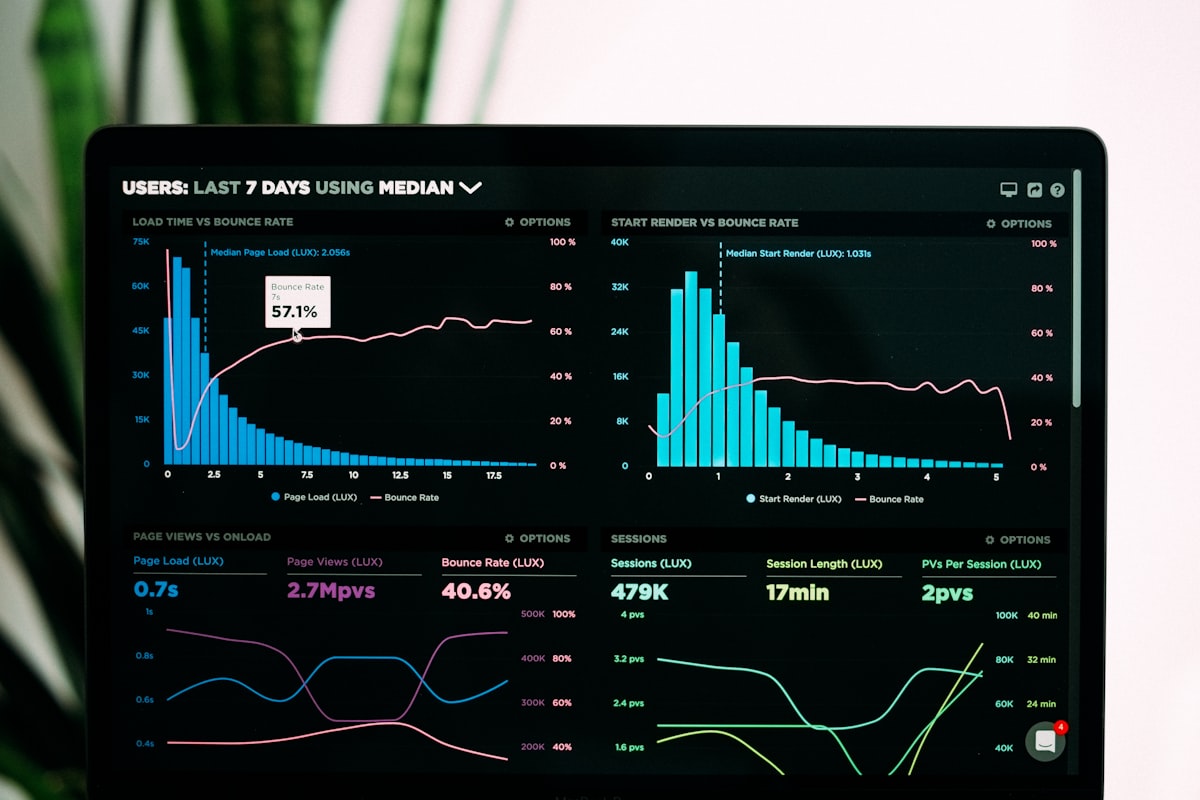
Image Source: Unsplash - A specialized CRM supports the entire customer journey, from consultation to long-term support.
Highjoule's Perspective: CRM as the Brain of a Modern Energy System
At Highjoule, we view software as the indispensable partner to hardware. Since 2005, we've evolved from providing advanced battery storage systems to delivering intelligent, integrated energy solutions. Our Highjoule HORIZON platform for commercial, industrial, and microgrid applications isn't just a Battery Management System (BMS); it's an ecosystem optimizer. But its value is fully unlocked when it communicates with a company's business brain—its CRM.
For instance, when our HORIZON platform detects a slight, long-term degradation in a battery cell's performance, that technical data can trigger two crucial workflows in your CRM: 1) An automated service alert for your technical team to schedule proactive maintenance, and 2) A personalized communication to the customer, demonstrating your superior oversight and care for their asset. This seamless flow from physical asset data to customer relationship action is the hallmark of a mature, future-ready energy business. It transforms your service from reactive to predictive, building unparalleled trust.
For residential and small business clients, our Highjoule HELIOS home energy storage systems are designed with open APIs, ensuring they can easily integrate into the broader data and management ecosystem that a robust CRM orchestrates, enabling providers to offer value-added services like peak shaving alerts or VPP enrollment directly through the customer portal.
A Question for Your Future
As you plan for the next phase of growth—whether that's expanding into new markets, launching grid service offerings, or simply delivering a customer experience that sets you apart—ask yourself this: Is our current software stack a patchwork of solutions, or is it a unified platform that grows with our ambitions? If you're ready to explore how the right CRM for energy companies can be the catalyst for that growth, what's the first operational bottleneck you would want it to solve?
 Inquiry
 Online Chat