


Your Solar Panel Converter: The Unsung Hero of Home Energy Independence
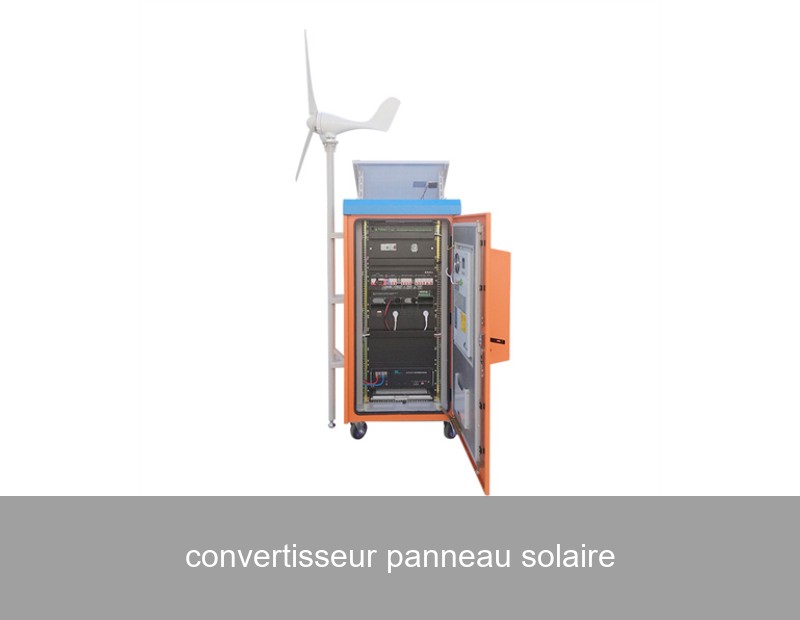
You've seen the sleek panels on rooftops, harnessing the sun's power. But have you ever wondered how that raw sunlight actually becomes the clean electricity that powers your home? The critical piece of technology that makes it all possible is the solar panel converter, more commonly known as an inverter. Think of it as the intelligent heart of your photovoltaic (PV) system. While panels capture DC (Direct Current) electricity, our homes and the grid run on AC (Alternating Current). This is where the converter performs its essential magic, transforming DC into usable AC power with remarkable efficiency and intelligence.

Image: A modern solar inverter is the crucial link between your panels and your home. Source: Unsplash
How Solar Converters Work: The Heart of Your PV System
Let's demystify the process. Your solar panels are hard at work producing DC electricity. This DC power travels through wiring to your solar panel converter. Inside this sophisticated device, a process called "maximum power point tracking" (MPPT) first ensures your panels are operating at their absolute peak efficiency, regardless of shading or temperature changes. Then, through high-frequency electronic switching, it converts the steady DC current into a smooth AC sine wave that perfectly matches the grid's requirements.
Modern inverters don't just convert; they communicate. They provide real-time data on your system's performance, alert you to potential issues, and can even adjust the power output to ensure grid stability—a feature becoming increasingly valuable as renewable penetration grows across Europe and North America.
Types of Solar Inverters: Choosing the Right One for Your Needs
Not all converters are created equal. The right choice depends on your roof, budget, and goals. Here’s a breakdown of the main types:
- String Inverters: The most common and cost-effective option. All panels are connected in a series "string," sending DC power to a single, central inverter. Ideal for unshaded roofs with uniform panel orientation.
- Microinverters: These are small units attached to each individual solar panel. They convert DC to AC right at the source. This maximizes output if you have partial shading or complex roof layouts, as the performance of one panel doesn't drag down the rest.
- Power Optimizer Systems: A hybrid solution. A power optimizer is attached to each panel (like a microinverter) but only conditions the DC power. It then sends it to a central string inverter for conversion. This offers panel-level monitoring and optimization with some of the cost benefits of a central inverter.
| Type | Best For | Key Advantage | Consideration |
|---|---|---|---|
| String Inverter | Simple, unshaded roofs | Lowest cost per watt, proven technology | Whole string affected by shading on one panel |
| Microinverter | Complex roofs, partial shading | Panel-level optimization & monitoring | Higher initial cost, components on roof |
| Power Optimizer System | Balancing cost and performance | Panel-level data, enhanced safety (rapid shutdown) | Slightly more complex than a simple string system |
Key Features to Consider in a Modern Converter
When selecting your solar panel converter, look beyond just the type. Efficiency ratings (often above 98%), multiple MPPT trackers for different roof planes, robust warranty terms (10-12+ years is standard, with extension options), and smart grid functionality are crucial. For homeowners in regions with frequent grid outages, the ability to seamlessly integrate with a battery storage system is perhaps the most important feature of all.
Real-World Case Study: Maximizing Output for a German Dairy Farm
Let's look at a concrete example from Bavaria, Germany. A medium-sized dairy farm installed a 50 kWp rooftop solar system to power its milking machines, cooling tanks, and administrative buildings. The large roof had two distinct sections facing east and west, and was occasionally shaded by a silo in the late afternoon.
The Challenge: A traditional single-string inverter would have been a poor fit. The mismatch between the east and west orientations and the partial shading would have caused significant energy losses, reducing the system's financial return.
The Solution: The installer opted for a system using advanced string inverters with dual, independent MPPT channels. One channel managed the east-facing panels, the other the west-facing ones. This allowed each roof section to operate at its own ideal voltage and current, independent of the other.
The Data-Driven Result: According to monitoring data from the European Commission's energy portal, such configuration optimizations can yield 5-15% more annual energy harvest compared to a single-string setup on a mismatched roof. For this farm, the tailored inverter solution pushed their annual production to over 52,000 kWh, covering over 70% of their energy needs and shortening their payback period significantly. This case highlights that the right convertisseur panneau solaire strategy is not one-size-fits-all; it requires expert design.
The Future: Converters and Integrated Energy Storage
The role of the solar converter is evolving rapidly from a simple conversion device to the brain of a comprehensive home energy system. With the rise of battery storage, the modern inverter must be a hybrid or "storage-ready" inverter. These devices can intelligently manage energy flow in three directions: from solar panels to the home, from solar to charge a battery, and from the battery to power the home during outages or peak rate periods.
This is where companies with deep system integration expertise shine. At Highjoule, we've been at the forefront of this evolution since 2005. Our H-IQ Series Hybrid Inverters are designed specifically for this new paradigm. They aren't just converters; they are energy managers. With built-in intelligence, they can be programmed to prioritize self-consumption, participate in utility demand-response programs (where available), and provide essential backup power during grid failures—all while ensuring your system operates with maximum efficiency and safety.
Image: A complete home energy system with solar panels, battery storage, and an intelligent inverter. Source: Unsplash
Highjoule's Smart Solutions for Reliable Solar Conversion and Beyond
Understanding the pivotal role of the solar panel converter is the first step. The next is partnering with a provider that offers robust, intelligent, and future-proof solutions. Highjoule's product ecosystem is engineered for resilience and simplicity.
Our H-IQ Hybrid Inverter seamlessly couples with our modular H-Cell lithium-ion battery systems, creating a unified AC-coupled or DC-coupled storage solution. For commercial and industrial applications, our scalable H-Matrix Power Conversion Systems can handle the demands of large-scale solar arrays and complex microgrids. What ties it all together is the Highjoule Energy OS, a proprietary software platform that gives you granular control, real-time analytics, and the ability to adapt your system's behavior to changing energy tariffs and personal consumption patterns.
We believe a great converter should be noticed by its results—uninterrupted power, lower bills, and a smaller carbon footprint—not by its complexity. As noted by researchers at the National Renewable Energy Laboratory (NREL), the integration of power electronics and software is key to achieving high renewable penetration. That's the principle behind every Highjoule system.
Ready to Transform Your Solar Energy?
Choosing the right convertisseur panneau solaire is more than a technical specification; it's a decision that defines the performance, resilience, and intelligence of your energy investment for decades to come. Are you simply looking to offset your electricity bill, or are you building a true energy-independent home that can withstand grid instability and maximize your use of clean power? The answer to that question will guide you to the perfect inverter—and partner—for your journey.
 Inquiry
 Online Chat