


From Shipping Box to Power Hub: The Rise of the Battery Storage Container
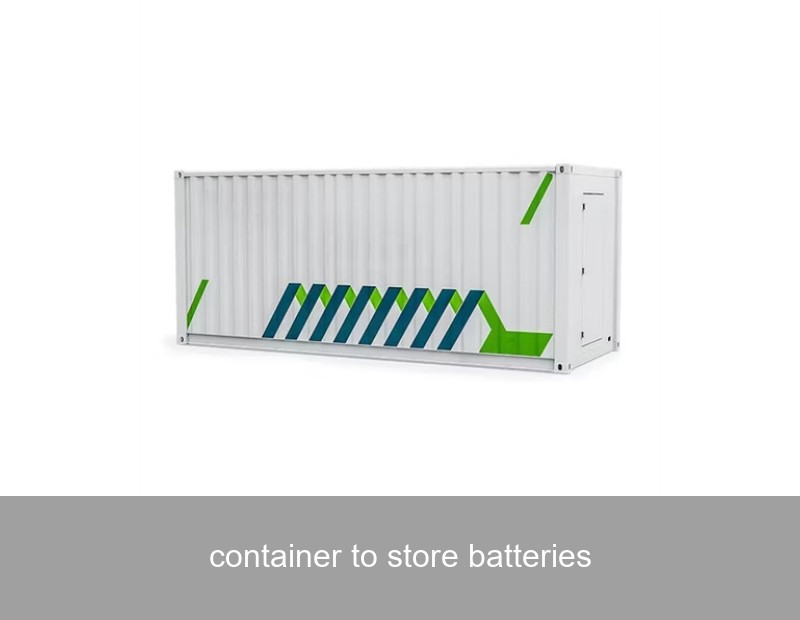
Imagine a standard 40-foot shipping container, the kind you see stacked on cargo ships and trucks worldwide. Now, imagine that same robust steel box not filled with goods, but packed with cutting-edge battery technology, silently managing the flow of clean energy. This is the modern container to store batteries, a transformative solution reshaping how we think about energy resilience and grid stability. For businesses, communities, and utilities facing volatile energy prices and the urgent need to integrate renewables, these modular powerhouses are becoming an indispensable asset. They offer a scalable, safe, and surprisingly straightforward answer to a complex question: how do we store energy at scale?
Table of Contents
The Phenomenon: Why We Need Massive Energy Storage
Let's face it, the energy landscape is changing faster than ever. Solar panels flood the grid with power at noon, only for demand to peak in the evening when the sun is down. Wind farms can generate surplus energy during storms, but that power needs to be captured. This intermittency of renewable sources creates a fundamental challenge—a mismatch between supply and demand. That's where large-scale energy storage comes in, acting as a buffer. The container to store batteries has emerged as the preferred vehicle for this solution. Why? Because it leverages a globally understood, standardized, and rugged form factor. It takes the incredible complexity of a battery energy storage system (BESS)—with its lithium-ion cells, thermal management, fire suppression, and power conversion systems—and packages it into a secure, plug-and-play unit that can be deployed anywhere in the world, quickly.

Image Source: Unsplash - A modular battery storage container enables rapid deployment of clean energy capacity.
The Data: Scale, Speed, and Economic Sense
The numbers behind this trend are compelling. A single 40-foot container to store batteries can typically house between 1 to 6 MWh of energy capacity. For perspective, 1 MWh can power around 30 average EU households for a full day. But the real magic isn't just in capacity; it's in responsiveness. These systems can react to grid signals in milliseconds, providing services like frequency regulation that keep the power network stable. According to the International Energy Agency (IEA), the global grid-scale battery storage market is set to grow exponentially, with installations reaching hundreds of gigawatts by 2030. The modular container approach is a key driver, slashing project timelines from years to months. The economic argument is clear: by storing cheap renewable energy and discharging it during expensive peak periods, or by selling grid services, these systems deliver a strong return on investment.
Key Advantages of a Containerized BESS:
- Scalability: Need more power? Simply add more containers. It's like building with energy LEGO bricks.
- Rapid Deployment: Factory-built and pre-tested, they reduce on-site construction time and risk by over 60%.
- Enhanced Safety: A self-contained, climate-controlled environment with integrated fire detection and suppression systems specifically designed for battery hazards.
- Site Flexibility: Can be placed on concrete pads, existing industrial land, or even temporarily deployed for events or emergency power.
The Case Study: Grid Stability in Central Europe
Let's look at a real-world example to see the impact. In 2023, a regional grid operator in Central Europe was facing increasing instability due to the retirement of traditional coal plants and a surge in variable wind energy. They needed a fast, reliable solution to provide primary frequency control—a critical service that balances supply and demand second-by-second.
The solution was a 12 MW / 24 MWh battery storage facility, comprised of four of Highjoule's H-Joule Cube MAX containerized systems. Our H-Joule Cube line represents the pinnacle of this approach: a fully integrated, all-in-one container to store batteries that includes our proprietary battery management system (BMS), HVAC, and safety features. Deployed in under five months, the facility now acts as a digital "shock absorber" for the grid.
| Metric | Detail | Outcome |
|---|---|---|
| System Size | 12 MW / 24 MWh (4 x Highjoule H-Joule Cube MAX) | Can respond to grid fluctuations in < 100 milliseconds. |
| Deployment Time | 5 months from contract to commissioning | Solved the grid urgency far faster than building new gas peaker plants. |
| Annual Grid Service | Provides primary frequency control reserve (FCR) | Stabilizes the regional grid, enabling more renewable integration. |
| CO2 Displacement | Equivalent to taking ~2,500 combustion-engine cars off the road annually. | Direct contribution to the region's decarbonization goals. |
This case highlights how a container to store batteries isn't just about energy arbitrage; it's about providing essential, high-value services that modern, clean grids require to function reliably. Highjoule's intelligent energy management software ensures each container doesn't just store energy, but thinks, optimizing its operation for maximum value and lifespan.
The Insight: More Than Just a Box
It's a common misconception to view these units as simple "boxes of batteries." The container is merely the robust shell. The true value lies in what's inside and how it's managed. At Highjoule, with nearly two decades of experience, we view each H-Joule Cube as an integrated energy asset. Key differentiators include:
- Cell-to-Grid Intelligence: Our BMS monitors every individual cell cluster for health and performance, while our plant-level controller interfaces seamlessly with grid operators or building management systems.
- Thermal Management Mastery: Battery lifespan and safety are paramount. Our systems maintain the optimal temperature range year-round, whether deployed in the heat of Southern Europe or the cold of Scandinavia.
- Future-Proof Design: As battery chemistry evolves, our container architecture is designed for serviceability and potential technology upgrades, protecting your long-term investment.

Image Source: Unsplash - Advanced control systems are the brain of any effective containerized BESS.
The Future of Modular Energy
Looking ahead, the role of the container to store batteries will only expand. We're moving towards "storage-as-a-service" models for commercial and industrial clients, where they can benefit from backup power and cost savings without upfront capital. For microgrids—whether on remote islands, universities, or industrial parks—these containers form the stable heart, balancing solar, wind, and generators. Research from institutions like The National Renewable Energy Laboratory (NREL) points to hybrid systems combining storage with other technologies as the next frontier.
For a business owner in California looking to avoid demand charges, a community in Texas seeking resilience after severe weather, or a utility in Germany integrating more wind power, the question is no longer *if* energy storage is needed, but *how* to implement it most effectively. The modular, scalable, and proven approach of a purpose-built container to store batteries offers a compelling answer.
 Inquiry
 Online Chat