


Unlocking Flexibility and Power: The Complete Guide to Container Battery Energy Storage
Imagine needing a massive amount of energy storage, and it arrives not as a complex construction site, but as a shipping container. This is the reality of container battery energy storage, a game-changing solution transforming how we manage electricity. For businesses, utilities, and communities, these modular power hubs offer an unprecedented blend of scalability, speed, and intelligence. As a global leader in advanced energy storage since 2005, Highjoule has been at the forefront of this revolution, engineering smart, containerized systems that deliver resilience and sustainability for commercial, industrial, and microgrid applications worldwide.
Table of Contents
What Exactly is Container Battery Energy Storage?
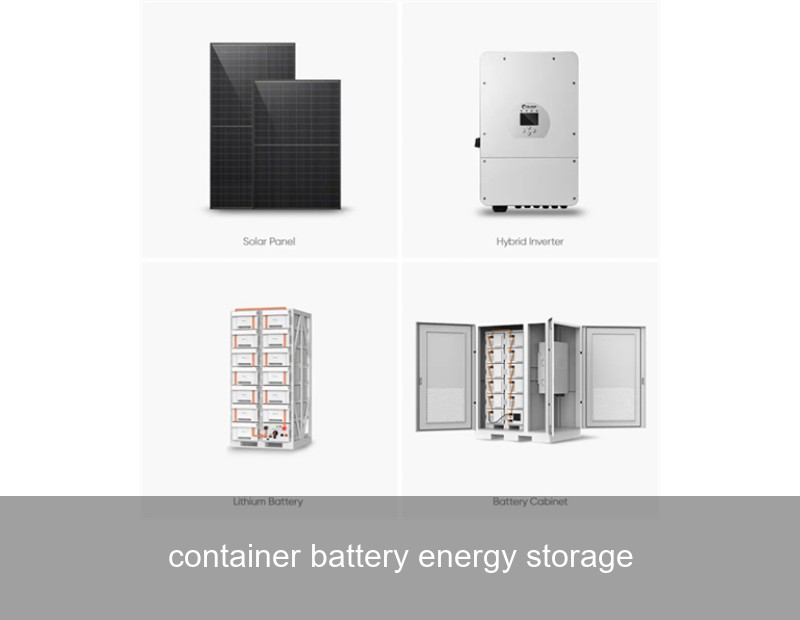
At its core, a container battery energy storage system (BESS) is a large-scale, plug-and-play battery system housed within a standardized shipping container. Think of it as a gigantic, self-contained power bank. But it's far more than just batteries in a box. These units integrate the battery racks, a sophisticated thermal management system, fire suppression, power conversion systems (PCS), and an energy management system (EMS) into a single, factory-tested package.
The beauty lies in its modularity. Need more capacity? You can simply add another container. This makes it an ideal solution for a wide range of power needs, from stabilizing the grid for a utility company to ensuring a factory can operate during peak tariff hours.

Image Source: Unsplash - Representative image of a containerized energy storage installation.
The Driving Forces: Why the Market is Booming in Europe and the US
You might be wondering, why has this become such a hot topic now? The convergence of several powerful trends is creating the perfect storm for adoption.
The Renewable Energy Integration Challenge
Solar and wind power are fantastic, but they're intermittent. The sun doesn't always shine, and the wind doesn't always blow. This creates a mismatch between supply and demand. Container BESS acts as a buffer, storing excess renewable energy when production is high and releasing it when it's needed most. This is critical for achieving high penetration of renewables on the grid.
Grid Modernization and Resilience
Ageing grid infrastructure and increasing frequency of extreme weather events have highlighted the need for a more resilient power supply. Containerized storage can provide backup power during outages and can be rapidly deployed to support grid stability, acting as a "shock absorber" for voltage and frequency fluctuations.
Economic Incentives and Policy Support
Policies like the Inflation Reduction Act (IRA) in the US and the European Green Deal are providing significant tax credits and subsidies for energy storage projects. Furthermore, the ability of storage to participate in energy arbitrage (buying cheap power, storing it, and selling it when prices are high) and provide grid services creates a compelling financial case. For a deeper look at global market forecasts, the International Energy Agency (IEA) provides authoritative analysis.
Key Benefits and Applications: Where Does It Shine?
So, what concrete advantages does a containerized approach offer? Let's break it down.
- Rapid Deployment & Scalability: Since they are pre-assembled and tested, these systems can be deployed in weeks, not years. Scaling is as simple as adding more containers.
- Cost-Effective: Factory integration reduces on-site construction costs and minimizes technical risks. The standardized container format also simplifies transportation and site planning.
- Enhanced Safety: Reputable providers like Highjoule design safety in from the start. Our container systems feature multi-layered protection including advanced battery management systems (BMS), inert gas fire suppression, and continuous gas detection, all housed in a robust, weatherproof enclosure.
- Intelligent Control: The built-in Energy Management System (EMS) is the brain of the operation. It can be programmed for various use cases automatically, maximizing financial return or ensuring operational continuity.
| Application Sector | Primary Use Case | Highjoule Solution Highlight |
|---|---|---|
| Commercial & Industrial (C&I) | Peak shaving, backup power, time-of-use optimization | Highjoule's HI-Cube Commercial series with AI-driven load forecasting to minimize demand charges. |
| Utility-Scale | Frequency regulation, renewable firming, grid deferral | The HI-Cube Grid platform, designed for high-cycling durability and seamless grid communication. |
| Microgrids & Off-Grid | Energy sovereignty, integration of diesel gensets, community power | Fully integrated Highjoule Microgrid Controllers that manage solar, storage, and generators as one cohesive system. |
Inside the Unit: A Closer Look at Technology and Safety
Not all container BESS are created equal. The choice of battery chemistry and the sophistication of the control systems are paramount.
Most modern systems, including Highjoule's, utilize Lithium Iron Phosphate (LFP) battery chemistry. Why LFP? It offers an excellent balance of safety (superior thermal and chemical stability), long cycle life (often over 6,000 cycles), and cost-effectiveness. It's a chemistry we trust for large-scale, daily cycling applications.
Beyond the cells, the Battery Management System (BMS) monitors the voltage, temperature, and state of charge of every single cell module, ensuring balance and preventing operation outside safe parameters. Coupled with the EMS, which makes strategic decisions based on market signals or on-site load, the system becomes a proactive asset, not just a reactive battery.

Image Source: Unsplash - Technician monitoring advanced battery systems.
A Real-World Case Study: Powering a European Industrial Park
Let's move from theory to practice. A great example comes from a manufacturing industrial park in Northern Germany. The park, housing several medium-sized factories, faced two major challenges: extremely high grid demand charges (costs based on their highest 15-minute power draw each month) and an ambitious corporate sustainability target to lower their carbon footprint.
The Problem: Spikes in machinery usage were causing short-term peaks in power demand, leading to punitive demand charges that significantly increased their annual electricity bill.
The Solution: The park operators partnered with Highjoule to deploy a 2.5 MWh / 1.25 MW HI-Cube Commercial container BESS. The system was integrated behind-the-meter at the park's main distribution point.
- The Highjoule EMS was programmed to "peak shave." It continuously monitors total park load and uses the stored energy to automatically inject power during those short, predictable demand spikes, effectively flattening the peak drawn from the grid.
- The system also stores excess solar energy from on-site rooftop PV installations in the afternoon for use during the evening operational hours.
- Within the first year of operation, the industrial park reported a 22% reduction in its overall electricity costs, primarily from slashing demand charges. Furthermore, it increased its on-site renewable consumption by 35%, making significant progress toward its carbon goals. The project had a calculated payback period of under 5 years, a highly attractive investment.
Future Trends and Your Next Steps
The evolution of container battery energy storage is accelerating. We are seeing trends toward higher energy density cells, allowing for more capacity in the same footprint, and the integration of artificial intelligence for even more predictive and optimized operation. Furthermore, the concept of "storage-as-a-service" is emerging, where a provider like Highjoule can own and operate the system on a client's site, removing upfront capital barriers.
The journey begins with a clear assessment of your energy profile. What are your peak demand times? Do you have on-site generation? What are your reliability concerns and sustainability goals? Answering these questions is the first step toward understanding if a containerized solution is right for you.
Is your business or community ready to explore how a turnkey container battery energy storage system could transform your energy costs, resilience, and green credentials? What's the single biggest energy challenge you're facing that you'd like to solve?
 Inquiry
 Online Chat