


Complete Portable Solar Power System: Your Guide to Off-Grid Energy Freedom
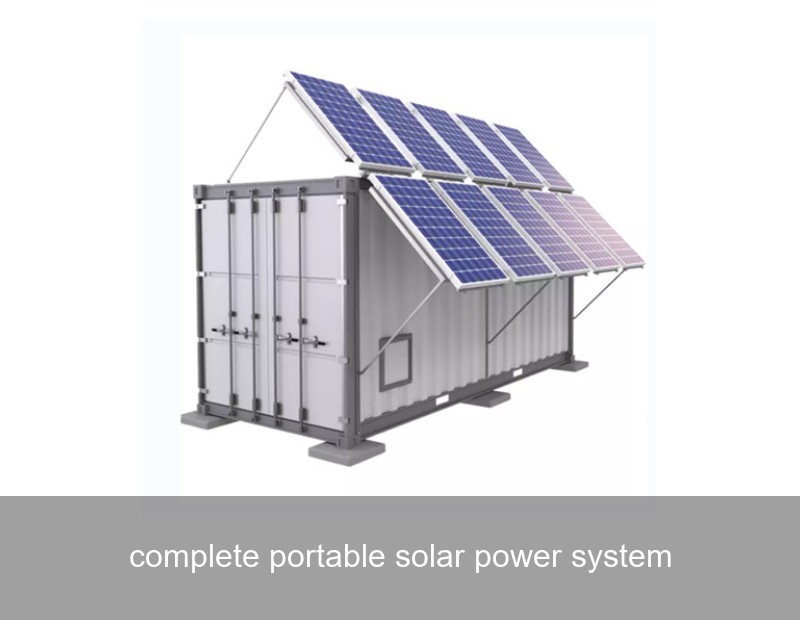
Imagine having the power to run your essential devices—lights, a mini-fridge, tools, or even a small medical device—anywhere, without relying on the grid or noisy, fume-spewing generators. This isn't a futuristic dream; it's the reality made possible by a complete portable solar power system. For adventurers, remote workers, emergency responders, and even homeowners seeking backup power, these integrated kits represent a quiet revolution in energy independence. But what exactly makes a system "complete," and how do you choose the right one for your needs? As a global leader in advanced energy storage since 2005, Highjoule is here to demystify portable solar power and show you how smart technology can turn sunlight into reliable, sustainable power wherever life takes you.
Table of Contents
- What is a Complete Portable Solar Power System?
- Key Components: More Than Just a Panel
- Why Go Portable? Key Benefits Beyond Convenience
- Real-World Power: A Case Study from California
- Choosing Your System: A Practical Guide
- Highjoule's Role: Engineering Reliability into Portability
- The Future of Portable Solar Power
What is a Complete Portable Solar Power System?
Unlike simply buying a single solar panel, a complete portable solar power system is an integrated, all-in-one solution designed to capture, store, manage, and deliver usable electricity. Think of it as a miniature, mobile power plant. The core idea is synergy: each component is specifically chosen to work seamlessly with the others, ensuring safety, efficiency, and ease of use. Whether for a weekend camping trip, a remote construction site in Texas, or as a critical backup during power outages in Europe, these systems provide a self-contained energy source. The key differentiator from piecemeal setups is the built-in intelligence—modern systems manage charging cycles and power output to protect your devices and maximize the lifespan of the system itself.

Image: A typical complete portable solar setup in use. Credit: Unsplash
Key Components: More Than Just a Panel
Let's break down the essential building blocks of any effective system. Missing one of these can lead to frustration or even damage to your equipment.
- Portable Solar Panels: These are the energy harvesters. Modern portable panels use flexible or semi-flexible monocrystalline silicon cells for a balance of efficiency and durability. They fold or roll for transport and often include built-in kickstands.
- Portable Power Station (The Heart): This is the core of the complete portable solar power system. It houses the battery (typically Lithium Iron Phosphate or LiFePO4 for safety and longevity), the charge controller, and the inverter. It's the unit that provides the AC outlets, DC ports, and USB outlets you plug into.
- Charge Controller (Integrated): This crucial, often overlooked component regulates the voltage and current coming from the solar panels to the battery. It prevents overcharging, which is critical for battery health and safety. In quality systems like those from Highjoule, this is a sophisticated Maximum Power Point Tracking (MPPT) controller, which can be up to 30% more efficient than older PWM types.
- Cables & Connectors: Robust, weather-resistant cables with secure connectors (like MC4) are vital for efficient energy transfer and safe operation.
| System Size (Wh) | Solar Input (W) | Sample Devices It Can Run | Ideal For |
|---|---|---|---|
| 300 - 500 Wh | 100 - 200W | Phones, laptops, LED lights, drones | Weekend camping, tailgating |
| 1000 - 2000 Wh | 200 - 400W | Mini-fridge, CPAP machine, power tools, TV | Van life, emergency home backup, remote work |
| 2000+ Wh | 400W+ | Small appliances, sustained tool use, medical equipment | Off-grid cabins, professional field teams, major outages |
Why Go Portable? Key Benefits Beyond Convenience
The appeal is obvious for outdoor enthusiasts, but the benefits run much deeper. First, there's resilience. With extreme weather events causing more frequent and prolonged power outages—the IEA notes grid upgrades are crucial for resilience—having a silent, emission-free backup power source is becoming a home essential. Second, cost savings over time. While there's an upfront investment, you eliminate fuel costs for generators and reduce reliance on grid electricity. Third, and perhaps most importantly, is the sustainability factor. You're directly reducing your carbon footprint by harnessing clean energy. It's a tangible step towards energy independence, a value deeply held in markets from North America to Europe.
Real-World Power: A Case Study from California
Let's look at a concrete example. In 2023, a community-led emergency response team in Sonoma County, California, equipped their mobile command unit with a complete portable solar power system. Their challenge was to power communication radios, LED lighting, two laptops, and a small medical fridge for vaccine storage during planned de-energization events (PSPS) and wildfire support operations.
- System Deployed: A 2kWh Lithium Iron Phosphate power station paired with four 400-watt foldable solar panels (1.6kW total array).
- Results: During a 3-day PSPS event, the system maintained 24/7 operation of all critical devices. The solar array, deployed for 5-6 hours daily, fully recharged the power station, eliminating any need for a diesel generator. The team reported a fuel cost saving of approximately $150 per event and, crucially, maintained silent, fume-free operation near living quarters.
- The Takeaway: This case highlights how portability doesn't mean low power. It demonstrates reliable, sustained off-grid operation for critical applications, proving that clean energy solutions are ready for professional and emergency use.
Choosing Your System: A Practical Guide
So, how do you select the right one? Start by auditing your power needs. List the devices you need to run, their wattage, and for how many hours. Add up the total watt-hours (device wattage x hours of use). Then, add a 20-30% buffer. This is your target capacity. Next, consider recharge speed. A system that can be fully recharged from solar in 4-6 hours is far more practical than one needing 10+ hours. Look for systems with high-efficiency MPPT controllers and compatible solar input wattage. Don't forget durability: weather-resistant panels and a power station with a robust battery management system (BMS) are non-negotiable for reliable, long-term use.
Highjoule's Role: Engineering Reliability into Portability
At Highjoule, our expertise in large-scale commercial and residential battery energy storage systems (BESS) directly informs our approach to portable power. We understand that the core principles—safety, cycle life, and intelligent management—are just as critical in a small system as in a grid-scale installation. Our Highjoule Nomad Pro Series embodies this philosophy. These complete portable solar power systems integrate our proprietary LiFePO4 battery technology, known for its exceptional thermal stability and 3,000+ cycle life. The integrated AIO (All-In-One) MPPT controller optimizes solar harvest even in sub-optimal light conditions, a common challenge in real-world portable use. For us, portability isn't about making compromises; it's about condensing Highjoule's nearly two decades of grid-edge intelligence into a package you can take anywhere.

Image: The core unit of a modern portable power station. Credit: Unsplash
The Future of Portable Solar Power
The technology is advancing rapidly. We're seeing trends towards even higher-density batteries, like nascent solid-state technologies promising greater safety and capacity. Integration is also key; future systems may feature built-in satellite messengers or mesh network nodes for true off-grid connectivity. Furthermore, the concept of modularity and microgrids is trickling down. Imagine linking multiple portable power stations together to create a temporary microgrid for a community event or disaster recovery site. The line between portable power and permanent, resilient infrastructure is beginning to blur.
As you consider your own path to energy independence, ask yourself: What would you power if your next adventure—or your next blackout—was lit entirely by the sun?
 Inquiry
 Online Chat