


Understanding Commercial Solar System Cost: A Smart Investment for Your Business
When business leaders consider going solar, the first question is almost always: "What is the commercial solar system cost?" It's a natural starting point. However, focusing solely on the upfront price tag can be misleading. The true story of commercial solar is about total cost of ownership, long-term value, and strategic energy independence. In an era of volatile energy prices and increasing sustainability goals, a commercial solar installation isn't just an expense; it's a pivotal capital investment in your company's financial and operational resilience. Let's break down the real factors behind the cost and value.
Table of Contents
- The Real Breakdown of Commercial Solar System Costs
- Key Factors Influencing Your Final Price
- The Hidden Game-Changer: Adding Battery Energy Storage
- Case Study: A European Logistics Hub's Journey
- The Highjoule Approach: Maximizing ROI on Your Solar Investment
- Is Your Business Ready to Re-evaluate Its Energy Costs?
The Real Breakdown of Commercial Solar System Costs
So, what are you actually paying for? A commercial solar photovoltaic (PV) system is a sophisticated piece of energy infrastructure. The hardware—solar panels, inverters, racking, and wiring—typically constitutes about 60-70% of the total cost. The remaining 30-40% covers "soft costs": engineering design, permitting, interconnection fees, and professional installation labor. In the U.S., average costs can range from $2.50 to $3.50 per watt for a commercial-scale system, translating to a $250,000 to $1 million+ investment depending on size. In Europe, prices vary by country but follow a similar structure.
But here's the critical shift in perspective: instead of just looking at the installation cost, savvy businesses calculate the Levelized Cost of Energy (LCOE). This metric accounts for the total lifetime cost of the system divided by the total energy it will produce. With solar technology efficiency improving and hardware costs falling, solar LCOE has become highly competitive with, and often beats, traditional grid electricity in many regions, especially when future utility rate hikes are factored in.
Beyond Panels: The Soft Cost Landscape
Navigating soft costs is where an experienced partner becomes invaluable. This includes:
- Site Assessment & Engineering: Is your roof strong enough? What's the optimal panel layout?
- Permitting & Interconnection: Navigating local building codes and utility requirements can be complex.
- Financing & Incentives: Leveraging tax credits (like the U.S. Investment Tax Credit), rebates, and accelerated depreciation can reduce net cost by 30-50%.
Key Factors Influencing Your Final Price
Every business and every building is unique. Your final commercial solar system cost is shaped by a combination of factors:
| Factor | Impact on Cost | Impact on Long-Term Value |
|---|---|---|
| System Size (kW/mW) | Larger systems have higher total cost but lower cost per watt. | Greater energy production, higher savings, larger carbon reduction. |
| Roof Type & Condition | Complex roofs or those requiring reinforcement increase installation costs. | A proper installation ensures system longevity and protects asset. |
| Local Utility Rates & Net Metering | Higher electricity prices improve payback period, regardless of install cost. | Favorable net metering policies enhance financial returns. |
| Technology Choice | High-efficiency panels or advanced inverters may have a premium. | Can produce more power in limited space and offer better monitoring/control. |
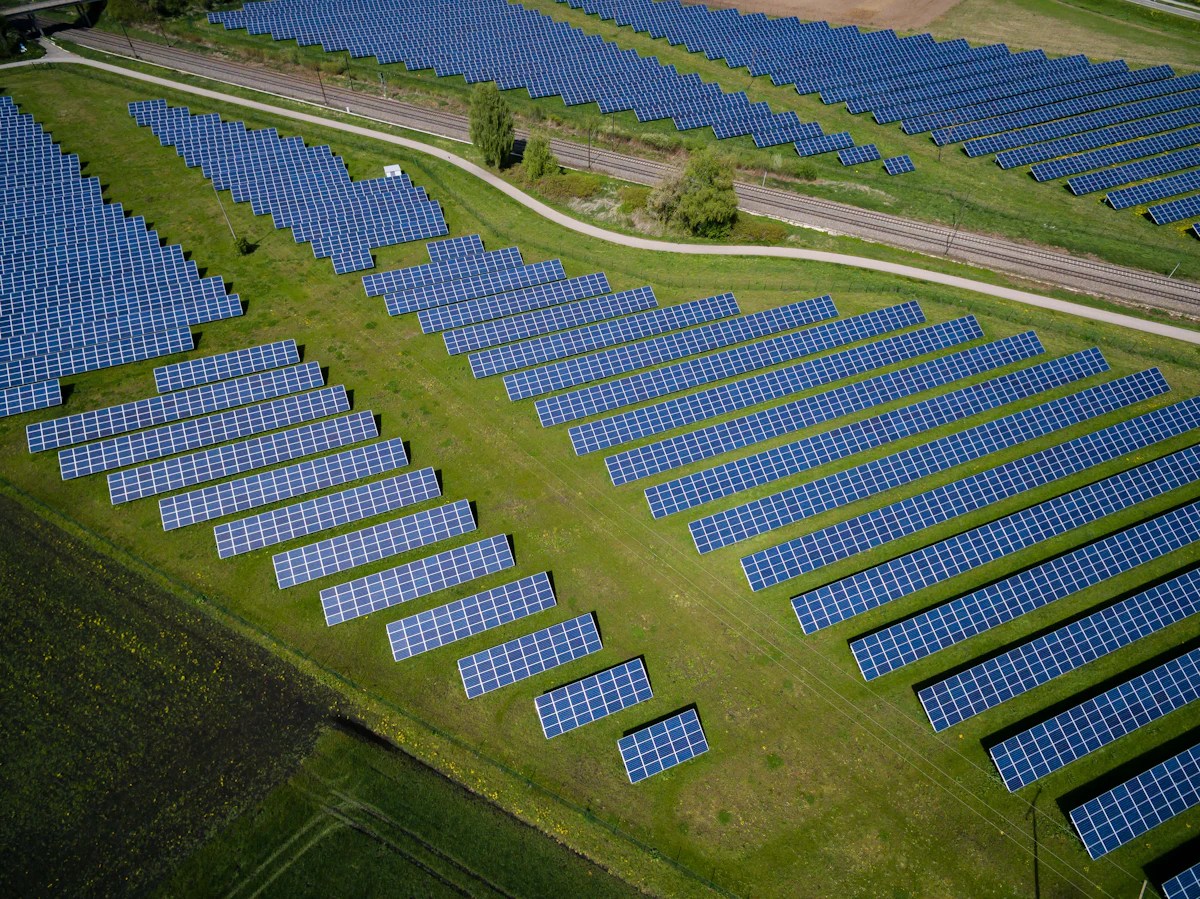
Image: A professional site assessment is crucial for accurate costing and optimal system design. Source: Unsplash
The Hidden Game-Changer: Adding Battery Energy Storage
Discussing solar cost without considering storage is like buying a car and only planning to use first gear. A Battery Energy Storage System (BESS) integrated with your solar array transforms the investment logic. Yes, it adds to the initial capital outlay, but it dramatically increases the value and control you gain.
- Maximizes Self-Consumption: Store excess solar energy generated during the day and use it at night, increasing your solar usage from ~30-40% to 70% or more.
- Demand Charge Reduction: For commercial users, demand charges can be 30-70% of the electricity bill. A BESS can discharge during short peak periods to "shave" these costly peaks, leading to massive savings.
- Backup Power: Provides critical resilience during grid outages, keeping operations running.
When evaluating commercial solar system cost, the combined "solar-plus-storage" solution often delivers a superior return on investment and faster payback than solar alone, by unlocking multiple revenue streams and cost-saving mechanisms.
Case Study: A European Logistics Hub's Journey
Let's look at real data. A major logistics company operating a 50,000 sqm warehouse in Northern Germany faced rising energy costs and pressure from its corporate sustainability framework. Their goal: reduce grid dependence and operational carbon footprint.
Initial Challenge: A quoted €850,000 for a 750 kWp rooftop solar system. While the 25-year savings were projected to be substantial, the management was concerned about the upfront cost and the fact that a significant portion of solar energy would be exported to the grid at low feed-in tariffs during weekends.
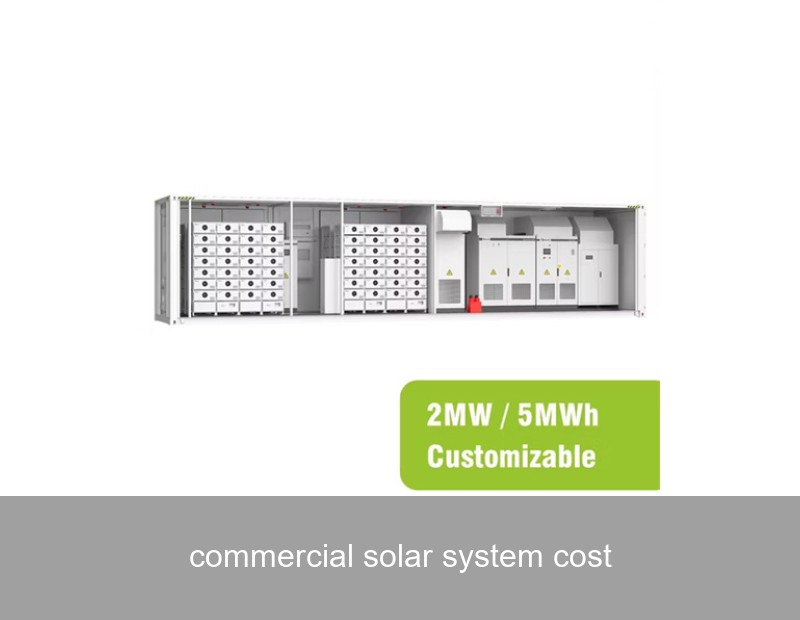
Integrated Solution: They partnered with Highjoule to redesign the project. We proposed a slightly smaller 680 kWp solar array paired with a 500 kWh Highjoule H2.IntelliBESS. The total system cost increased to €1.1 million.
- Grid Consumption Reduction: 92% during peak hours, 78% overall.
- Demand Charge Savings: €42,000 annually.
- Increased Self-Consumption: From an estimated 35% to 89% of solar generation used on-site.
- Payback Period: The enhanced savings from demand management reduced the projected payback period for the combined system to under 7 years, compared to 9 years for the solar-only option.
This case illustrates how a holistic view of cost and value, enabled by smart storage, creates a more robust and financially attractive outcome. You can explore more on the economics of storage from the U.S. Department of Energy.
The Highjoule Approach: Maximizing ROI on Your Solar Investment
At Highjoule, we believe the conversation should start with your business's energy needs and financial goals, not just a generic price per watt. Since 2005, we've evolved from a component provider to a full-scale solutions partner for commercial, industrial, and microgrid applications.
Our process is designed to optimize the true value of your commercial solar system cost:
- Deep Energy Analysis: We analyze your historical utility bills, load profile, and site specifics to model the optimal system size and storage capacity.
- Technology-Agnostic Design: We select the best-in-class solar PV and our proprietary, containerized H2.IntelliBESS or scalable H2.StackBESS for storage, all managed by our intelligent Energy Management System (EMS).
- Financial Modeling & Incentive Navigation: Our team provides clear ROI projections, factoring in all available tax credits, rebates, and potential revenue from grid services (where applicable).
- Lifecycle Support: From installation to ongoing monitoring and maintenance, we ensure your system performs at peak efficiency for decades.

Image: A Highjoule containerized BESS provides scalable storage for commercial solar systems. Source: Unsplash
Our systems are engineered for the harsh conditions of both European and North American markets, ensuring reliability and safety. By integrating storage and smart controls, we help you transform a solar array from a simple energy saver into a strategic asset that actively manages your energy costs. For independent data on solar performance, the National Renewable Energy Laboratory (NREL) is an excellent resource.
Is Your Business Ready to Re-evaluate Its Energy Costs?
The landscape of commercial energy is shifting from a predictable operating expense to a dynamic, manageable asset class. The initial commercial solar system cost is just the entry point into a long-term strategy for price stability, sustainability leadership, and operational resilience.
What would a 25-year fixed electricity rate, significantly below market prices, do for your business's financial planning? How much value would there be in knowing your core operations are protected from grid instability? The technology to achieve this is here and economically viable today.
We invite you to start with a different question: not "What does a solar system cost?" but "What is the optimal energy solution for my business's financial and operational future?" What is the single biggest energy cost challenge you'd like to solve in the next fiscal year?
 Inquiry
 Online Chat