


Finding the Right Solar Cell Supplier: A Guide to Quality, Reliability, and System Performance
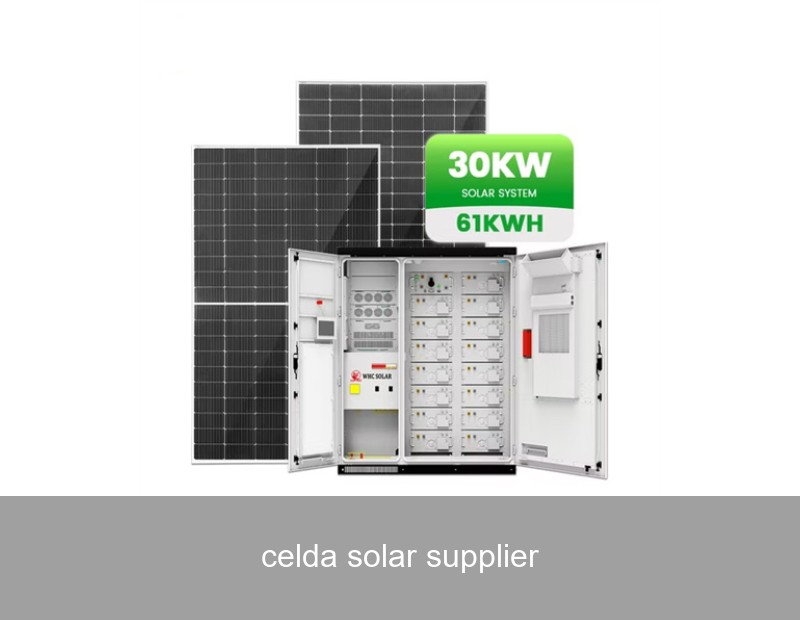
So, you're planning a solar project. Whether it's for your home, business, or a larger community initiative, one of the most critical decisions you'll make is choosing your solar cell supplier. This choice goes far beyond just price per watt. The quality, efficiency, and long-term reliability of the photovoltaic cells directly determine your system's energy yield, return on investment, and ultimately, your contribution to a sustainable future. In this guide, we'll navigate the key considerations and highlight how partnering with a technology-integrated provider like Highjoule can transform your solar investment from a simple array into a resilient, intelligent energy asset.
The Core Issue: More Than Just a Panel on the Roof
Many project developers and homeowners start their journey focused on the solar panel brand. However, the true heart of a panel is the solar cell itself. Think of it this way: if the panel is the engine, the cells are the precision cylinders inside. A solar cell supplier provides the fundamental technology that converts sunlight into electricity. Variations in cell technology—like monocrystalline PERC, TOPCon, or heterojunction (HJT)—lead to significant differences in initial efficiency, performance in low-light or high-temperature conditions, and degradation rates over 25+ years.
The common pitfall is sourcing cells (or panels) as a commodity based on a spec sheet, without considering how they interact with other system components. An ultra-efficient cell paired with a mediocre inverter or no storage solution might still lead to wasted energy and grid dependency.
The Data Reality: Efficiency, Degradation, and Lifetime Value
Let's look at the numbers. According to the National Renewable Energy Laboratory (NREL), the average efficiency of commercial silicon solar cells has steadily climbed, with lab records for specific technologies now exceeding 26%. But real-world performance is what matters.
| Cell Technology | Typical Module Efficiency | Annual Degradation Rate | Key Advantage |
|---|---|---|---|
| Monocrystalline PERC | 21-22% | ~0.5% | Cost-effective, proven reliability |
| TOPCon | 22.5-23.5% | ~0.4% | Higher efficiency, better temperature coefficient |
| Heterojunction (HJT) | 23-24%+ | ~0.25% | Highest efficiency, lowest degradation, superior performance in heat |
This data reveals a crucial insight: a lower degradation rate can mean significantly more energy produced over the system's lifetime. A system with 0.25% annual degradation will retain about 94% of its output after 25 years, while one at 0.5% degrades to about 88%. That 6% difference represents a substantial amount of clean electricity and revenue lost. Therefore, your choice of solar cell supplier and their technology commitment has a direct, quantifiable impact on your project's financial model.
Case Study: A German Industrial Park's Strategic Shift
Consider the real-world example of a mid-sized industrial park in Bavaria, Germany. In 2020, they expanded their rooftop solar array, initially opting for standard, tier-1 panels based on lowest upfront cost. While functional, the system's performance on their high-energy-demand afternoons and its inability to capture excess midday generation for later use became a pain point. They were essentially exporting valuable energy at lower feed-in tariffs and drawing expensive power from the grid in the evening.
In 2023, for their second phase expansion, they shifted strategy. They partnered with Highjoule not just as a solar cell supplier, but as a system architect. Highjoule recommended and supplied high-efficiency HJT-based panels for their superior space-efficiency and lower thermal losses, coupled with Highjoule's integrated H-Stack Commercial Battery Energy Storage System (BESS).
- Result: The new 500 kWp solar + 750 kWh storage system increased on-site consumption of solar power from 35% to over 80%.
- Data Point: By leveraging the battery for peak shaving and time-of-use arbitrage, the park reduced its annual energy costs by an additional €42,000 beyond solar savings alone.
- Key Insight: The project leader noted, "Choosing a partner who understood energy flows, not just panel specs, was transformative. The cells are high-quality, but the real value was created by intelligently storing and dispatching that energy."

Image: A modern industrial solar installation. Source: Unsplash
Thinking Beyond Cells: The System Integration Imperative
The German case study underscores a fundamental truth: solar cells don't operate in a vacuum. Their output must be managed, converted, stored, and optimized. This is where the role of a solar cell supplier evolves into that of an energy solutions provider. Key integration points include:
- Inverter Compatibility: Ensuring the voltage-current characteristics of the solar array are perfectly matched to the inverter's maximum power point tracking (MPPT) range for optimal harvest.
- Storage Synergy: Pairing with a battery system that can handle high charge/discharge rates and has the cycle life to match the 25+ year solar asset. This is Highjoule's core expertise.
- Energy Management (EMS): The "brain" that decides when to store, use, or export energy based on weather forecasts, electricity prices, and consumption patterns.
The Highjoule Approach: From Solar Cell Supplier to Energy Solutions Partner
Since 2005, Highjoule has built its reputation not on being just another component vendor, but on delivering intelligent, integrated power solutions. While we work with and source premium cell technologies for specific projects, our primary value lies in engineering the complete system.
For our commercial and industrial clients, this means providing a seamless package: high-performance solar generation (where we act as a systems integrator and can advise on or supply panels with top-tier cells), coupled with our flagship H-Stack BESS and the Highjoule Apex Energy Management Platform. This platform uses AI-driven forecasting to maximize self-consumption and grid services revenue. For residential customers, our Home Energy Hub offers a similar, streamlined experience—integrating solar, storage, and smart home energy control into one user-friendly interface.
This holistic approach ensures that every kilowatt-hour generated by your carefully selected solar cells is used in the most economically and operationally efficient way possible.

Image: A residential home with integrated solar and storage. Source: Unsplash
Choosing Your Partner: A Practical Checklist
When evaluating a solar cell supplier or a broader solutions provider, ask these strategic questions:
- Technology Roadmap: Do they offer or partner with suppliers of advanced cell technologies (TOPCon, HJT) for better long-term performance?
- Warranty & Degradation: What are the linear power output and product warranties? Do they back the promised degradation rates?
- System Integration Capability: Can they provide or seamlessly interface with storage, inverters, and EMS? Do they have proven case studies?
- Software & Intelligence: Is there a platform to monitor, control, and optimize the entire energy asset? (Like Highjoule's Apex Platform).
- Local Support & Compliance: For the EU and US markets, do they understand local grid codes, incentives (like the IRA in the US), and have local technical support?
The energy landscape is shifting from simple generation to intelligent management. Your choice of partner should reflect that. It's about finding a team that can not only supply a high-quality component but also design a system where the sum is greater than its parts. As you contemplate your next project, consider this: Is your goal merely to install solar cells, or is it to achieve true energy independence and resilience?
What specific energy challenge—be it peak demand charges, backup power needs, or sustainability targets—could an intelligently integrated solar and storage system solve for you today?
 Inquiry
 Online Chat