


Cara Membuat Panel Surya: A DIY Guide and the Bigger Picture for Home Energy
Have you ever looked at your rising electricity bill, then up at the sun, and wondered, "Could I just build my own solar panels?" The idea of cara membuat panel surya (how to make solar panels) is a captivating one, promising energy independence, cost savings, and the deep satisfaction of a hands-on project. For the curious homeowner in Europe or the US, the DIY route is an intriguing educational journey. However, creating safe, efficient, and durable power for your home involves more than just assembling parts. This guide will walk you through the process while illuminating the broader ecosystem of a reliable home energy system, where companies like Highjoule, a global leader in advanced energy storage since 2005, play a transformative role.
Understanding the Basics: More Than Just Cells
Before you source materials, it's crucial to understand what a solar panel truly is. A photovoltaic (PV) module is a sealed, weatherproof unit designed to withstand decades of hail, wind, and UV exposure. The core components are:
- Solar Cells: Typically monocrystalline or polycrystalline silicon cells that convert sunlight into direct current (DC) electricity.
- Encapsulation: EVA (ethylene-vinyl acetate) sheets that laminate the cells, protecting them from moisture and physical damage.
- Backsheet: A polymer layer providing electrical insulation and rear protection.
- Frame: Usually anodized aluminum, providing structural rigidity for mounting.
- Junction Box: A critical component on the back where the cell strings are connected and bypass diodes are installed to prevent hot spots.
The DIY challenge isn't just soldering cells together; it's achieving the professional-grade encapsulation that ensures longevity. A study by the National Renewable Energy Laboratory (NREL) highlights that module durability is a primary factor in the 25+ year lifespan of commercial panels.
A Step-by-Step Guide to Building Your Panel
If you're proceeding with a small-scale, educational project, here is a simplified workflow. Warning: This involves working with fragile materials and electrical components. Wear appropriate safety gear.
1. Sourcing and Preparing Solar Cells
You can often purchase tabbed solar cells online. They are extremely fragile. Solder tabbing wire to the busbars on the front and back of each cell to create strings. This requires a low-temperature soldering iron and a steady hand to avoid micro-cracks that drastically reduce efficiency.
2. Assembling the Panel Layout
Lay out your cell strings on a non-conductive surface like a piece of plywood, spaced slightly apart. Typically, you connect 36 cells in series for a 12V nominal panel. Carefully solder the strings together to create a series circuit, ensuring positive leads connect to negative leads.

Image: Solar cells are delicate and require careful handling. (Image Source: Wikimedia Commons)
3. The Lamination Process
This is the most DIY-critical step. Professionally, this is done with vacuum laminators. For a home project, you can use a clear, UV-resistant plexiglass front and a sealed backing board, creating an airtight seal with silicone around all edges. Any moisture ingress will cause failure.
4. Adding the Junction Box and Frame
Attach a purchased junction box to the back, sealing it thoroughly. Connect your panel's positive and negative outputs to the terminals inside the box. Finally, construct or attach a simple aluminum frame for mounting strength.
The Critical Missing Piece: Energy Storage
Here’s the pivotal insight: a homemade or even a commercial solar panel is only one part of the equation. Solar panels only produce power when the sun shines. What happens at night or on cloudy days? This is where energy storage systems (ESS) become non-negotiable for true energy resilience.
Your DIY panel produces DC electricity. To power your home, you need:
- An Inverter: To convert DC to usable AC electricity.
- A Battery System: To store excess energy for use anytime.
- A Battery Management System (BMS): To ensure safety, longevity, and efficiency of the batteries.
- System Controller: The "brain" that manages energy flow between panels, batteries, and the grid.
This is the domain of professional providers. For instance, Highjoule's integrated home storage solutions, like the Highjoule HOMESERIES, are designed to seamlessly integrate with solar arrays. They feature high-cyclelife lithium iron phosphate (LiFePO4) batteries, intelligent hybrid inverters, and sophisticated energy management software that learns your consumption patterns to maximize self-consumption. While cara membuat panel surya focuses on generation, pairing it with robust storage is what unlocks 24/7 renewable power.
Real-World Case Study: A German DIY Project
Let's look at real data from a documented DIY enthusiast in Bavaria, Germany. In 2021, Markus built a 400W panel array (4 x 100W homemade panels) for his garden workshop. His material cost was approximately €320. While functional, his system faced challenges:
| Metric | DIY Panel Array | Commercial Equivalent |
|---|---|---|
| Peak Output | ~340W (15% lower than rated) | 400W (certified) |
| Cost per Watt | €0.80 | €0.85 - €1.00 (pre-install) |
| Estimated Lifespan | 5-8 years (due to encapsulation issues) | 25+ years (with performance warranty) |
| Grid-Tie & Storage | Not possible; standalone only | Fully integrable |
To solve the intermittency issue, Markus later installed a small, pre-assembled 2.4 kWh Highjoule BALANCER residential battery system. This allowed him to run his workshop lights and tools in the evening, increasing his solar self-consumption from 30% to over 70%. The project highlighted that while DIY generation has educational value, professional storage is key to real utility. Data from the European Commission's energy department underscores that coupling solar with storage increases household self-consumption by 50-90%.
The Professional Alternative: Why Expertise Matters
For most homeowners seeking reliability, safety, and financial return, professionally installed systems are the clear choice. A certified solar installer doesn't just provide panels; they deliver a complete energy system.
This is where Highjoule's expertise shines. Beyond individual batteries, Highjoule provides end-to-end smart energy solutions for residential, commercial, and microgrid applications. Their systems are built with:
- Grid-Forming Inverter Technology: Allowing homes to create a stable "microgrid" during wider power outages, a feature beyond DIY capability.
- Scalable Architecture: Start with a 5 kWh system and expand to 20 kWh+ as your needs grow, something very difficult to achieve safely with a DIY battery setup.
- Remote Monitoring & AI Optimization: Their platform provides real-time insights and predictive energy management, ensuring you get the most value from every kilowatt-hour, whether from your DIY panels or a commercial array.

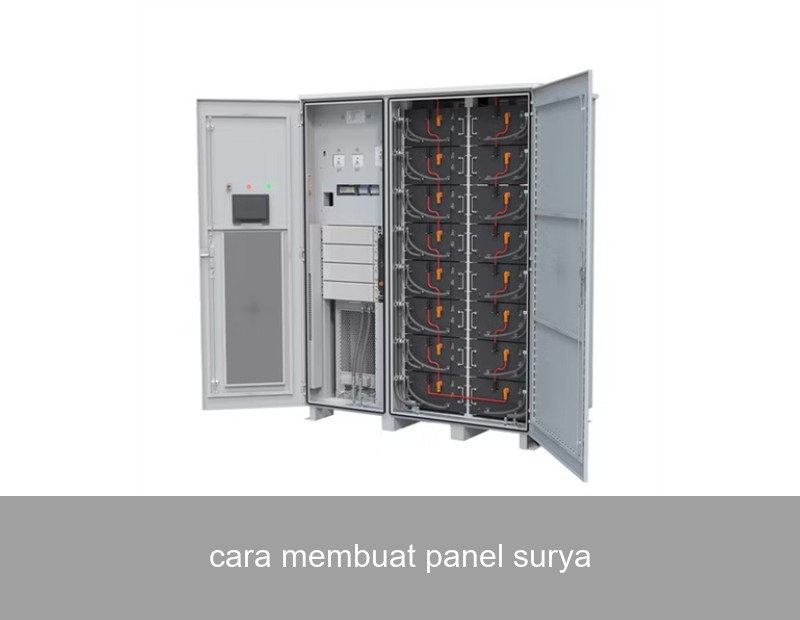
Image: Professional energy storage systems offer safety, scalability, and smart management. (Image Source: Unsplash)
Your Energy Future: What's the Right Path for You?
So, is learning cara membuat panel surya worth it? Absolutely, if your goal is hands-on learning and you have a small, off-grid application. The process teaches you the fundamental principles of photovoltaics in an unforgettable way.
But if your goal is to significantly reduce your carbon footprint, achieve energy independence, and ensure unwavering power for your home, a professional solution that combines high-efficiency generation with intelligent storage is the proven path. The journey to energy independence isn't a single step of making a panel; it's about designing a resilient, intelligent system that works seamlessly every single day.
Given the complexities of system integration, safety codes, and long-term performance, would you consider a hybrid approach—using a DIY project to understand the basics, then partnering with an expert like Highjoule to design and install the complete storage and management system that brings your renewable energy vision to life?
 Inquiry
 Online Chat