


The Critical Role of BMS for High Voltage Battery Systems in Modern Energy Storage
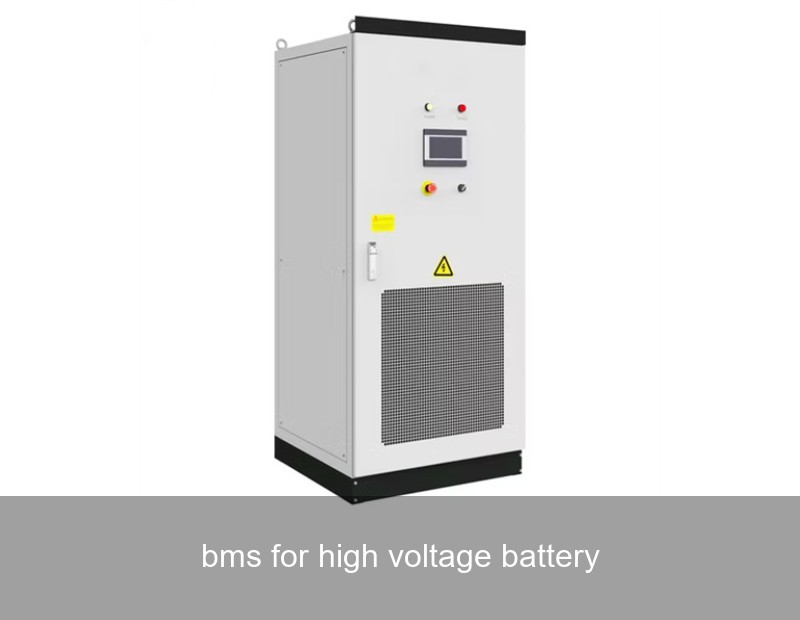
Imagine the heart of a high-performance electric vehicle or a massive grid-scale battery storage facility. At its core lies a complex assembly of hundreds, even thousands, of individual battery cells. Now, imagine managing that intricate system—ensuring its safety, maximizing its lifespan, and unlocking its full potential. That monumental task falls to a single, sophisticated component: the Battery Management System, or BMS for high voltage battery systems. As the world pivots decisively towards renewable energy and electrification, understanding this unsung hero is key to building a reliable and sustainable power future. For businesses and communities, a robust high-voltage BMS isn't just an accessory; it's the central nervous system that separates a safe, profitable investment from a potential liability.
Table of Contents
- What is a High Voltage BMS and Why is it Different?
- Core Functions: More Than Just Monitoring
- Case Study: Grid Stability with a 50 MWh System in Germany
- The Highjoule Approach: Intelligent BMS for Demanding Applications
- Future Trends: The Evolving Intelligence of BMS
What is a High Voltage BMS and Why is it Different?
A Battery Management System (BMS) is the electronic brain that manages a rechargeable battery pack. Its primary job is to protect the battery from operating outside its safe area, monitor its state, calculate secondary data, report that data, and control its environment. But when we talk about BMS for high voltage battery applications—typically systems operating above 400V, common in industrial energy storage, commercial backup power, and large microgrids—the stakes and complexities multiply.
Why? Higher voltage systems string many more cells in series. This architecture is excellent for powering heavy machinery or feeding into the grid efficiently, but it introduces a critical challenge: cell imbalance. Even tiny variations in manufacturing, temperature, or aging can cause individual cell voltages to drift apart over time. A standard BMS might struggle; a high-voltage BMS is specifically engineered for this scale. It performs precise cell balancing, actively shuttling energy from higher-voltage cells to lower-voltage ones during charging and discharging. This meticulous care is what ensures the entire pack's longevity and safety, preventing the weakest cell from dictating the performance of the entire multi-million-dollar asset.

Image: High-voltage battery systems for grid support require exceptionally robust BMS technology. Credit: Unsplash.
Core Functions: More Than Just Monitoring
The anatomy of a high-voltage BMS is built around several non-negotiable pillars. Think of it as a multi-talented guardian for your energy investment.
- Safety-Centric Monitoring: Continuously tracks every cell's voltage, temperature, and the overall pack current. It's the first line of defense against thermal runaway—a dangerous chain reaction of overheating.
- Advanced State Estimation: It doesn't just read raw data. Using complex algorithms, it calculates the State of Charge (SOC - "the fuel gauge"), State of Health (SOH - "the battery's lifespan indicator"), and State of Power (SOP - "available power right now").
- Active Thermal Management: It integrates with cooling and heating systems to maintain the optimal temperature window, crucial for both performance and cycle life.
- Communication & Integration: A top-tier BMS doesn't operate in a silo. It communicates seamlessly with inverters, energy management systems (EMS), and grid controllers via protocols like CAN bus or Ethernet, making the storage system a responsive grid citizen.
This is where expertise matters. At Highjoule, our HVS Series battery systems are engineered with a proprietary, multi-layer BMS architecture. It goes beyond basic protection to deliver predictive analytics and seamless integration, ensuring our commercial and industrial storage solutions operate at peak efficiency for decades.
The Data Behind the Risks: Why Cutting Corners is Costly
The consequences of an inadequate BMS are not theoretical; they are quantifiable and severe. According to a DNV GL energy storage report, battery failures are often traced back to issues in monitoring and management systems, not the cells themselves. Let's break down the risks:
| Risk Factor | With Basic BMS | With Advanced High-Voltage BMS |
|---|---|---|
| Cell Imbalance | Accelerated degradation, up to 30% faster capacity loss | Optimal balance, extending cycle life by 20-30% |
| Safety Incidents | Higher risk of thermal events, fire | Multi-stage protection with predictive alarms |
| Operational Downtime | Reactive maintenance, unexpected outages | Predictive maintenance, >99% system availability |
| Financial Return | Reduced ROI, uncertain payback period | Maximized throughput and asset lifespan |
The phenomenon is clear: as battery systems scale to meet megawatt-hour demands, the management system must scale in intelligence and robustness. The data shows that investing in a sophisticated BMS for high voltage battery arrays is fundamentally an investment in the asset's financial viability and operational safety.
Case Study: Grid Stability with a 50 MWh System in Germany
Let's look at a real-world application. In 2022, a large industrial park in North Rhine-Westphalia, Germany, faced dual challenges: volatile energy prices and grid connection constraints. Their solution was a 50 MWh battery energy storage system (BESS) designed to provide peak shaving, frequency regulation, and backup power.
The core technical requirement was a BMS capable of managing over 10,000 individual lithium-ion cells in a high-voltage configuration, with millisecond response times for grid frequency services. The system integrator chose a platform known for its advanced BMS, similar in philosophy to Highjoule's GridSynergy product line for utility-scale applications.
- Performance: The BMS maintained cell voltage uniformity within 15mV, far below the 50mV threshold that triggers accelerated aging.
- Revenue: By enabling reliable participation in the European grid frequency market, the storage asset generated over €1.2 million in ancillary service revenue annually.
- Reliability: The system achieved 99.7% availability, with the BMS's predictive alerts preventing two potential forced outages.
This case underscores that a high-voltage BMS is the enabling technology that transforms a static battery bank into a dynamic, revenue-generating grid asset.

Image: Large-scale solar-plus-storage projects depend on reliable high-voltage BMS. Credit: Unsplash.
The Highjoule Approach: Intelligent BMS for Demanding Applications
Founded in 2005, Highjoule has built its reputation as a global provider by focusing on this exact intersection of hardware robustness and software intelligence. Our philosophy is that the BMS should be an active performance optimizer, not just a passive monitor.
For our commercial and industrial clients across Europe and North America, this translates into tangible benefits. Our integrated BMS solution within products like the HVS Series and MicroGrid Core offers:
- Adaptive Learning Algorithms: The system learns the unique aging patterns of your specific battery cells, refining its state estimations for more accurate forecasting and dispatch.
- Cybersecurity by Design: In an era of smart grids, we implement secure communication protocols to protect your energy asset from digital threats.
- Open API Framework: We believe in interoperability. Our systems are designed to integrate with your existing building management or SCADA systems, providing a unified view of your energy ecosystem.
This holistic approach ensures that when you choose a Highjoule system, you're not just buying batteries; you're investing in a fully managed, intelligent energy asset designed for the long haul.
Future Trends: The Evolving Intelligence of BMS
The future of BMS for high voltage battery systems is leaning heavily into artificial intelligence and digital twins. The next generation will move from describing the battery's state to predicting its future behavior under various stress scenarios. Research from institutions like NREL points towards BMS that can estimate the impact of a specific discharge command on the overall battery lifespan, allowing operators to make cost-optimized decisions in real-time.
Furthermore, as second-life applications for EV batteries grow, the BMS will play a crucial role in rapidly assessing the health and viability of used packs for less demanding stationary storage duties—a key sustainability driver that companies like Highjoule are actively exploring.
Given the critical and evolving role of the battery management system, what specific operational challenge—whether it's peak demand charges, renewable integration, or revenue stacking—is your organization looking to solve with a high-voltage energy storage solution today?
 Inquiry
 Online Chat