


Finding the Best Budget Hybrid Battery for Your Home Energy Independence
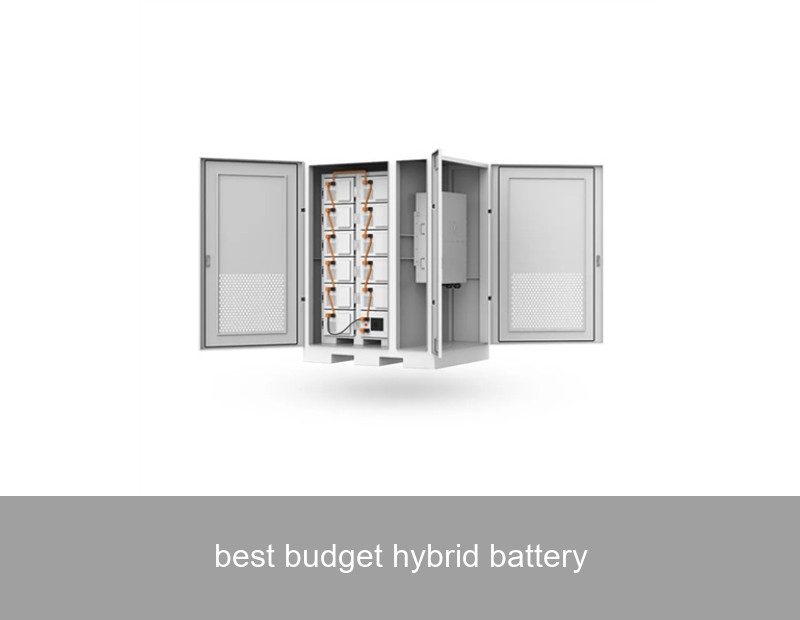
Let's be honest: when you hear "home battery storage," you might immediately think of hefty price tags and complex installations reserved for the tech-enthusiast or the wealthy. But what if we told you the landscape has dramatically shifted? Today, a growing number of homeowners in Europe and the U.S. are discovering the power of the best budget hybrid battery systems—solutions that don't sacrifice essential performance for affordability. This isn't about settling for less; it's about smart engineering that delivers core value. A hybrid system, which intelligently combines solar panels, a battery, and an inverter that can also manage grid power, is no longer a distant dream. It's becoming an accessible tool for energy resilience and cost savings. As a leader with nearly two decades of experience, Highjoule is at the forefront of making intelligent, sustainable power accessible, proving that a sensible budget and advanced energy management can indeed go hand-in-hand.
The Phenomenon: Why the Search for Affordable Hybrid Storage is Exploding
The drive towards budget-friendly hybrid storage isn't a random trend; it's a direct response to a perfect storm of global energy dynamics. First, electricity prices have been on a rollercoaster. In Europe, following the energy crisis, household electricity prices in the EU remained stubbornly high, averaging over €0.28 per kWh in the second half of 2023, with some nations far exceeding that (source: Eurostat). In the U.S., while prices vary by state, the national average has consistently climbed, with the EIA reporting a rise of over 4% in 2023 alone.
Secondly, the rapid growth of residential solar has created a new need. Homes with solar panels often produce excess energy in the middle of the day when families aren't home to use it. Without a battery, this clean power is sold back to the grid at a low rate, only to be bought back at night at a much higher price. This imbalance makes the financial case for solar less compelling. The solution? Store that midday sun for evening use. But for years, the cost of the battery was the prohibitive barrier. Now, with advancements in battery chemistry (primarily Lithium Iron Phosphate or LFP), scale manufacturing, and smarter power electronics, that barrier is crumbling.

Image Source: Unsplash. A modern home with solar panels, representing the growing trend of residential renewable energy.
Key Components of a Truly Cost-Effective Hybrid System
Understanding what makes a hybrid system both "budget" and "best" requires looking under the hood. It's not just about finding the cheapest battery box. A truly valuable system is built on three pillars:
- The Battery Cell Chemistry: The move to Lithium Iron Phosphate (LFP) has been a game-changer for budget-conscious quality. LFP batteries are inherently safer, have longer lifespans (often 6,000+ cycles), and are less sensitive to being kept at full charge compared to older NMC chemistries. Crucially, they use abundant materials, making them more affordable to produce. When evaluating a best budget hybrid battery, LFP is the non-negotiable foundation.
- The Hybrid Inverter: This is the brain of the operation. A quality hybrid inverter manages energy flow from solar panels, the battery, and the grid seamlessly. It decides when to charge, when to discharge, and when to pull from the grid to optimize for cost. Look for one with high efficiency (over 97%) and robust software. A cheap inverter with poor efficiency can waste more money in lost energy than it saves.
- System Intelligence & Software: Hardware is only half the story. The software that controls your system is what unlocks the savings. Can it be programmed to avoid drawing power during peak grid rate hours? Can it respond to real-time utility signals? This intelligence is what transforms a simple battery into a money-saving asset.
This is where Highjoule's philosophy shines. Our ResiCore 5 Hybrid System is engineered around this precise value equation. It integrates high-density LFP batteries with a highly efficient hybrid inverter and our proprietary Adaptive Load Manager software. This system isn't packed with unnecessary, costly features for the average home; instead, it delivers robust, reliable performance focused on the core functions that save you money: self-consumption of solar, peak shaving, and backup power during outages.
A Real-World Case Study: Savings in Action in Leipzig, Germany
Let's move from theory to hard numbers. Consider the Müller family in Leipzig, Germany. Facing electricity costs of €0.32/kWh and a relatively low solar feed-in tariff, they installed a 8 kWp solar array in 2022. While it reduced their daytime grid use, their evening and winter bills were still high. In early 2023, they added a best budget hybrid battery solution—a 10 kWh Highjoule ResiCore 5 system.
| Metric | Before Hybrid Battery (2022) | After Hybrid Battery (2023-24) | Change |
|---|---|---|---|
| Annual Grid Electricity Purchased | 4,200 kWh | 1,150 kWh | -73% |
| Solar Self-Consumption Rate | 35% | 92% | +57% |
| Estimated Annual Electricity Cost | €1,344 | €368 | Annual Savings: €976 |
Their system paid for itself in under 7 years, a timeframe accelerated by German subsidy programs (like the KfW loans). More importantly, they now have peace of mind during grid outages and have effectively locked in a low, predictable energy rate for the lifespan of their battery. This case exemplifies the core mission at Highjoule: delivering tangible, calculable returns through intelligently designed technology.
The Highjoule Approach: Smart Engineering for Maximum Value
At Highjoule, we believe "budget" should never mean "compromised." Our approach to creating accessible energy solutions is rooted in our 19 years of experience in commercial and industrial storage. We apply the same rigor to our residential lines.
- Vertical Integration: We design and engineer key components in-house, which allows us to control quality and cost without relying on a chain of third-party markups.
- Modular, Scalable Design: Our ResiCore systems start with a base unit. You're not forced to over-buy upfront. As your needs grow—perhaps you buy an electric vehicle—you can add more battery capacity seamlessly, protecting your initial investment.
- Focus on Total Cost of Ownership (TCO): We engineer for longevity and efficiency. A cheaper battery that degrades in 5 years is no bargain. Our LFP-based systems are designed for a long service life, ensuring the savings continue for years beyond the payback period.

Image Source: Unsplash. A technician installing a modern home battery, highlighting the clean and integrated design of contemporary systems.
Choosing Your System: A Practical Guide Beyond the Sticker Price
So, how do you navigate the market to find your ideal best budget hybrid battery? Don't just compare price per kWh of battery capacity. Ask these critical questions:
- What's included in the quote? Is it just the hardware, or does it include professional installation, commissioning, and system monitoring software? A transparent quote from a certified installer is crucial.
- What is the warranted degradation? Reputable manufacturers will guarantee that the battery will retain a certain percentage of its original capacity (e.g., 70%) after a certain number of years or cycles (e.g., 10 years).
- How does the software work? Can you set preferences (e.g., "always keep 20% backup for outages")? Is the interface user-friendly? Can it integrate with future smart home devices?
- Is the installer certified? The best hardware is only as good as its installation. Ensure your installer is certified by the manufacturer and has local experience with permitting and grid connection rules.
The Future of Home Energy is Hybrid, and It's Accessible
The trajectory is clear. With grid instability, climate pressures, and economic incentives like the U.S. Inflation Reduction Act tax credits (source: U.S. Department of Energy), the hybrid home energy system is transitioning from a luxury to a mainstream asset. The technology, led by safe LFP batteries and intelligent software, is mature. The value proposition, centered on locking in energy costs and increasing resilience, is stronger than ever.
This isn't just about saving a few euros or dollars on your next bill. It's about taking a meaningful step towards personal energy sovereignty. What would you do with the security of knowing your lights and fridge stay on during the next storm, or the financial certainty of capping your largest utility expense?
 Inquiry
 Online Chat