


Demystifying the BESS Manufacturing Process: From Cell to Complete System
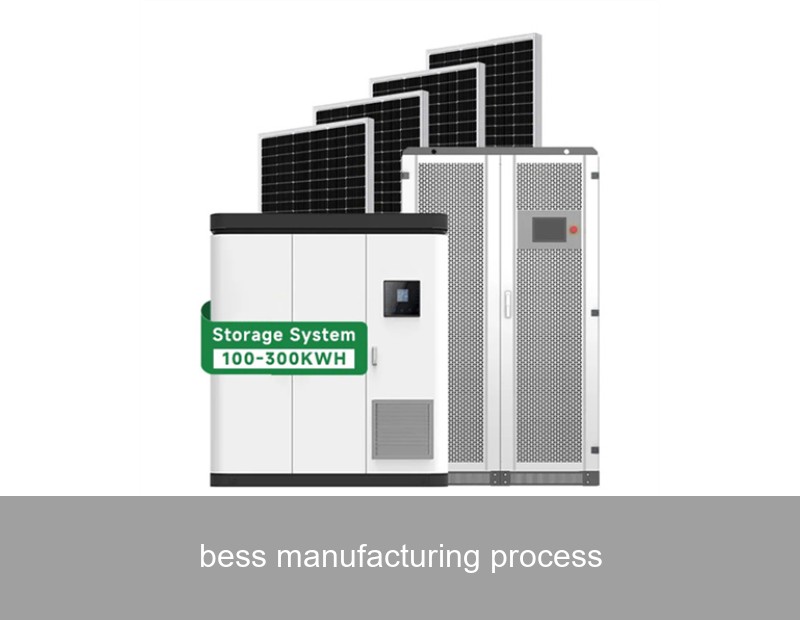
If you're considering a battery energy storage system (BESS) for your business, community, or home, you've likely heard terms like "cell chemistry," "module integration," and "system safety." But what truly goes on behind the scenes? The BESS manufacturing process is a sophisticated, multi-stage journey that directly impacts the performance, safety, and longevity of the system you install. Understanding this process isn't just technical trivia—it's key to making an informed investment in your energy future. At Highjoule, with nearly two decades of experience, we believe that transparency in how a BESS is built is the foundation of trust and reliability.
Table of Contents
- The Core Journey: A Step-by-Step Look at BESS Manufacturing
- Beyond the Battery: The Critical Role of Power Conversion and Control
- Where Reliability is Forged: The Unsung Hero of Quality Assurance
- From Factory to Field: A German Industrial Park Case Study
- Choosing Your Manufacturing Partner: What Really Matters
The Core Journey: A Step-by-Step Look at BESS Manufacturing
Think of BESS manufacturing as constructing a highly advanced, energy-dense building. It starts with the raw materials (bricks) and culminates in a fully operational, smart building (the complete system).
Stage 1: Cell Selection & Validation - Choosing the Right "Bricks"
The battery cell is the fundamental unit of energy storage. The BESS manufacturing process begins long before assembly, with rigorous cell selection. Not all lithium-ion cells are created equal. Manufacturers like Highjoule partner with top-tier cell producers, but we don't just take datasheets at face value. We subject cells to extensive in-house testing for capacity, cycle life, thermal stability, and internal resistance. This due diligence ensures the foundation of every system is solid. For instance, our Highjoule IntelliCell sourcing protocol involves stress-testing samples under simulated real-world conditions to predict decade-long performance.

Image: Cell testing is a critical first step in ensuring BESS longevity and safety. (Credit: Unsplash)
Stage 2: Module & Pack Assembly - Building "Walls" and "Floors"
Validated cells are then assembled into modules. This involves precise mechanical framing, electrical connections (busbars), and integration of temperature sensors. Multiple modules are then combined into a larger unit: the battery pack or rack. This stage is highly automated for consistency, but it's where system design philosophy shines. A key differentiator in Highjoule's BESS manufacturing process is our focus on serviceability and thermal management. Our modules are designed for easy replacement if needed, and our pack architecture promotes optimal air flow, which is crucial for preventing hotspots and extending cell life.
Stage 3: Battery Management System (BMS) Integration - Installing the "Brain"
This is where intelligence enters the hardware. The BMS is a dedicated microcontroller that constantly monitors every cell and module for voltage, temperature, and current. It's the guardian of safety and performance. In our manufacturing facilities, integrating the BMS isn't just a plug-and-play operation. It involves calibrating every sensor, loading sophisticated algorithms, and running simulations to ensure the BMS can accurately balance cells, predict state-of-charge, and execute safe shutdown procedures. The BMS in a Highjoule Sentinel Series commercial system, for example, operates with a multi-layered protection logic, acting as the first and most critical line of defense.
Beyond the Battery: The Critical Role of Power Conversion and Control
A stack of battery racks isn't a functional BESS. The BESS manufacturing process must seamlessly integrate two other core components:
- The Power Conversion System (PCS): Often an inverter/rectifier, this is the "translator" between the battery's DC power and the grid's or facility's AC power. Manufacturing involves pairing the correct PCS capacity with the battery bank and ensuring flawless communication protocols.
- The Energy Management System (EMS): This is the "command center." It's the software layer that decides when to charge, when to discharge, and at what power level, based on weather forecasts, energy prices, or consumption patterns. At Highjoule, we pre-load and configure our Highjoule Apex EMS during manufacturing, tailoring its base logic to the specific application profile of the system.
Where Reliability is Forged: The Unsung Hero of Quality Assurance
Perhaps the most under-discussed part of the BESS manufacturing process is Quality Assurance (QA). It's a continuous thread woven through every stage. A robust QA regime includes:
| QA Stage | Typical Tests | Purpose |
|---|---|---|
| Incoming Material | X-ray of cell welds, material data sheet verification | Verify supplier quality and material specs |
| In-Process (IPC) | Torque checks on electrical connections, Hi-Pot (dielectric) testing | Prevent assembly faults and ensure electrical safety |
| Final Assembly | Full functional test, grid simulation, thermal cycle test, burn-in | Simulate years of operation in a controlled environment to catch infant mortality failures |
According to a 2021 NREL report on BESS failures, a significant portion of field incidents can be traced back to manufacturing or integration flaws. This is why Highjoule invests heavily in a "test-first" philosophy. Every commercial system undergoes a mandatory 72-hour burn-in cycle at our facility before shipment, where it's subjected to dynamic charge/discharge profiles to ensure everything performs as an integrated whole.
From Factory to Field: A German Industrial Park Case Study
Let's ground this process in reality. A mid-sized manufacturing plant in Bavaria, Germany, faced volatile energy prices and sought to increase the consumption of its on-site solar PV. They needed a BESS that could reliably shift solar energy to evening hours and provide backup power for critical processes.
The challenge wasn't just supplying batteries, but delivering a system whose manufacturing process guaranteed precision and durability for a 24/7 industrial operation. Highjoule delivered a 500 kWh / 750 kWh Sentinel Series solution. Crucially, our manufacturing approach included:
- Application-Specific Design: The BMS thresholds and cooling system were calibrated for the plant's specific ambient temperature ranges.
- Pre-Configured EMS: The Apex EMS was pre-loaded with Germany's specific frequency regulations and a basic peak-shaving algorithm, reducing on-site commissioning time.
- Rigorous Pre-Shipment Testing: The complete system passed a simulated 7-day operational profile before leaving our factory.
The Result? Within the first year, the system achieved a 98.5% round-trip efficiency as measured onsite, and successfully navigated multiple grid voltage fluctuations without incident. The plant manager noted the seamless integration was directly attributable to the system arriving not as a collection of parts, but as a fully validated, "plug-and-play" energy asset. This case underscores that a meticulous BESS manufacturing process translates directly into lower lifetime costs and higher operational confidence.
Choosing Your Manufacturing Partner: What Really Matters
When evaluating BESS providers, looking beyond the spec sheet to their manufacturing philosophy is essential. Here are key questions to ask any potential supplier:
- Depth of Integration: Do you merely assemble purchased components, or do you have control over the core BMS/EMS software and system architecture? Highjoule, for example, designs and manufactures its own BMS and EMS software, giving us unparalleled control over system performance and safety logic.
- Transparency in Testing: Can you provide details of your QA and factory acceptance test (FAT) protocols? Reputable manufacturers will be proud to share these.
- Design for Service: How are your systems designed for maintenance and eventual end-of-life? Our modular design allows for individual module service without taking the entire system offline, a feature built into the manufacturing process from day one.
In an industry where long-term performance is paramount, the care taken during manufacturing is the strongest predictor of field success. It's the difference between a commodity product and a resilient energy asset. As the International Energy Agency highlights, robust storage is a cornerstone of the clean energy transition, and that robustness starts on the factory floor.
Given that the choices made during the BESS manufacturing process will impact your energy security and financial return for the next 15-20 years, what specific operational challenge would you like your storage system to solve first—and how can understanding its build process give you greater confidence in that solution?
 Inquiry
 Online Chat