


Battery Suppliers for Electric Vehicles: The Unsung Heroes of the EV Revolution
When you think of an electric vehicle (EV), what comes to mind first? Sleek design, instant torque, or perhaps zero tailpipe emissions? While these are all defining features, there's a silent powerhouse—quite literally—that makes everything else possible: the battery. The race to electrify our roads isn't just being won on the assembly line; it's being decided in the labs and factories of the world's leading battery suppliers for electric vehicles. These companies are not merely component providers; they are the fundamental architects of EV performance, range, and affordability.
More Than Just Cells: What Makes a True EV Battery Supplier?
It's a common misconception that an EV battery supplier simply manufactures lithium-ion cells. In reality, supplying batteries for the automotive industry is a vastly more complex undertaking. An EV battery pack is a sophisticated system, and the best suppliers are system thinkers. Let's break down the core competencies:
- Cell Chemistry & R&D: This is the foundation. Suppliers invest billions in developing chemistries like NMC (Nickel Manganese Cobalt), LFP (Lithium Iron Phosphate), and emerging solid-state technologies, each with trade-offs in energy density, cost, safety, and longevity.
- Module & Pack Engineering: Thousands of individual cells must be integrated into modules, which are then assembled into a structural pack. This requires mastery of thermal management, structural integrity, and space optimization.
- Battery Management System (BMS): The "brain" of the pack. A superior BMS precisely monitors and manages each cell's state of charge, health, and temperature, ensuring safety, maximizing lifespan, and optimizing performance.
- Manufacturing at Scale: Automotive-grade means consistent, reliable, and high-volume production. Building gigafactories that can deliver millions of cells with near-zero defect rates is a monumental challenge.
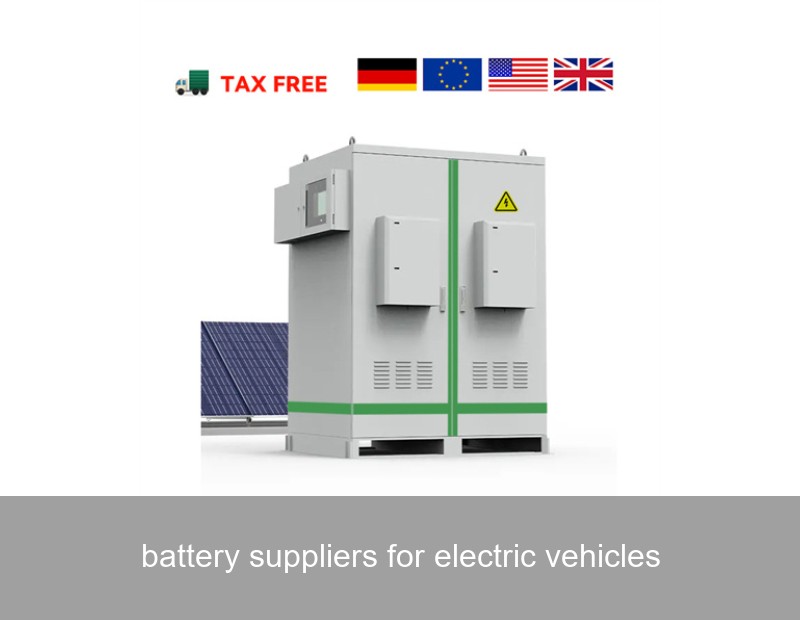
This holistic expertise is where companies with a deep background in large-scale energy storage shine. At Highjoule, our journey since 2005 in providing robust battery storage systems (BESS) for grid and industrial applications has given us a unique systems-level perspective. We understand the critical importance of longevity, safety, and intelligent management—principles we apply with rigor when collaborating on specialized EV and heavy transport projects.
The Critical Data: Why the Supply Chain Matters
According to analysis by BloombergNEF, the battery represents approximately 30-40% of the total cost of an electric vehicle. Furthermore, global demand for EV batteries is projected to soar from around 700 GWh in 2023 to over 2,700 GWh by 2030. This scale underscores a vital point: the success of the EV transition is inextricably linked to the capacity, innovation, and resilience of its battery suppliers.
The Innovation Imperative: Density, Speed, and Longevity
The market pushes suppliers to innovate on three key fronts simultaneously. Imagine an impossible triangle where you must improve all corners: energy density (more range per kg), charging speed (minutes instead of hours), and cycle life (a battery that outlives the car). Breakthroughs here are what allow EVs to go from niche to mainstream.
For instance, the industry's push towards cell-to-pack (CTP) designs, which eliminate intermediate module assemblies, is a direct innovation from suppliers to increase pack-level energy density by up to 10-15%. Similarly, advancements in lithium iron phosphate (LFP) chemistry, championed by several major battery suppliers for electric vehicles, have dramatically improved safety and reduced costs, making EVs accessible to a broader market without relying on scarce cobalt or nickel.

Image Source: Unsplash - Advanced, automated manufacturing is key for quality and scale in EV battery production.
Case Study: Powering a Fleet and Stabilizing the Grid in California
Let's look at a real-world example that bridges stationary storage and electric mobility. In 2022, a large logistics depot in Southern California faced a dual challenge: electrifying its fleet of 40 medium-duty delivery trucks and managing skyrocketing demand charges from the grid, especially during peak charging times.
They partnered with a system integrator utilizing Highjoule's containerized BESS solution. Here’s how it worked:
| Challenge | Solution | Data & Outcome |
|---|---|---|
| High grid demand during simultaneous EV charging | Install a 2 MWh Highjoule储能系统 (BESS) to act as a buffer | Peak grid load reduced by 65%; demand charges cut by an estimated $72,000 annually. |
| Need for reliable, fast charging without grid upgrades | BESS discharges to supplement power during charging sessions | Enabled all 40 trucks to charge within operational windows using existing grid connection. |
| Utilizing solar generation on-site | BESS stores excess solar energy for later use in charging or building load | Increased on-site renewable consumption by 40%, further reducing costs and carbon footprint. |
This case, documented in part by the National Renewable Energy Laboratory (NREL), highlights a crucial trend: the future of EV infrastructure isn't just about chargers; it's about integrated, smart energy systems. The battery suppliers for electric vehicles and for grid applications are converging, creating synergies that benefit the entire ecosystem.
Beyond the Vehicle: The Integrated Ecosystem
The role of advanced batteries extends far beyond the vehicle itself. As the California case shows, the true potential of electrification is unlocked when vehicle batteries interact with a dynamic energy grid. This involves:
- V2G (Vehicle-to-Grid): Where EVs can discharge back to the grid to provide stability and services.
- Second-Life Applications: Using EV batteries for stationary storage after their automotive life, a sustainability focus Highjoule actively explores.
- Renewable Integration: Large-scale battery storage, like Highjoule's commercial and utility solutions, is essential for managing the intermittency of solar and wind, which in turn provides cleaner electricity for the growing EV fleet.
This holistic view of the energy landscape is central to our approach. Whether it's a BESS for a factory, a microgrid for a remote community, or support for fleet electrification, the core principle is the same: intelligent storage is the linchpin for a sustainable, resilient, and electric future.

Image Source: Unsplash - The future of EV charging is integrated with renewable generation and on-site storage.
Choosing Your Partner in the EV Revolution
For automakers, fleet operators, or infrastructure developers, selecting the right battery technology partner is a strategic decision with decade-long implications. It's not just about the price per kilowatt-hour today. It's about:
- Proven Track Record: Does the supplier have a history of delivering safe, reliable products at scale?
- Technological Roadmap: Are they investing in the next generation of chemistries and system designs?
- System Integration Expertise: Can they provide more than just cells—intelligent BMS, thermal solutions, and software?
- Sustainability Commitment: What is their strategy for raw material sourcing, recycling, and circular economy?
The landscape of battery suppliers for electric vehicles is dynamic and competitive. From established giants to innovative challengers, the competition is driving progress at an unprecedented pace. As this sector evolves, the collaboration between automotive engineering and deep energy storage wisdom—the kind honed over nearly two decades at Highjoule—will become increasingly valuable.
As you contemplate the electric future, whether for a single vehicle or an entire fleet, what energy challenges are you looking to solve beyond simply finding a place to plug in?
 Inquiry
 Online Chat