


Is the Battery Industry for Sale? A Deep Dive into the Booming Energy Storage Market
You've likely seen the headlines: "Battery Gigafactory Breaks Ground," "Record Investments in Energy Storage," "Major Automaker Secures Lithium Supply." It feels like every week brings news of massive deals and strategic shifts. This begs a question many investors, business leaders, and energy enthusiasts are asking: Is the entire battery industry for sale? While not literally on the auction block, the sector is undergoing a historic transformation, marked by unprecedented consolidation, strategic partnerships, and global investment. This isn't just about electric vehicles; it's about the foundational shift towards a renewable-powered grid. Let's unpack what's driving this frenzy and what it means for the future of energy.
Table of Contents
- The Phenomenon: A Market in Hyperdrive
- The Data: Billions Flowing into Battery Tech
- Case Study: Grid Stability in Texas – More Than Just Megawatts
- Key Insights: What's Really Being "Sold"?
- Beyond the Transaction: Building Resilient Energy Systems
- The Future: Integration and Intelligence
The Phenomenon: A Market in Hyperdrive
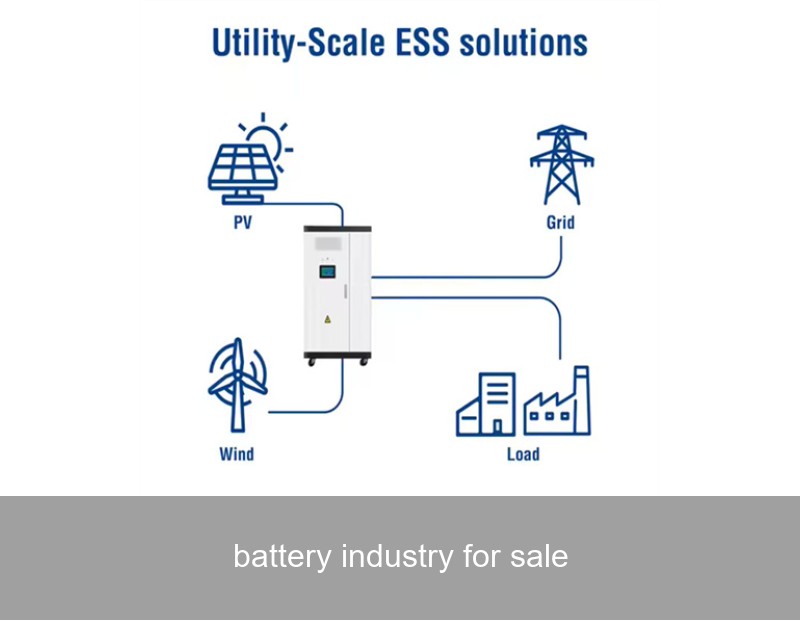
The perception of a battery industry for sale stems from a perfect storm of demand. The push for electrification (cars, heating, industry) collides with the rapid deployment of intermittent renewables like solar and wind. Grids designed for steady, centralized power are straining under this new, variable model. The result? A critical need for energy storage to balance supply and demand, stabilize frequency, and provide backup power. This has turned battery systems, particularly Battery Energy Storage Systems (BESS), from a niche technology into a critical grid asset. Companies and entire supply chains are now highly sought-after commodities, attracting buyers from traditional energy firms, private equity, and tech giants.

Image Source: Unsplash - Visual representation of a utility-scale BESS installation.
The Data: Billions Flowing into Battery Tech
The numbers tell a compelling story. According to BloombergNEF, global energy storage installations are set to multiply exponentially, reaching a cumulative 1,300 gigawatt-hours (GWh) by 2030, a staggering increase from about 90 GWh at the end of 2023. This growth is fueled by investments exceeding $100 billion in the battery supply chain in 2023 alone. In the U.S., the Inflation Reduction Act (IRA) has unleashed a tidal wave of manufacturing investments, while in Europe, the REPowerEU plan aggressively targets energy independence, with storage as a cornerstone. This isn't mere speculation; it's capital voting with its wallet on a future built on stored electrons.
Key Market Drivers
- Policy & Regulation: Tax credits (IRA in the US), capacity market mechanisms (UK, Germany), and clean energy mandates.
- Economics: Falling lithium-ion battery pack prices (down over 90% since 2010) and rising value of grid services.
- Energy Security: The need for resilient, decentralized power in the face of climate events and geopolitical instability.
- Corporate Decarbonization: Businesses seeking to power operations with 24/7 renewable energy, requiring storage.
Case Study: Grid Stability in Texas – More Than Just Megawatts
Let's move from global data to a local reality. The ERCOT grid in Texas is a prime example of a market where the value of batteries is being proven daily. Following winter storm Uri, the focus on grid resilience intensified. Here, batteries aren't just storing energy for later; they are providing critical "ancillary services" like frequency regulation, which keeps the grid's heartbeat steady.
A specific project in West Texas, a 100 MW / 200 MWh BESS, provides a clear case. In 2023, this single facility earned significant revenue not just by selling bulk energy, but primarily by responding to grid frequency drops within milliseconds. Data from the ERCOT website shows that frequency response resources like batteries are being called upon thousands of times per year. This project highlights that the "product" being sold in today's battery industry is often grid reliability itself, a service that is becoming priceless. Companies like Highjoule are at the forefront of deploying such intelligent systems, ensuring they respond optimally to both market signals and physical grid needs.
Key Insights: What's Really Being "Sold"?
So, when we talk about the battery industry for sale, we need to think beyond factory acquisitions. The real transaction is about securing:
- Technological IP: Patents on cell chemistry, battery management software, and system integration.
- Supply Chain Security: Access to raw materials (lithium, cobalt, nickel) and manufacturing capacity.
- Operational Expertise: The ability to safely deploy, manage, and monetize complex storage assets over a 15-20 year lifespan.
- Market Access: Project pipelines, development rights, and relationships with utilities/off-takers.
This is where a partner like Highjoule becomes crucial. Founded in 2005, we've moved beyond just providing battery containers. We offer turnkey, intelligent energy storage solutions for commercial, industrial, and microgrid applications. Our Highjoule HORIZON BESS integrates best-in-class battery cells with our proprietary Adaptive Grid OS, a software platform that maximizes financial returns by stacking revenue streams—from energy arbitrage and peak shaving to frequency regulation. We're not just selling a battery; we're selling a proven, optimized, and bankable energy asset.
Beyond the Transaction: Building Resilient Energy Systems
For a business owner or community considering energy storage, the M&A headlines can feel distant. Your concerns are practical: reducing demand charges, ensuring operational continuity during outages, meeting sustainability goals, and achieving a strong ROI. The good news is that the maturation of the broader battery industry directly benefits you. It means more reliable technology, competitive pricing, and sophisticated partners.
Highjoule's approach focuses on these end-user needs. For a manufacturing plant in Germany, our system might be configured for peak shaving and self-consumption of onsite solar. For a hospital in California, the priority is seamless backup power and participation in a demand response program. Our services encompass everything from initial feasibility studies and financial modeling to long-term performance monitoring and maintenance. We ensure the asset performs as promised, turning the complex promise of storage into a simple, dependable pillar of your energy strategy.

Image Source: Unsplash - Commercial and industrial sites are prime candidates for solar-plus-storage solutions.
The Future: Integration and Intelligence
The next phase of the battery industry won't be defined by who owns the factories, but by who masters the integration. The winning solutions will seamlessly combine solar PV, wind, battery storage, and advanced software into a single, dispatchable resource. Virtual Power Plants (VPPs)—networks of decentralized storage and generation units—will become commonplace, selling aggregated services to the grid.
Highjoule is already pioneering this future. Our systems are designed for easy integration with existing infrastructure and are VPP-ready. We see the battery not as an isolated product, but as the intelligent core of a modern, sustainable, and resilient energy ecosystem. As the industry consolidates, the value will increasingly shift to those who can provide this holistic, software-driven value.
Comparing Storage Approaches
| Feature | Basic Battery Unit | Integrated Highjoule HORIZON Solution |
|---|---|---|
| Core Offering | Energy storage hardware | Hardware + Adaptive Grid OS Software + Ongoing Optimization |
| Revenue Streams | Primary (e.g., arbitrage) | Multiple stacked (arbitrage, frequency, capacity, peak shaving) |
| Grid Integration | Passive | Active, grid-supportive |
| Long-term Value | Degrades with hardware | Enhances via software updates and adaptive algorithms |
The narrative of a battery industry for sale reflects a moment of immense opportunity and strategic positioning. The ultimate goal isn't just ownership of companies, but control over the architecture of our future energy networks. For those looking to participate in this transformation—whether as an investor, a business leader, or a community planner—the key is to look for partners with deep expertise, proven technology, and a vision that extends beyond the battery cell. As you evaluate your role in the energy transition, what specific challenge—be it cost, reliability, or sustainability—could a smart, integrated storage solution solve for you today?
 Inquiry
 Online Chat