


Battery Energy Storage Facility: The Unsung Hero of a Clean Energy Grid
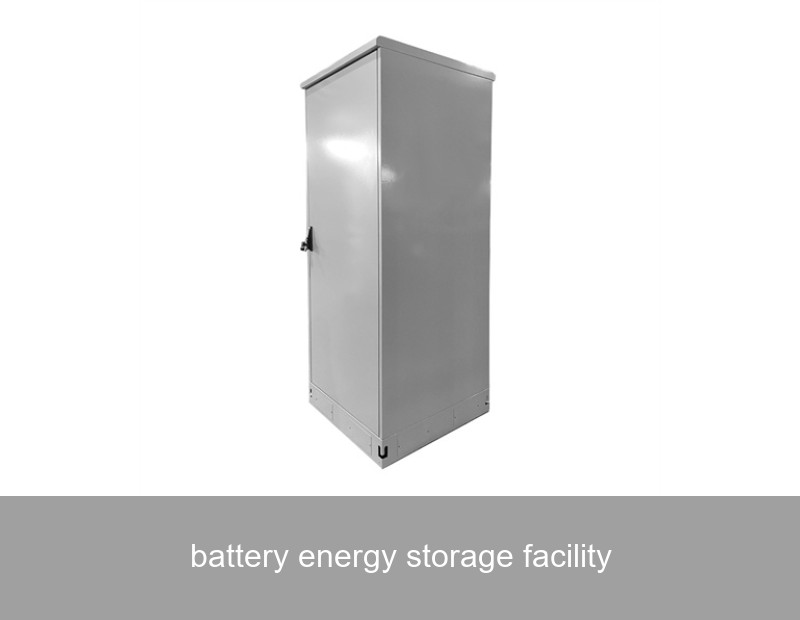
Imagine a world where solar power lights homes even after sunset, and wind energy heats buildings on calm days. This isn't a distant dream; it's the reality being built today, powered by a critical technology: the battery energy storage facility. For grid operators, businesses, and communities, these facilities are more than just rows of batteries—they are the intelligent linchpin that unlocks the full potential of renewables, ensures grid stability, and paves the way for a truly sustainable energy future. In this article, we'll explore how these systems work, why they are indispensable, and how companies like Highjoule are engineering solutions to meet this global demand.
Table of Contents
- The Challenge: Intermittency Meets Rising Demand
- What is a Battery Energy Storage System (BESS) Facility?
- Key Benefits of a Modern Battery Energy Storage Facility
- A Real-World Case Study: California's Shift to Resilience
- Highjoule's Role: Engineering Intelligent Storage Solutions
- The Future Outlook for Energy Storage
The Challenge: Intermittency Meets Rising Demand
The global push for decarbonization has led to an unprecedented surge in renewable energy generation. Solar farms and wind turbines are now common sights. However, they present a fundamental challenge: their output is variable. The sun doesn't always shine, and the wind doesn't always blow. This intermittency creates a mismatch between when energy is produced and when it is needed most. Traditionally, this gap was filled by fast-ramping fossil fuel "peaker" plants, but this undermines the environmental goals of the energy transition.
Simultaneously, electrification of transport and heating is driving electricity demand higher and creating new load patterns. The result? Grid operators face a daily tightrope walk of balancing supply and demand, with the risk of blackouts or the need for costly infrastructure upgrades. This is the complex problem that a large-scale battery energy storage facility is uniquely designed to solve.
What is a Battery Energy Storage System (BESS) Facility?
At its core, a battery energy storage facility is a sophisticated, grid-connected installation that stores electrical energy for later use. Think of it as a massive, rechargeable "energy bank" for the grid. But it's far more than just batteries in a warehouse.
A complete facility integrates several critical components:
- Battery Racks & Modules: The core storage units, typically using lithium-ion chemistry for its high energy density and efficiency.
- Power Conversion System (PCS): The "translator" that converts alternating current (AC) from the grid to direct current (DC) for storage, and back again when discharging.
- Energy Management System (EMS): The intelligent "brain" that controls when to charge and discharge based on grid signals, market prices, or operational needs.
- Thermal Management & Safety Systems: Essential subsystems that maintain optimal operating temperatures and ensure fail-safe operation.

These components are often housed in modular, weatherproof containers, allowing for scalable and rapid deployment. The true magic, however, lies in the software and intelligence that governs these physical assets.
Key Benefits of a Modern Battery Energy Storage Facility
So, what tangible value does this technology deliver? The benefits cascade across the entire energy ecosystem.
| Stakeholder | Primary Benefits |
|---|---|
| Grid Operators | Frequency regulation, peak shaving, deferred grid upgrades, enhanced reliability. |
| Commercial & Industrial (C&I) Businesses | Reduced demand charges, backup power, sustainability goal achievement, participation in grid services markets. |
| Renewable Project Developers | Reduced curtailment, smoother power output (firming), increased project revenue and bankability. |
| Communities & Municipalities | Increased grid resilience, lower overall energy costs, support for local renewable integration, emergency power for critical facilities. |
For a C&I business, for instance, a battery energy storage facility can be programmed to discharge during the few hours each month when electricity prices (or "demand charges") are at their peak, leading to significant savings on utility bills. For a grid with high solar penetration, batteries can store excess solar energy at noon and release it during the evening peak—a process often called "solar shifting."
A Real-World Case Study: California's Shift to Resilience
Let's look at a concrete example. California, a leader in renewable adoption, has also faced significant grid stress, particularly during late summer heatwaves when demand soars and solar generation fades in the evening. This created a critical need for fast-responding, clean capacity.
In response, the state has aggressively deployed utility-scale storage. According to the California Energy Commission, the state had over 6,600 MW of battery storage capacity online by the end of 2023, a massive increase from just a few years prior. During a September 2022 heatwave, these battery energy storage facilities delivered a record 3,360 MW to the grid at a critical moment—equivalent to the output of several large gas plants—helping to avoid rolling blackouts.
The Data Point: The California Independent System Operator (CAISO) reported that on July 12, 2023, batteries provided over 4,000 MW of power during the evening peak. This isn't just backup power; it's a fundamental, market-driven component of daily grid operations, proving that storage can reliably replace fossil-fueled peakers.

This case demonstrates the transition from viewing storage as an experiment to treating it as essential grid infrastructure. The success hinges on the performance, safety, and intelligence of the storage systems themselves.
Highjoule's Role: Engineering Intelligent Storage Solutions
This is where Highjoule's nearly two decades of expertise come into play. Since 2005, we have been at the forefront of designing and deploying advanced battery energy storage facilities that are not just robust, but smart and adaptable.
Our approach centers on the Highjoule H-Series platform, a containerized, all-in-one BESS solution engineered for commercial, industrial, and utility-scale applications. What sets it apart?
- Predictive Intelligence: Our proprietary EMS uses AI-driven algorithms not just to react to grid signals, but to predict energy patterns and optimize dispatch for maximum economic or operational value.
- Unmatched Safety: We integrate a multi-layered safety architecture, from cell-level monitoring and advanced thermal runaway prevention to gas detection and fire suppression, ensuring peace of mind for operators and communities.
- Modular & Scalable Design: Starting from a single 1 MW container, systems can be scaled to hundreds of megawatts, allowing projects to grow with your needs.
- Full-Service Partnership: Highjoule provides more than hardware. We offer comprehensive services including feasibility studies, system design, grid interconnection support, and long-term performance monitoring and maintenance.
For a manufacturing plant in Germany looking to cap its energy costs and ensure production continuity, or a solar developer in Texas seeking to firm up their power output, Highjoule's solutions provide the technological backbone to make their energy strategies viable and profitable.
The Future Outlook for Energy Storage
The trajectory for battery energy storage facilities is steeply upward. Driven by policy support like the U.S. Inflation Reduction Act and Europe's REPowerEU plan, coupled with continued cost declines, the global market is set for exponential growth. The U.S. Energy Information Administration (EIA) projects that the U.S. alone will add nearly 30 GW of utility-scale battery storage capacity by the end of 2025.
Future innovations will focus on longer-duration storage technologies (8+ hours), second-life battery applications, and even more sophisticated grid-forming inverters that can help stabilize the grid without traditional fossil fuel generation. The battery energy storage facility is evolving from a supporting actor to a central orchestrator of the modern grid.

As we integrate more variable renewables and face increasingly volatile weather patterns, the question for energy leaders is no longer if they need storage, but how to implement it most effectively. What specific energy resilience or cost challenge could a strategically placed battery energy storage facility solve for your operation or community?
 Inquiry
 Online Chat