


Unlocking Energy Independence: A Deep Dive into the Battery Electric Storage System (BESS)
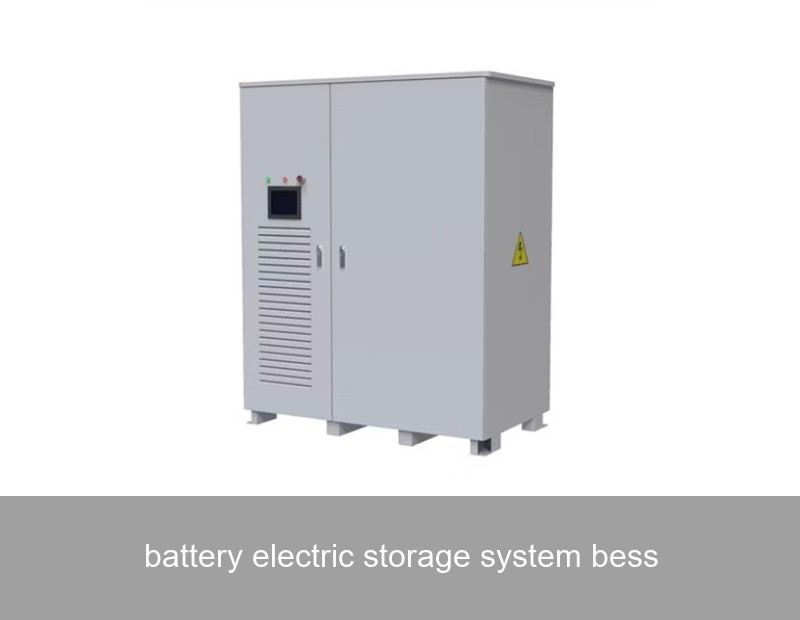
Imagine a world where your home or business isn't at the mercy of the grid. Where soaring electricity prices and unexpected outages are concerns of the past. This isn't science fiction; it's the reality being built today by a powerful technology: the Battery Electric Storage System (BESS). At its core, a BESS is more than just a battery. It's an intelligent energy hub that stores electricity for use when you need it most, transforming how we generate, consume, and think about power. For homeowners, businesses, and entire communities, understanding BESS technology is the first step toward energy resilience and sustainability.
Table of Contents
- The Modern Grid Challenge: Why We Need BESS
- How a Battery Electric Storage System Actually Works
- Key Applications: From Residential Backup to Grid Services
- A Real-World Case: BESS in Action in California
- Choosing the Right System: What to Look For
- Highjoule's Intelligent BESS Solutions
- The Future Outlook of Energy Storage
The Modern Grid Challenge: Why We Need BESS
Our century-old electrical grid is facing unprecedented stress. The rapid adoption of intermittent renewable sources like solar and wind, while essential for decarbonization, creates a mismatch between supply and demand. The sun doesn't always shine, and the wind doesn't always blow, but our demand for power is constant. This phenomenon, often seen in regions with high solar penetration, leads to the "duck curve"—a deep midday dip in net demand followed by an evening spike. This steep ramp challenges traditional power plants and can lead to instability.
Furthermore, extreme weather events are becoming more frequent. In the US, the number of weather-related power outages has doubled over the past two decades. In Europe, energy security and price volatility have become top concerns for governments and consumers alike. A BESS acts as a buffer against these challenges. It soaks up excess renewable energy when it's plentiful and discharges it during peak demand or outages, effectively flattening the duck curve and hardening our energy infrastructure.
How a Battery Electric Storage System Actually Works
Think of a BESS as a sophisticated energy bank. It's not a single component but a fully integrated system comprising several key parts:
- Battery Cells: The core energy storage units, typically using lithium-ion chemistry for its high energy density and efficiency.
- Battery Management System (BMS): The "brain" of the battery pack. It monitors cell voltage, temperature, and state of charge to ensure safety, longevity, and performance.
- Power Conversion System (PCS): Often an inverter/charger. This critical component converts stored DC (Direct Current) electricity from the batteries to AC (Alternating Current) for your home or business, and vice versa.
- Energy Management System (EMS): The system-level intelligence. It decides when to charge and discharge based on algorithms, user settings, grid signals, or economic factors.
The magic happens through intelligent software. A modern BESS can be programmed to prioritize self-consumption of solar power, participate in utility demand response programs, or provide automatic backup power within milliseconds of a grid failure—all without any human intervention.

Image Source: Unsplash - A modern home battery storage unit.
Key Applications: From Residential Backup to Grid Services
The versatility of BESS technology is what makes it revolutionary. Its applications span every level of our energy ecosystem:
| Application | Primary Benefit | Typical User |
|---|---|---|
| Residential & Commercial Backup Power | Uninterrupted power during outages, peace of mind. | Homeowners, Small Businesses |
| Solar Self-Consumption & Time-of-Use Optimization | Store excess solar energy for use at night, avoid peak electricity rates. | Prosumers (Solar PV owners) |
| Commercial & Industrial (C&I) Load Management | Reduce demand charges, which can constitute up to 50% of a business's electricity bill. | Factories, Office Buildings, Shopping Centers |
| Grid Services & Utility-Scale Storage | Frequency regulation, voltage support, deferring grid upgrades. | Utilities, Independent Power Producers |
| Microgrids & Off-Grid Systems | Enable energy independence for remote communities or campuses. | Islands, Universities, Military Bases |
A Real-World Case: BESS in Action in California
Let's look at a concrete example. California, a leader in renewable energy, has aggressively deployed BESS to manage its grid. During a heatwave in September 2022, battery storage systems played a pivotal role. According to the California Energy Commission, battery storage output reached a record of over 3,300 megawatts (MW) during the evening peak—effectively powering approximately 2.5 million homes. This discharge was crucial in avoiding rolling blackouts. This case isn't just about large-scale grids. It demonstrates the same principle on a smaller scale: a well-sized BESS can provide critical power during the exact moments a home or business needs it most, whether due to grid stress or a local outage.
Choosing the Right System: What to Look For
With so many options, selecting a BESS can feel daunting. Focus on these key criteria:
- Capacity & Power: Capacity (kWh) is your "energy tank"—how much you can store. Power (kW) is how fast you can use it. A system with high power can run more appliances simultaneously during an outage.
- Depth of Discharge (DoD) & Cycle Life: A higher DoD means you can safely use more of your battery's stated capacity. Cycle life indicates how many charge/discharge cycles the battery is rated for, directly impacting its lifespan and value.
- Efficiency: Round-trip efficiency measures how much energy you get out versus what you put in. Look for systems above 90%.
- Scalability & Integration: Can the system be easily expanded? Does it seamlessly integrate with existing or new solar PV systems and smart home ecosystems?
- Intelligence & Software: The software platform is what unlocks the system's potential. Look for user-friendly apps that allow for custom operating modes and future grid service participation.
Highjoule's Intelligent BESS Solutions
At Highjoule, we've been designing and deploying advanced energy storage solutions since 2005. We understand that a one-size-fits-all approach doesn't work for energy. That's why our product portfolio is built on the pillars of intelligence, safety, and durability.
Our flagship H-Series Commercial & Industrial BESS is engineered for demanding applications. With a modular design, it scales from 100 kWh to multi-megawatt-hour installations. Its advanced liquid cooling and proprietary cell-level BMS ensure maximum safety and a lifespan exceeding 6,000 cycles. For utilities and large-scale projects, our GridMax Utility-Scale Platform provides grid-forming capabilities, essential for maintaining stability in renewable-heavy grids.
For residential and small commercial clients, the Highjoule HomePower+ system offers a sleek, all-in-one solution. It features a hybrid inverter, scalable battery capacity, and our intuitive EnergyOS software. EnergyOS learns your energy patterns and automatically optimizes for self-consumption, time-of-use savings, or backup readiness. It’s the brain that turns hardware into genuine energy independence.

Image Source: Unsplash - Engineer monitoring a large-scale BESS.
The Future Outlook of Energy Storage
The trajectory for BESS is steeply upward. The International Energy Agency (IEA) notes that global energy storage capacity is set to expand dramatically by 2030, driven by policy support and falling costs. Beyond lithium-ion, research into solid-state, flow, and other next-generation batteries promises even greater safety and energy density. The future grid will be a distributed network of millions of "prosumer" assets—homes and businesses with solar and storage—all contributing to a more resilient and clean energy system.
So, as you look at your next electricity bill or consider the resilience of your operations, ask yourself: Is your energy strategy ready for the demands and opportunities of the 21st century? What would true energy security look like for you?
 Inquiry
 Online Chat