


Unlocking Energy Independence: The Power of a Battery Converter Hybrid System
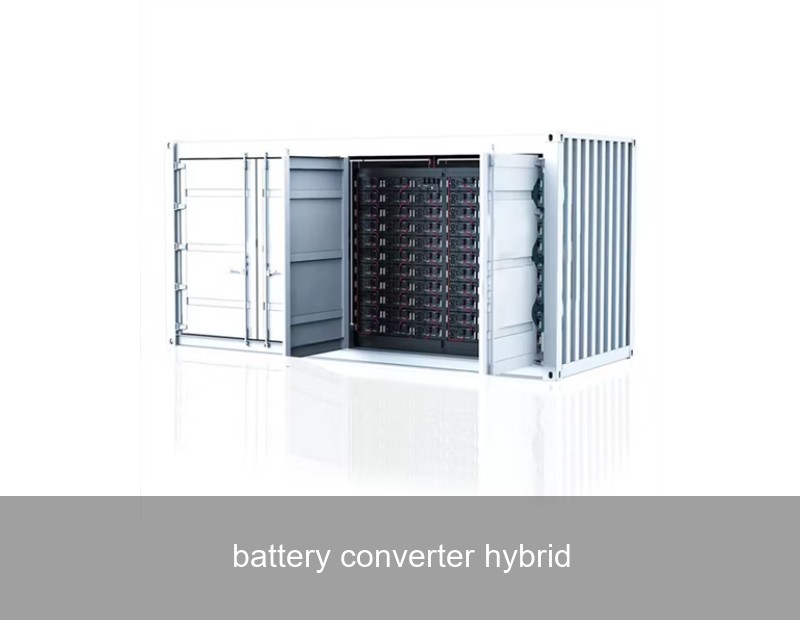
Have you ever watched your solar panels produce more energy than your home can use at noon, only to buy electricity back from the grid at night? Or felt the frustration of a commercial operation's energy bills being hit by peak demand charges? This common phenomenon is the very challenge that modern energy storage seeks to solve. At the heart of this solution lies a critical, yet often overlooked component: the battery converter hybrid. This isn't just another piece of hardware; it's the intelligent brain and muscle of a sophisticated energy system, seamlessly managing power between solar panels, batteries, and the grid. For homeowners and businesses across Europe and the US, understanding this technology is the first step toward true energy resilience and cost savings. As a leader in advanced energy storage, Highjoule has been engineering and refining these intelligent systems since 2005, empowering our customers to take complete control of their power.
Table of Contents
- What is a Battery Converter Hybrid?
- How Does a Hybrid Converter Work? The Phenomenon to Solution Journey
- Key Benefits: From Data to Tangible Value
- A Real-World Case Study: Peak Shaving in a German Bakery
- Highjoule's Role: Intelligent Hybrid Systems for Every Need
- The Future of Energy Management
What is a Battery Converter Hybrid?
Let's break it down simply. A traditional battery inverter converts DC (Direct Current) electricity from your batteries into AC (Alternating Current) for your home. A solar inverter does the same for DC from your solar panels. A battery converter hybrid, often called a multi-mode or hybrid inverter, combines these functions into a single, smart unit. But it does much more. It's a multi-port energy manager that can simultaneously connect to solar arrays, battery banks, the utility grid, and your critical loads. Its primary role is to intelligently decide, in real-time, where energy should flow: should solar power charge the batteries, run the appliances, or be exported to the grid? Should battery power cover evening loads or be saved for a potential grid outage? This dynamic decision-making is what transforms a simple storage setup into an adaptive energy ecosystem.
How Does a Hybrid Converter Work? The Phenomenon to Solution Journey
The operation of a hybrid converter follows a logical "if-then" sequence that directly addresses everyday energy phenomena.
The Common Phenomenon: Intermittency and Cost Spikes
Renewable generation is variable, and grid electricity costs can fluctuate wildly, with extreme peaks in the early evening in many markets.
The Data-Driven Response
A modern hybrid converter like those in Highjoule's systems uses sophisticated algorithms and real-time data (solar production, consumption patterns, grid frequency, tariff rates) to make optimal decisions. Here's a typical daily logic ladder:
- Step 1 (Day, Sunny): Solar PV generates DC power. The hybrid converter's Maximum Power Point Tracking (MPPT) charger maximizes this harvest. Priority is given to powering immediate building loads. Any surplus is directed to charge the battery storage system.
- Step 2 (Day, Excess): If batteries are full and loads are met, excess solar can be fed back to the grid, often earning feed-in tariffs or credits.
- Step 3 (Evening, Peak Grid Demand): As the sun sets and household demand rises, grid prices often peak. The hybrid system seamlessly disconnects from drawing expensive grid power and uses the stored energy from the batteries to power the home or business.
- Step 4 (Grid Outage): Upon detecting a grid failure, the hybrid converter isolates the home or critical load panel (forming a "microgrid") in milliseconds, continuing to supply power from solar and batteries. This is the essence of backup power.

Image Source: Unsplash (Representative image of a modern energy storage system)
Key Benefits: From Data to Tangible Value
The intelligent orchestration by a battery converter hybrid translates into concrete, measurable advantages:
| Benefit | How the Hybrid Converter Enables It | Impact for User |
|---|---|---|
| Maximized Self-Consumption | Directs surplus solar to batteries instead of the grid, storing it for later use. | Drastically reduces reliance on purchased grid electricity, enhancing ROI on solar panels. |
| Peak Shaving & Demand Charge Management | Uses battery power during periods of highest grid demand/price, avoiding drawing from the grid. | For commercial & industrial users, can cut the "demand charge" portion of the bill by 30-50%. |
| Uninterruptible Power Supply (UPS) | Provides sub-20ms transition to backup power during grid outages. | Keeps lights on, food cold, and businesses operational during blackouts. |
| Grid Services & Stability | Advanced models can perform frequency regulation or support voltage. | Potential future revenue streams and contributes to overall grid resilience. |
A Real-World Case Study: Peak Shaving in a German Bakery
Let's move from theory to practice. A medium-sized artisan bakery in Bavaria, Germany, faced a classic problem: high energy costs driven by demand charges. Their ovens, refrigeration, and lighting created significant power draws, especially in the early morning. Even with a rooftop solar system, they were hit hard by grid charges during these peak periods.
The Solution: The bakery installed a Highjoule battery converter hybrid system tailored for commercial applications. The system included a high-power hybrid inverter and a 100 kWh lithium-ion battery bank.
- The system was programmed to prioritize using stored battery energy during the 6:00 AM - 10:00 AM peak baking window and the 5:00 PM - 8:00 PM evening grid strain period.
- Over the first 12 months, the system reduced the bakery's peak power draw from the grid by 40%.
- This directly translated to a 28% reduction in their overall monthly electricity bill, despite volatile energy markets.
- The bakery also increased its on-site consumption of solar power from 35% to over 80%, making their renewable investment far more valuable.
This case exemplifies how the right hybrid technology directly addresses economic pain points with clear, quantifiable outcomes.
Highjoule's Role: Intelligent Hybrid Systems for Every Need
At Highjoule, we don't just sell components; we deliver integrated, intelligent power solutions. Our expertise lies in selecting and configuring the optimal battery converter hybrid technology for your specific context—whether it's a family home in California, a manufacturing facility in Poland, or a remote microgrid.
Our product lines feature hybrid inverters known for their high efficiency, robust grid compliance (meeting strict standards like VDE-AR-N 4105 in Germany and UL 1741 SA in the US), and advanced software. This software is key: our Highjoule Energy Management Platform provides users with intuitive visibility into energy flows, cost savings, and system health, and allows for custom strategies like time-based control or weather-based forecasting.

Image Source: Unsplash (Representative image of commercial solar and storage)
For residential customers, our HomePower+ series offers all-in-one units that simplify installation and provide whole-home backup. For commercial and industrial clients, our GridMax Pro series of modular, scalable hybrid converters is designed for demanding applications and significant demand charge savings. And for the most challenging off-grid or weak-grid environments, our microgrid solutions with advanced hybrid control ensure reliable, 24/7 power.
The Future of Energy Management
The evolution of the battery converter hybrid is moving towards even greater intelligence and grid interactivity. We're looking at systems that can autonomously participate in local energy markets, form peer-to-peer energy sharing communities, and integrate with electric vehicle charging in a holistic home energy ecosystem. The line between consumer and prosumer is blurring, and the hybrid converter is the enabling device at the center.
As grid dynamics continue to shift and the push for decarbonization intensifies, one question becomes increasingly personal and pressing for every energy consumer: Is your power system a passive cost center, or an active, intelligent asset working for your wallet and resilience? The choice of technology you make today will define your energy posture for the next decade.
What specific energy challenge—be it unpredictable bills, reliability concerns, or simply maximizing your solar investment—is most critical for you to solve in the coming year?
 Inquiry
 Online Chat