


Understanding the Falling Battery and Solar Panel Price: Your Key to Energy Independence
Have you been watching the news about energy and noticed a fascinating trend? The cost of going green is plummeting. We're not just talking about a small discount; we're witnessing a historic shift where battery and solar panel price drops are fundamentally reshaping how we power our homes and businesses. This isn't just good for the planet—it's becoming incredibly smart economics. For homeowners in sunny California or factory managers in Germany, the equation is changing. The once-daunting upfront investment in solar plus storage is now transforming into a predictable, long-term strategy for slashing energy bills and achieving resilience. Let's dive into the data behind this revolution and explore what it truly means for your energy future.
Table of Contents
- The Great Price Plunge: From Luxury to Mainstream
- The Solar Panel Price Story: Efficiency Meets Scale
- The Battery Storage Revolution: More Than Just Backup
- The Powerful Synergy: Why Combined Systems are the Smart Choice
- A Real-World Case: The German Industrial Shift
- Highjoule's Role: Smart Integration for Maximum Value
- Future Trends: What's Next for Battery and Solar Panel Prices?
The Great Price Plunge: From Luxury to Mainstream
Remember when solar panels were a rare sight, installed only by the most ardent environmentalists or the wealthiest homeowners? That era is over. The phenomenon is backed by hard data. According to benchmarks from the International Renewable Energy Agency (IRENA), the global weighted-average levelized cost of electricity (LCOE) from utility-scale solar photovoltaics (PV) plunged by a staggering 89% between 2010 and 2022. Similarly, lithium-ion battery pack prices, the heart of modern energy storage systems, have fallen from over $1,200 per kilowatt-hour (kWh) in 2010 to under $140/kWh in 2023, as tracked by BloombergNEF. This tandem decline is the engine behind the clean energy transition.

Image Source: Unsplash (Representative image of data trends)
The Solar Panel Price Story: Efficiency Meets Scale
The drop in solar panel costs is a masterclass in industrial innovation. It's a story of phenomenon, data, and relentless improvement.
- Phenomenon: Solar panels became cheaper to manufacture and more efficient at converting sunlight.
- Data: Manufacturing scale, particularly in China, drove down polysilicon and component costs. Simultaneously, panel efficiency for common monocrystalline panels jumped from around 15% to well over 22%.
- Case in Point: A standard 6kW residential solar system in the U.S. that might have cost $50,000+ before incentives in 2010 can now be installed for roughly $18,000, with federal tax credits bringing the net cost even lower.
- Insight: Lower solar panel prices mean you need fewer panels to meet your energy needs, reducing both material and installation costs. The payback period has shrunk from decades to often less than 10 years in many regions.
The Battery Storage Revolution: More Than Just Backup
While solar handles generation, batteries are the game-changer for management. The narrative here follows a similar logical阶梯 (ladder).
Phenomenon: Electric vehicles (EVs) created massive demand for lithium-ion batteries, fueling research and gigafactory-scale production.
Data: As mentioned, the battery price per kWh has dropped by nearly 90% in a decade. Energy density (how much power fits in a given space) has also improved dramatically.
Insight: This isn't just about backup power during an outage (though that's a huge benefit). It's about energy arbitrage: storing cheap solar energy or off-peak grid power and using it during expensive peak hours. For commercial users with demand charges, this can be the most significant source of savings.
The Powerful Synergy: Why Combined Systems are the Smart Choice
Solar panels and battery storage are a classic case of the whole being greater than the sum of its parts. A solar-only system exports excess daytime power to the grid, often at low rates. A battery alone just charges from the grid. But combine them, and you create a personal energy ecosystem.
| System Type | Key Benefit | Limitation |
|---|---|---|
| Solar Only | Reduces daytime energy bills | Doesn't help during evening peak or outages |
| Battery Only (Grid-charged) | Provides backup & peak shaving | Still uses grid electricity, less green |
| Solar + Battery | Maximizes self-consumption, provides backup, enables peak shaving, increases energy independence | Higher upfront cost, though ROI is improving fast |
With falling battery and solar panel prices, this synergistic combination is now within reach for millions. The system intelligently manages energy flow, prioritizing solar self-consumption, then charging the battery, and only then exporting any surplus.
A Real-World Case: The German Industrial Shift
Let's look at Europe, where high energy prices and a strong push for Energiewende (energy transition) make this technology crucial. Consider a mid-sized automotive parts manufacturing plant in Baden-Württemberg, Germany.
- Challenge: Volatile electricity prices, high grid demand charges, and corporate sustainability targets.
- Solution: In 2022, the plant installed a 1.2 MW rooftop solar PV system coupled with a 500 kWh / 1 MW battery energy storage system (BESS).
- Data & Results:
- The solar system covers ~25% of the plant's annual daytime load.
- The BESS is programmed to charge from excess solar and during low-cost night-time hours.
- It discharges during the 4-8 pm peak, avoiding the highest grid tariffs and demand charges.
- Result: A 18% reduction in overall annual energy costs and over 600 tons of CO2 savings per year. The calculated payback period, aided by falling equipment costs and intelligent software, is under 7 years.
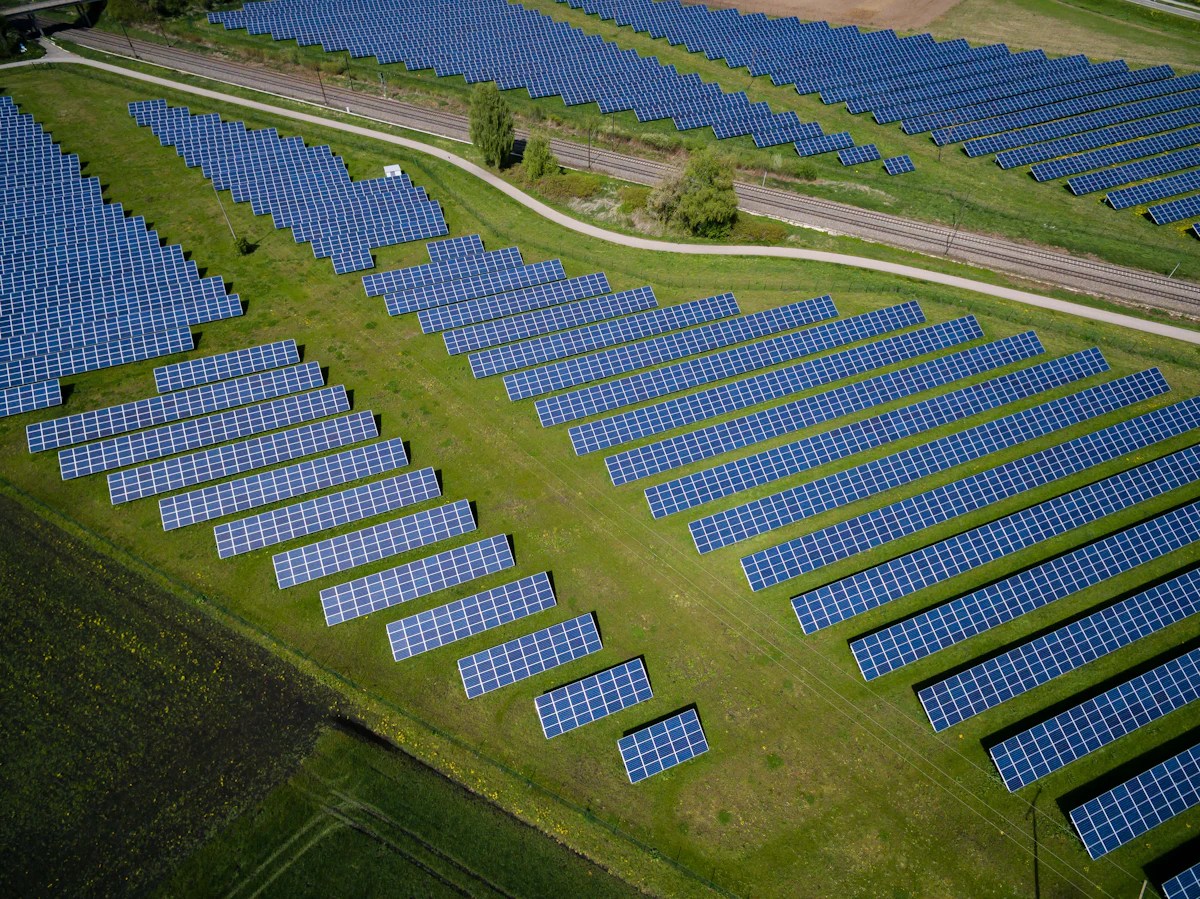
Image Source: Unsplash (Representative image of commercial solar installation)
Highjoule's Role: Smart Integration for Maximum Value
This is where expertise matters most. As battery and solar panel prices fall, the value shifts from just the hardware to the intelligence that optimizes it. This is the core of Highjoule's mission since 2005. We don't just sell components; we provide integrated, smart power solutions.
For our residential clients, our Home Energy Hub seamlessly integrates high-efficiency solar panels with our modular H-Joule Cell battery systems. Our AI-driven energy management software learns your household's patterns, weather forecasts, and utility rate schedules to autonomously optimize every kilowatt-hour, maximizing your financial return and comfort.
For commercial and industrial (C&I) applications, like the German case study, our GridMAX BESS platform is a powerhouse. It's designed for rigorous duty cycles and can be configured for applications ranging from peak shaving and load shifting to providing grid services. We work with partners to integrate solar PV, ensuring the entire system operates as a single, profit-generating asset, not just a cost center. Our systems are deployed across the U.S. and Europe, helping businesses lock in long-term energy costs and build operational resilience.
Navigating Incentives and Financing
With the improving economics, incentives are the final piece of the puzzle. In the U.S., the federal Investment Tax Credit (ITC) now applies to standalone storage and solar-storage combinations, significantly reducing net cost. In Europe, various national and EU-level programs exist. Part of our service at Highjoule includes helping you navigate this complex landscape to secure the best possible financial model for your project.
Future Trends: What's Next for Battery and Solar Panel Prices?
Will the price drops continue? Most analysts believe so, though perhaps at a slower rate. Solar panel technology is advancing with perovskite tandem cells promising even higher efficiencies. On the battery front, chemistries like lithium iron phosphate (LFP) offer longer life and safety at competitive costs, while sodium-ion and other post-lithium technologies are on the horizon. The key trend is that the levelized cost of storage (LCOS) will continue to fall, making solar-plus-storage the default choice for new energy installations.
The conversation is no longer "if" but "how" and "when." With the economic barriers crumbling, the question becomes about choosing the right partner for design, installation, and long-term management.
Given your current energy bills and sustainability goals, what would a 20% or greater reduction in your annual energy costs mean for your home or business budget this coming year?
 Inquiry
 Online Chat