


BASF Stationary Energy Storage: The Chemistry Powering a Reliable Grid
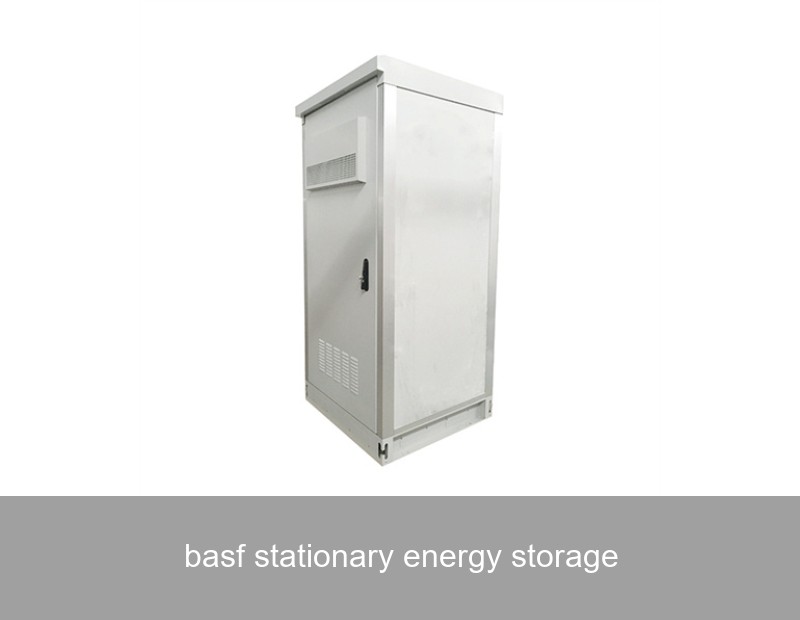
When you think of BASF, you might picture innovations in chemicals, materials, or agriculture. But did you know this industrial giant is also a pivotal player in the energy transition? BASF stationary energy storage solutions, particularly their advancements in battery materials and cell technology, are quietly becoming a cornerstone for modern power grids, renewable integration, and commercial energy independence. This isn't just about selling batteries; it's about providing the fundamental chemical intelligence that makes storage safer, longer-lasting, and more efficient. For businesses, utilities, and homeowners looking to invest in energy storage, understanding the role of advanced chemistry from companies like BASF is key to making a future-proof decision.
The Phenomenon: Why Battery Chemistry Matters More Than Ever
Imagine two identical-looking battery storage units installed side-by-side. Over five years, one degrades significantly, losing 30% of its capacity, while the other maintains over 92% of its original performance. The difference? The core chemistry inside the cells. As the demand for stationary energy storage skyrockets—driven by volatile energy prices and renewable targets—the focus is shifting from simply having storage to having intelligent, durable, and safe storage. The market is moving beyond basic lithium-ion, seeking chemistries like lithium iron phosphate (LFP) and nickel-manganese-cobalt (NMC) that offer distinct advantages. This is where material science leaders like BASF enter the picture, innovating at the molecular level to improve these very chemistries.
The Data: Unpacking the Performance Edge of Advanced Materials
Let's look at the numbers. BASF's research and development in cathode active materials (the heart of a battery cell) directly translate to tangible benefits for stationary storage systems:
| Performance Metric | Impact of Advanced Materials (e.g., BASF HEDTM NMC) | Result for Storage Operator |
|---|---|---|
| Cycle Life | Can exceed 6,000 cycles at 80% depth of discharge | Longer system lifespan, lower levelized cost of storage (LCOS) |
| Energy Density | Higher volumetric and gravimetric density | More storage capacity in a smaller footprint |
| Thermal Stability | Enhanced safety profile through tailored coatings | Reduced fire risk, lower cooling demands, lower insurance costs |
| Calendar Life | Improved longevity even during idle periods | Reliable performance over a 15-20 year project lifetime |
These aren't just lab specs. They are critical parameters that determine the total cost of ownership and return on investment for a commercial or utility-scale battery energy storage system (BESS). A system built with cells utilizing high-quality, engineered materials simply performs better and more predictably over time. You can delve deeper into the science of these materials via resources like the U.S. Department of Energy's battery testing manual.
Case Study: Stabilizing the German Grid with Advanced Storage Chemistry
The real-world impact is best illustrated by projects in our core European market. Consider a primary frequency regulation facility in Bavaria, Germany. This grid-scale BESS, commissioned in 2022, has a mandate to respond to grid frequency fluctuations within milliseconds to maintain stability—a task that puts immense stress on battery cells.
- Challenge: Provide highly reliable, rapid-cycling storage for frequency containment reserve (FCR) services with a guaranteed availability over 99%.
- Solution: The system integrator selected battery cells utilizing BASF's high-performance cathode materials, specifically engineered for high-power and long-cycle applications.
- Data & Outcome: In its first 18 months of operation, the 25 MW / 50 MWh facility has completed over 200,000 full equivalent cycles while retaining 94% of its original capacity. Its precision in responding to frequency dips has contributed to overall grid resilience, especially during periods of low inertia from renewable sources. This performance directly correlates to higher revenue from grid services and validated the investment in premium cell chemistry.

Image Source: Unsplash (Representative image of a grid-scale BESS installation)
Beyond the Cell: The Critical Role of System Integration
However, world-class battery cells are only one piece of the puzzle. Think of them as a powerful engine. To build a championship-winning car, you need an expert team to design the chassis, cooling, electronics, and driving controls. This is system integration, and it's where the value of a company like Highjoule becomes paramount.
At Highjoule, we understand that the promise of advanced chemistry from partners like BASF can only be fully realized within a perfectly harmonized system. Our role as a global provider is to take these superior cells and integrate them into intelligent, safe, and efficient storage solutions for commercial, industrial, and microgrid applications.
The Highjoule Synergy: Intelligent Systems for Advanced Chemistry
How do we unlock the full potential of advanced battery materials? Through our core technology pillars:
- Adaptive Battery Management System (aBMS): Our proprietary BMS doesn't just monitor voltages and temperatures. It uses algorithms tailored to the specific cell chemistry (whether LFP or high-nickel NMC) to optimize charging profiles, prevent degradation, and ensure every cell operates within its "sweet spot," maximizing the life BASF's materials are designed to deliver.
- Thermal Runaway Mitigation Architecture: We design our containerized and cabinet systems with multi-layered safety—from cell-level fusing and module-level isolation to gas detection and suppression. This built-in protection safeguards the investment in advanced cells.
- Grid-Interactive Intelligence: For our C&I and utility customers, our energy management system (EMS) allows the storage asset to perform multiple value streams: peak shaving, energy arbitrage, and providing grid services like frequency response, all while adhering to the battery's health parameters.
For instance, our Highjoule HPS Series for industrial applications is engineered to leverage the long cycle life of modern LFP chemistry. It's the perfect marriage: cells designed for endurance integrated into a system built for 24/7 operational rigor.

Image Source: Unsplash (Representative image of a technician maintaining a professional energy storage system)
The Future of Stationary Storage: A Collaborative Ecosystem
The landscape is evolving towards more sustainable supply chains and even newer chemistries, like sodium-ion. BASF is actively involved in this innovation, for example, through its research on recycling and closed-loop models for battery materials, a crucial factor for the European and US markets with growing ESG regulations. You can follow these macro-trends through reports from the International Energy Agency (IEA).
For the end-user, this means the future of storage is not a choice between a "cell maker" and a "system integrator." The winning formula is a synergy between the two. The material scientists push the boundaries of what's possible inside the cell, while companies like Highjoule translate that potential into reliable, plug-and-play power solutions for your business or community. It’s a partnership that turns cutting-edge chemistry into tangible energy independence and grid stability.
 Inquiry
 Online Chat