


Base Power Battery Backup: The Unsung Hero of Modern Energy Resilience
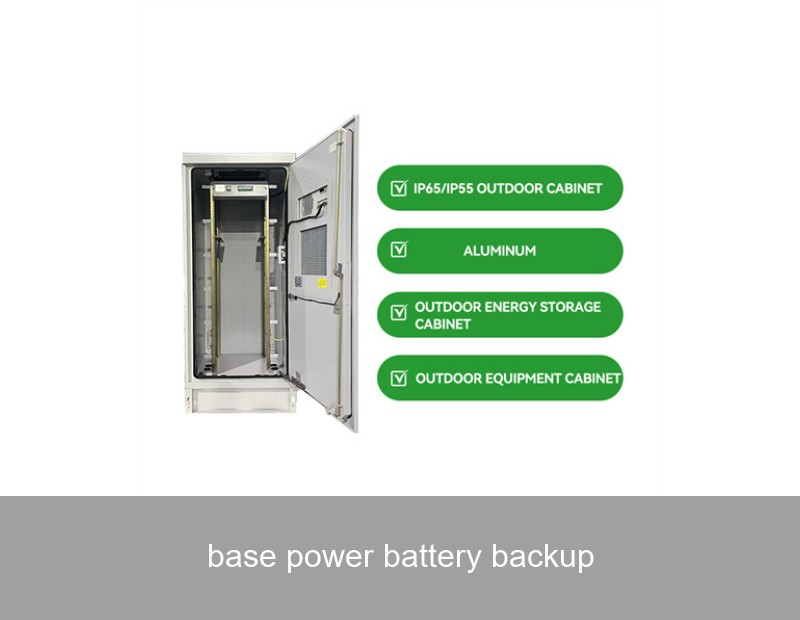
Imagine this: a critical surgery is underway when the grid fails. Or, a precision manufacturing line halts mid-process. Or perhaps, during a severe winter storm, your home's heat and lights go out. These aren't just inconveniences; they are significant risks to safety, productivity, and comfort. In our increasingly electrified world, the need for reliable, instant, and clean power isn't a luxury—it's a necessity. This is where the concept of base power battery backup transitions from a technical term to a fundamental pillar of energy security. Unlike traditional generators that roar to life after a delay, a modern battery backup system sits silently, ready to provide seamless power the moment it's needed, forming the stable "base" upon which our essential activities depend.
Table of Contents
- The Phenomenon: Grid Volatility is the New Normal
- The Data: Quantifying the Cost of Downtime
- The Evolution: From Generators to Intelligent Battery Systems
- The Highjoule Approach: Engineered for Base Power Duty
- Case Study: A German Hospital's Journey to Resilience
- Future-Proofing: More Than Just Backup
- What's Your Energy Resilience Score?
The Phenomenon: Grid Volatility is the New Normal
Let's be frank: our power grids are under unprecedented stress. In Europe and the United States, aging infrastructure meets the dual challenges of extreme weather events and a rapidly changing energy mix. The shift towards renewable sources like solar and wind, while essential for sustainability, introduces intermittency. A cloud cover or a calm day can cause significant dips in generation. Meanwhile, heatwaves drive record electricity demand for cooling, and winter storms can topple transmission lines. The result is an increased frequency of brownouts (voltage drops), blackouts (complete outages), and overall less predictable power quality. For businesses and homeowners alike, this volatility means operational risk is now directly tied to grid reliability.

Credit: Photo by American Public Power Association on Unsplash. Modern grids face pressure from demand, weather, and renewable integration.
The Data: Quantifying the Cost of Downtime
To understand the value of a solution, we must first understand the cost of the problem. The numbers are staggering. According to a report by the U.S. Department of Energy, power outages cost the U.S. economy an estimated $150 billion annually. For individual businesses, this translates to:
- Data Centers: Can incur costs exceeding $9,000 per minute of downtime.
- Manufacturing: An unplanned outage can halt production, causing losses of tens of thousands of dollars per hour in lost output and potential equipment damage.
- Healthcare: Beyond financial cost, patient safety is paramount. Backup power is literally a lifeline.
- Residential: For homeowners, an outage can mean spoiled food, discomfort, and in extreme climates, dangerous living conditions. A study by the Lawrence Berkeley National Laboratory found the average U.S. customer experiences about 4 hours of power interruption per year, with significant regional variation.
This data paints a clear picture: passive reliance on the grid is a growing financial and operational liability.
The Evolution: From Generators to Intelligent Battery Systems
Traditionally, the answer to grid failure was the diesel or natural gas generator. While still useful for prolonged outages, they have critical limitations: they take precious seconds (or minutes) to start, require fossil fuel storage and delivery, produce emissions and noise, and need regular maintenance. For many sensitive applications, that delay is unacceptable.
The modern base power battery backup system, particularly using Lithium Iron Phosphate (LFP) chemistry, is a paradigm shift. Think of it not as a reactive backup, but as an active buffer. It constantly interacts with your building's electrical system, providing these key advantages:
- Seamless Transition: Power transfer in milliseconds, often undetectable to sensitive equipment.
- Silent & Zero-Emission Operation: No fumes, no noise, ideal for indoor and urban environments.
- Multi-Functionality: Beyond backup, it can perform energy arbitrage (store cheap energy, use during expensive peaks) and support grid services.
- Low Operational Cost: Minimal maintenance compared to rotating machinery.
The Core Components of a Robust System
A true base power solution isn't just a battery pack. It's an integrated system:
- Battery Bank (LFP recommended): For safety, longevity, and stable performance.
- Bi-Directional Inverter: The brain that converts DC battery power to AC for your loads and vice-versa.
- Energy Management System (EMS): Intelligent software that controls when to charge, discharge, and how to prioritize loads.
- Critical Load Panel (Optional): To ensure extended backup for essential circuits.
The Highjoule Approach: Engineered for Base Power Duty
At Highjoule, with nearly two decades of experience since 2005, we've moved beyond offering simple battery units. We engineer intelligent energy resilience platforms designed specifically for the demanding role of base power. Our systems are built on three core principles:
- Reliability by Design: Our commercial and industrial-grade LFP batteries undergo rigorous testing for thousands of cycles. We use robust, UL-certified components and design for 24/7 operation, ensuring they are ready when the grid is not.
- Intelligent Integration: The Highjoule EMS doesn't just react to outages. It proactively manages energy flow. It can be programmed to automatically charge from the grid during off-peak, low-cost periods and discharge during peak demand times, creating immediate savings on your electricity bill—a feature that pays for the system over time.
- Scalability & Service: From a single residential unit like our Highjoule HomePower V2 to modular, containerized solutions for factories or microgrids, our systems grow with your needs. Our global service network provides ongoing monitoring and support, ensuring your investment is protected.
For a business, a Highjoule system isn't an expense; it's an asset that protects revenue, reduces operational costs, and enhances sustainability credentials.

Credit: Photo by Kindel Media on Pexels. A modern, clean battery storage system integrated into a building.
Case Study: Securing Critical Care in Bavaria
Let's look at a real-world application. A 300-bed regional hospital in Bavaria, Germany, faced a dual challenge: ensuring absolute power reliability for its ICU, operating theaters, and life-support systems, while also managing soaring energy costs. Their old diesel generators were reliable for long outages but were slow to start and incurred high maintenance and fuel costs. They also wanted to reduce their carbon footprint.
The Solution: Highjoule designed and deployed a 1.2 MWh containerized battery storage system integrated with the hospital's existing infrastructure and new rooftop solar PV. The system was configured for three primary functions:
- Ultra-Fast Base Power Backup: Providing instantaneous power to critical loads for up to 4 hours, bridging the gap until the diesel generators were fully online and stable.
- Peak Shaving: The EMS automatically discharges the battery during the hospital's daily peak demand periods (e.g., late morning), reducing peak power charges from the utility by over 25%.
- Solar Self-Consumption Optimization: Storing excess solar energy produced during the day for use in the evening, increasing the on-site use of renewable energy by 40%.
The Results (12-month period):
| Metric | Result |
|---|---|
| Backup Transition Time | <20 milliseconds (seamless) |
| Energy Cost Savings | €68,000 annually |
| Carbon Footprint Reduction | Estimated 85 tonnes of CO2e |
| Diesel Generator Runtime | Reduced by 70% during grid tests |
This case demonstrates how a modern base power battery backup system solves for resilience, economics, and sustainability simultaneously.
Future-Proofing: More Than Just Backup
The journey with a Highjoule system begins with securing your base power, but it opens doors to the future of energy. For microgrid applications, our systems act as the cornerstone, balancing generation from solar, wind, and other sources to create self-sufficient energy islands. For utilities and grid operators, aggregated distributed storage systems like ours can provide vital services to stabilize the wider grid, a concept known as Virtual Power Plants (VPPs).
By investing in an intelligent battery backup system today, you are not just buying an insurance policy against blackouts. You are acquiring a flexible energy asset that will deliver value every single day through bill savings and can participate in the energy markets of tomorrow. The technology, as validated by institutions like the National Renewable Energy Laboratory (NREL), is proven and ready.
What's Your Energy Resilience Score?
We've explored the "why" and the "how." Now, consider your own situation. What are the two or three most critical processes in your home or business that cannot tolerate even a two-second power interruption? How much would a 4-hour outage cost you in lost revenue, productivity, or risk? The first step towards true energy independence is understanding your vulnerability. We invite you to assess your needs—not just for backup, but for intelligent, cost-effective, and sustainable power management. What will be the catalyst for you to transform your relationship with energy from passive consumer to active manager?
 Inquiry
 Online Chat