


Banco de Baterías y Paneles Solares: The Complete Guide to Energy Independence
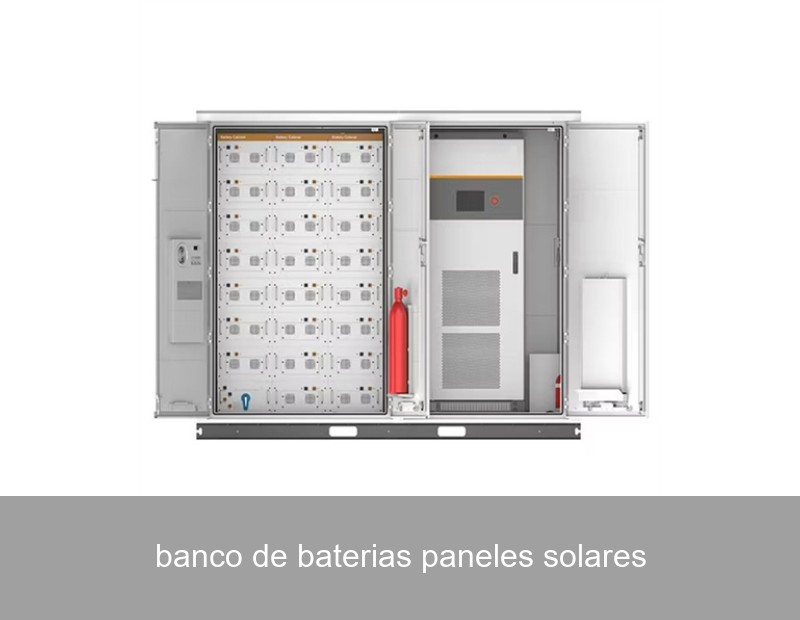
Have you ever watched your solar panels produce a surplus of clean energy on a sunny afternoon, only to buy electricity back from the grid at night? This common frustration is the exact challenge a banco de baterías para paneles solares (battery bank for solar panels) is designed to solve. As energy prices remain volatile and the desire for true energy self-sufficiency grows, combining solar with storage isn't just an upgrade—it's becoming the new standard for smart energy management. Let's explore how this powerful pairing works and why it's the key to unlocking the full potential of your solar investment.
What is a Solar Battery Bank (Banco de Baterías)?
In simple terms, a banco de baterías para paneles solares is a system of connected batteries that store the electrical energy generated by your solar panels. Think of your solar panels as a highly efficient water pump, and the battery bank as the reservoir. The pump fills the reservoir during the day, and you draw from it whenever you need water—day or night, sunny or cloudy. This storage capability transforms a solar installation from a daytime-only power source into a 24/7 energy asset.
Why Pair Batteries with Solar Panels Now? The Data Speaks
The trend is clear: solar-plus-storage is accelerating. According to the U.S. Energy Department's Solar Energy Technologies Office, the residential solar market with paired storage has seen consistent growth, driven by three key factors:
- Falling Costs: Lithium-ion battery pack prices have dropped significantly over the past decade, making systems more accessible.
- Grid Instability: Increased frequency of extreme weather events has led to more power outages, highlighting the need for backup power.
- Economic Shifts: Changes in net metering policies in regions like California (NEM 3.0) make storing your own solar energy more financially advantageous than selling it back to the grid at low rates.
For homeowners and businesses, this means a battery bank is no longer just for emergency backup. It's a tool for maximizing self-consumption, reducing peak demand charges (a major cost for businesses), and achieving greater control over your energy costs.
Key Components of a Solar + Storage System
A fully integrated system involves more than just panels and a box of batteries. Here’s what makes it tick:
| Component | Role | Importance |
|---|---|---|
| Solar Panels (PV Array) | Generate DC electricity from sunlight. | The primary energy source. |
| Solar Inverter | Converts DC from panels to usable AC for your home. | Essential for powering standard appliances. |
| Battery Bank | Stores excess DC or AC electricity. | Provides energy availability on demand. |
| Battery Inverter/Charger | Manages charging/discharging, converts power for battery storage or home use. | The "brain" of the storage system, ensuring efficiency and safety. |
| Energy Management System (EMS) | Intelligently controls when to charge, discharge, or export energy. | Optimizes for cost savings, backup, or grid services. |

Credit: A modern home solar and storage installation. (Photo: Andreas Gücklhorn/Unsplash)
How to Choose the Right Battery Bank for Your Needs
Selecting a banco de baterías involves balancing capacity, power, and chemistry. Ask yourself:
- Capacity (kWh): How much energy do you want to store? This determines how long you can power essential loads during an outage.
- Power (kW): How much electricity can the battery deliver at once? This determines if you can run multiple high-power appliances simultaneously.
- Chemistry: Lithium Iron Phosphate (LFP) is now the dominant choice for residential and commercial storage due to its longer lifespan, superior safety, and stability compared to older lithium-ion variants.
- Integration: Does the system seamlessly integrate with your existing or new solar panels? A unified system from a single provider often ensures better performance and simpler maintenance.
A Real-World Case Study: Community Resilience in California, USA
Let's look at tangible data. A 50-unit condominium complex in Sonoma County, California, faced repeated Public Safety Power Shutoffs (PSPS) due to wildfire risk. In 2022, they installed a centralized banco de baterías coupled with their existing rooftop solar.
- System Size: 250 kW solar PV array + a 500 kWh Highjoule H2 Series battery bank.
- Result: During a 3-day grid outage in October 2023, the system provided uninterrupted power to all common areas (lighting, elevators, well pumps) and allocated essential power to each residence for refrigeration, lighting, and communications.
- Data Point: The system maintained 100% operational uptime for critical infrastructure and reduced the community's peak grid demand by 40% during normal operations, leading to substantial cost savings. This aligns with findings from the National Renewable Energy Lab (NREL) on the multi-value stream potential of solar+storage.
Highjoule's Intelligent Solutions: Beyond Basic Storage
At Highjoule, with nearly two decades of experience, we see the banco de baterías para paneles solares as the heart of an intelligent energy ecosystem. Our products, like the H-Series for residential and H2-Series for commercial applications, are built with LFP chemistry and feature our proprietary JouleMind™ EMS.
This software doesn't just react—it predicts. By analyzing weather forecasts, your consumption patterns, and real-time utility rate structures, JouleMind™ optimizes your energy flow automatically. It decides the most economical moment to store solar energy, power your home, or even provide grid services (where available), ensuring you get the maximum financial and operational return from your system.

Credit: The interior of a large-scale battery energy storage system (BESS). (Photo: American Public Power Association/Unsplash)
The Future of Home and Business Energy is Integrated
The combination of paneles solares and a banco de baterías is fundamentally changing our relationship with energy. It empowers consumers, enhances grid stability, and accelerates the transition to renewables. The question is no longer "if" but "when" and "how optimally" to make this integration.
Is your current solar installation only operating at half its potential without storage? What would total energy security during the next storm or blackout be worth to your family or business operations?
 Inquiry
 Online Chat