


Axpert V vs. Off-Grid Energy Storage Cabinet: Choosing Your Power Independence Solution
Have you ever experienced a sudden power outage that left your home in the dark or brought your business operations to a grinding halt? For many in Europe and the US, the quest for reliable, clean, and independent electricity is no longer a luxury—it's a necessity. Two terms you'll frequently encounter on this journey are Axpert V inverters and Off-Grid Energy Storage Cabinets. While both are pivotal in the world of energy independence, they represent different philosophies and technical approaches. This guide will demystify these solutions, helping you understand which system aligns with your energy resilience goals.
Table of Contents
Understanding the Basics: Inverter vs. Integrated System
Let's start with a simple analogy. An Axpert V is like a high-performance, standalone car engine—powerful and versatile, but you need to source the chassis, transmission, and wheels separately to build a complete vehicle. An Off-Grid Energy Storage Cabinet, on the other hand, is like a fully engineered, warrantied electric vehicle, delivered ready to drive. The former is a critical component; the latter is a complete, pre-assembled system.
The Core Function: Energy Conversion and Management
Both solutions share a core mission: to manage energy flow between solar panels, batteries, and your electrical loads. They convert direct current (DC) from solar or batteries into usable alternating current (AC) for your home or business. The key difference lies in integration, scalability, and user experience.
Deep Dive: The Axpert V Inverter
The Axpert V is a popular line of hybrid inverters known for robustness and cost-effectiveness. It's a workhorse device designed to be the brain and heart of a DIY or installer-assembled system.
- What it is: A multi-mode inverter/charger. It can function in grid-tied, off-grid, and backup modes.
- Key Strength: Flexibility. It allows installers to select compatible batteries, solar charge controllers (often built-in), and other components, potentially optimizing for cost or specific performance parameters.
- Consideration: It requires expert design and integration. System performance and safety depend on the quality of all chosen components and the installation expertise. The user interface is typically a local display, with optional remote monitoring.
In essence, the Axpert V is a powerful tool for creating a custom solution, but it places the onus of system design and component compatibility on the installer.
Deep Dive: The Off-Grid Energy Storage Cabinet
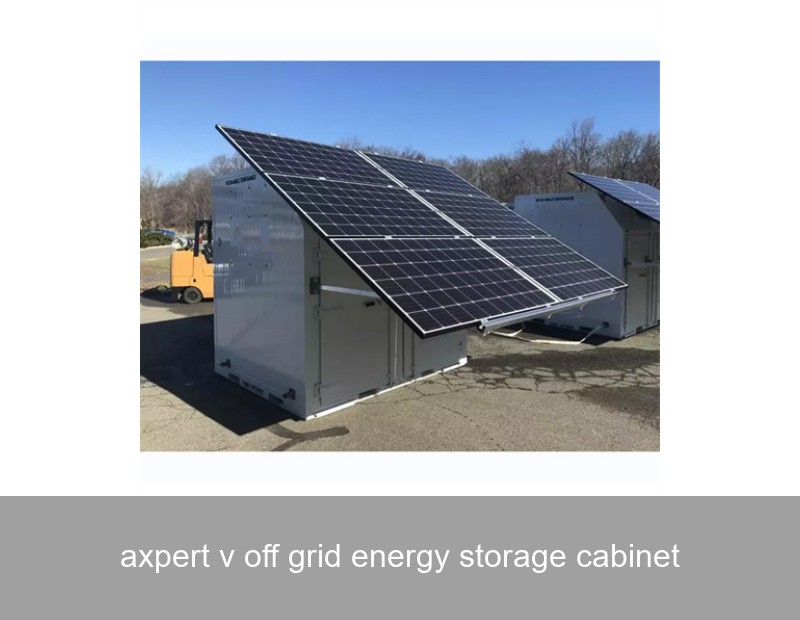
An Off-Grid Energy Storage Cabinet, such as the solutions pioneered by Highjoule, represents the next generation of energy independence technology. It's a pre-engineered, all-in-one unit that encapsulates the inverter, battery management system (BMS), cooling, safety mechanisms, and often the battery cells themselves into a single, sleek enclosure.
- What it is: A unified, plug-and-play energy storage system. Think of it as your personal, on-site micro-power plant. Key Strength: Simplicity and Reliability. With all components designed to work in perfect harmony from the factory, you benefit from optimized performance, a single warranty, and significantly simplified installation. Advanced models feature cloud-based monitoring and smart energy management software.
- Consideration: It is often a premium solution. However, the total cost of ownership—factoring in installation time, long-term reliability, and warranty support—can be highly competitive.

Credit: Photo by American Public Power Association on Unsplash. A modern energy storage cabinet like Highjoule's systems offers a clean, integrated installation.
Head-to-Head Comparison
| Feature | Axpert V Inverter (Component-Based System) | Off-Grid Energy Storage Cabinet (All-in-One System) |
|---|---|---|
| Integration | Requires assembly of separate components (inverter, batteries, BMS, etc.). | Fully integrated, factory-tested unit. Plug-and-play ready. |
| Installation & Complexity | More complex, requires high technical expertise for safe and efficient setup. | Streamlined, faster installation. Reduced on-site technical hurdles. |
| Scalability | Can be modular but depends on component compatibility and custom design. | Designed for easy, stackable expansion within the same ecosystem. |
| Monitoring & Control | Often basic local display; advanced monitoring may need add-ons. | Typically includes sophisticated, user-friendly cloud-based platforms. |
| Warranty & Support | Multiple warranties from different manufacturers. | Single, comprehensive warranty for the entire system from one provider. |
| Ideal For | Technically adept users, custom projects with specific constraints. | Homeowners, businesses, and communities seeking a hassle-free, reliable turnkey solution. |
A Real-World Case Study: The Bavarian Farm
Let's look at a concrete example from Southern Germany. A 200-acre dairy farm with rising energy costs and an unreliable rural grid connection needed a dependable off-grid solution to power its milking parlors, cooling tanks, and farmhouse.
The Initial Plan: A custom system using high-capacity inverters (similar in concept to the Axpert V) paired with lead-acid batteries. The project faced delays due to component sourcing and complex electrical integration.
The Solution Implemented: The farmer partnered with a Highjoule-certified installer who deployed a Highjoule SolsticeTM Off-Grid Cabinet. The system featured 120 kWh of lithium iron phosphate (LiFePO4) storage and 85 kW of integrated inverter capacity.
The Data-Driven Outcome (12-month period):
- Energy Independence: Achieved 99.8% off-grid operation, surviving multiple prolonged grid outages.
- Cost Savings: Reduced diesel generator usage by 95%, leading to an annual fuel saving of over €12,000.
- ROI: Projected payback period of 6-7 years, factoring in German energy price trends and declining renewable technology costs (IRENA).
- Simplicity: The farm manager monitors and manages the system via a simple smartphone app.
This case highlights how an integrated cabinet solution can overcome the practical challenges of a complex off-grid project, delivering reliability and economic benefits from day one.
Making the Right Choice for Your Needs
So, which path is right for you? Ask yourself these questions:
- Is "plug-and-play" reliability your top priority? If yes, an Off-Grid Energy Storage Cabinet is likely the superior choice.
- Do you have access to highly specialized, certified installers for a component-based system? If not, the risks of a mismatched DIY approach can outweigh the potential cost savings.
- What is your scalability vision? If you plan to expand significantly in the future, consider the ease of expansion offered by modular cabinet systems.
For most residential, commercial, and industrial applications in Europe and North America, the trend is decisively moving toward intelligent, all-in-one storage solutions. They mitigate risk, ensure compliance with evolving grid codes, and provide peace of mind.
How Highjoule Delivers Advanced Energy Solutions
At Highjoule, with nearly two decades of experience since 2005, we've evolved beyond component supply to become a leader in integrated smart energy systems. Our approach bridges the gap between raw power and intelligent, user-centric management.
Our GridShieldTM Commercial Cabinet Series and HomeSphereTM Residential Units embody the off-grid energy storage cabinet philosophy. These systems are not just containers for batteries; they are equipped with our proprietary Adaptive Core BMS and HarmonyOSTM energy management platform. This software intelligence enables features like predictive load shifting, peak shaving, and seamless integration with backup generators or microgrids.
We understand that energy needs vary. That's why our engineering team also provides expert consultation for large-scale, custom projects that may require specific inverter technology, offering the best of both worlds: cutting-edge components with master-level system design. You can explore the foundational safety standards for such systems through resources like the NFPA 855 standard for stationary energy storage.

Credit: Photo by Andreas Gücklhorn on Unsplash. A complete home energy system combining solar with integrated storage, like Highjoule's HomeSphere, maximizes self-consumption.
Ultimately, the debate between an Axpert V-style setup and an Off-Grid Cabinet isn't about which product is better—it's about which approach best serves your journey to energy independence. Are you building a system, or are you buying a solution?
What specific energy challenge—be it unpredictable outages, soaring bills, or a desire for true sustainability—is driving you to consider energy storage today?
 Inquiry
 Online Chat