


Unlocking Energy Independence: The Power of the ASD Automatic Storage Device
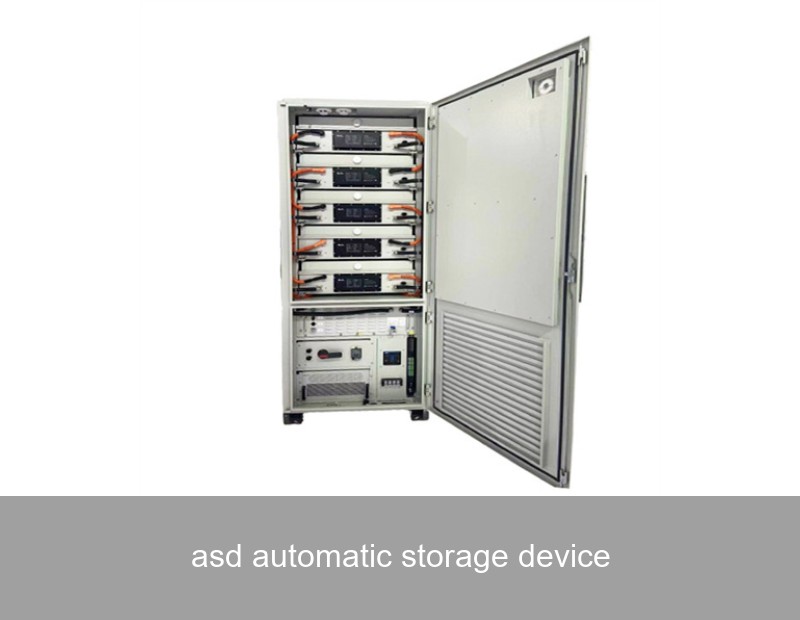
Imagine a world where your home or business isn't at the mercy of the grid. Where a power outage is a minor blip, not a crisis, and your solar panels work for you around the clock. This isn't a distant future—it's the reality enabled by today's smart energy storage. At the heart of this revolution is a key piece of technology: the ASD Automatic Storage Device. But what exactly is it, and why is it becoming a non-negotiable asset for energy-conscious consumers and businesses across Europe and the US? Let's demystify this technology and explore how it seamlessly integrates renewable energy, ensuring power is available precisely when and where you need it.
Table of Contents
- What is an ASD (Automatic Storage Device)?
- The Modern Grid Challenge: Intermittency & Instability
- Real-World Impact: A Case Study from California
- Beyond Backup: Financial and Grid Benefits
- Choosing the Right ASD System for Your Needs
- Your Energy Future: Questions to Consider
What is an ASD (Automatic Storage Device)?
An Automatic Storage Device (ASD) is far more than just a battery. It's an integrated, intelligent energy management system. At its core, an ASD combines high-capacity battery storage with sophisticated software and power electronics. Its primary function is to automatically store excess electricity—typically from solar panels—and then release it when demand is high, grid power is expensive, or during an outage. The "automatic" aspect is crucial; the system makes split-second decisions without requiring any input from you, optimizing your energy use for cost, efficiency, and resilience.
For over 18 years, Highjoule has been at the forefront of this intelligent storage revolution. Our Highjoule Hive series exemplifies the modern ASD. It's not just a hardware unit; it's a connected ecosystem that continuously learns your energy patterns, integrates with local weather forecasts, and can be managed remotely via an intuitive app. This transforms a passive battery into an active energy asset.
The Modern Grid Challenge: Intermittency & Instability
The push for renewables like solar and wind is essential, but it introduces a well-documented phenomenon: intermittency. The sun doesn't always shine, and the wind doesn't always blow. This creates a mismatch between when energy is generated and when it's needed most.
Let's look at the data. In Germany, renewable sources provided over 50% of public net electricity generation in 2023. However, the Fraunhofer Institute data shows significant daily and seasonal fluctuations. Similarly, in California, the now-familiar "duck curve" illustrates the steep plunge in solar output in the evening, just as demand peaks. This strain can lead to grid instability and increased reliance on fossil-fuel "peaker" plants.

Image Source: Wikimedia Commons, illustrating the daily generation pattern with solar peak.
The Problem: Without storage, excess solar energy produced at midday is often fed back to the grid at low value. Then, a few hours later, homeowners must buy back expensive power from the grid. This cycle limits the financial and environmental return on solar investments and stresses the infrastructure we all rely on.
How an ASD System Works: Intelligence in Action
This is where the ASD becomes the hero. Think of it as the brain and bank of your personal energy microgrid. Here’s the logical step-by-step process:
- Monitoring & Collection: The ASD's software constantly monitors energy flow: solar generation, home consumption, and grid status.
- Automatic Charging: When your solar panels produce more power than your home is using (e.g., on a sunny afternoon), the ASD automatically diverts that excess energy to charge its battery bank, instead of sending it all to the grid.
- Intelligent Discharge: When consumption rises above solar generation (in the evening, on cloudy days, or during a grid outage), the ASD automatically switches to power your home from the stored energy. No lights flicker, no appliances shut off.
- Advanced Optimization: Advanced systems like the Highjoule Hive can be programmed for time-based control. In regions with time-of-use (TOU) electricity rates, the system can decide to draw a small amount of grid power during super off-peak hours to top up the battery, ensuring you use virtually zero grid power during expensive peak periods.
| Time of Day | Solar Production | Home Demand | ASD Action | Grid Interaction |
|---|---|---|---|---|
| 10:00 - 15:00 | High | Medium | Charging from excess solar | Minimal export |
| 18:00 - 21:00 (Peak) | Low/None | High | Discharging to power home | Zero import (cost avoidance) |
| 02:00 - 05:00 (Super Off-Peak) | None | Very Low | Optional strategic charging | Low-cost import (if programmed) |
Real-World Impact: A Case Study from California
Data tells a story, but real-life examples bring it home. Consider a commercial case: a mid-sized winery in Sonoma County, California. This business had a 250 kW solar array but faced two major issues: crippling peak demand charges from irrigation pumps and cooling systems, and the constant threat of Public Safety Power Shutoffs (PSPS) during fire season, which could ruin an entire vintage.
They installed a Highjoule Hive-C Industrial ASD system with 500 kWh of storage. Here are the results after one year:
- Demand Charge Reduction: By using the ASD to "peak shave"—discharging battery power during the 2-3 highest consumption hours each day—they reduced their peak demand from the grid by 40%. This translated to an annual savings of over $28,000 on demand charges alone.
- Outage Protection: During three separate PSPS events totaling 11 days, the ASD system automatically islanded the facility. Critical refrigeration and security systems ran uninterrupted, protecting an estimated $600,000 worth of inventory.
- Increased Self-Consumption: Their solar self-consumption rate jumped from 35% to over 85%, maximizing the return on their existing solar investment.
This case clearly demonstrates the ASD's triple value: financial savings, operational resilience, and sustainability enhancement.
Beyond Backup: Financial and Grid Benefits
While backup power is a huge motivator, the financial case for an ASD is compelling on its own, especially with evolving policies.
For Homeowners:
With net metering rules changing in many states (like California's NEM 3.0), the value of exporting solar power to the grid has dropped significantly. An ASD shifts the strategy to self-consumption. You use your own cheap, clean solar power at night. Furthermore, programs like virtual power plants (VPPs) allow aggregators to use your ASD's stored energy (with your permission and for compensation) to support the grid during extreme stress, turning your storage into a potential revenue stream.
For the Grid & Society:
Widespread ASD adoption creates a more resilient and flexible electricity network. It flattens the demand curve, reduces the need for expensive and polluting peaker plants, and helps integrate more renewable sources. It's a foundational technology for the decentralized, democratic energy future.

Image Source: Unsplash - A home equipped for modern energy independence.
Choosing the Right ASD System for Your Needs
Not all storage solutions are created equal. When evaluating an ASD, consider these factors aligned with Highjoule's design philosophy:
- Intelligence & Software: The software is the brain. Look for systems that offer smart energy management, easy app control, and compatibility with future grid services.
- Safety & Reliability: Ensure the system uses proven, safe battery chemistry (like lithium iron phosphate, or LFP) and has robust thermal management and safety certifications.
- Scalability: Can you start with a smaller system and add more storage later as your needs or budget grow? Highjoule's modular design allows for this.
- Service & Warranty: This is a long-term investment. Choose a provider with a strong track record and comprehensive warranty. With a global service network, Highjoule supports its commercial and residential clients for the long haul.
For businesses, Highjoule's Hive-C and Hive-M (Microgrid) series offer scalable, three-phase power solutions with advanced grid-interactive capabilities. For homeowners, the Hive-R provides a sleek, all-in-one unit with the same intelligent software at its core.
Your Energy Future: Questions to Consider
The transition to a smarter, more resilient energy system is underway. The ASD automatic storage device is a key that unlocks personal control and participation in this transition. It moves us from passive consumers to active "prosumers."
So, as you look at your next electricity bill, consider the stability of your local grid, or ponder the true value of your solar panels, ask yourself this: What would it mean for you to have an intelligent partner automatically managing your energy, ensuring it's always there on your terms? The technology to answer that question is here, and it's more accessible than you might think.
 Inquiry
 Online Chat