


How to Successfully Apply for a Government Solar Scheme: Your Guide to Smart Energy Adoption
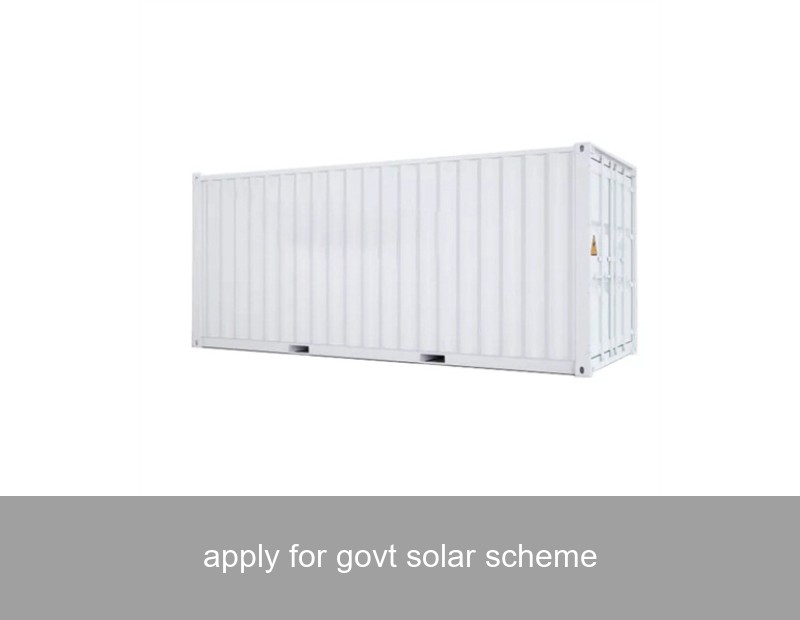
Thinking about harnessing the sun's power for your home or business? You're not alone. Across Europe and the US, a powerful trend is underway: homeowners and business leaders are actively seeking ways to reduce energy bills, gain energy independence, and contribute to a cleaner grid. The most significant catalyst for this shift? Government solar schemes. These incentives, which include tax credits, rebates, and grants, are designed to make solar and battery storage systems more accessible and affordable than ever. But the process to apply for a govt solar scheme can seem daunting. Where do you start? What are the key steps to ensure you maximize your benefits? This guide will walk you through the journey, from initial consideration to a fully operational, intelligent energy system that works for you.
Table of Contents
- The Rise of Solar Incentives: Why Now is the Time
- Understanding Different Types of Government Solar Schemes
- Step-by-Step: How to Apply for a Government Solar Scheme
- Case Study: Maximizing a Commercial Scheme in Germany
- Beyond Panels: The Critical Role of Battery Storage
- How Highjoule's Solutions Fit Into Your Solar Plan
- Your Next Steps Towards Energy Independence
The Rise of Solar Incentives: Why Now is the Time
The energy landscape is transforming. Volatile electricity prices and increased awareness of climate resilience are driving governments to actively support renewable energy adoption. In the United States, the Inflation Reduction Act (IRA) has supercharged the Investment Tax Credit (ITC), now offering a 30% tax credit for qualified solar and battery storage installations. Similarly, across the European Union, national schemes like Germany's EEG (Renewable Energy Sources Act) or the UK's Smart Export Guarantee (SEG) create compelling financial frameworks. The common goal? To accelerate the transition to a decentralized, clean energy system. For you, this means applying for these schemes isn't just about saving money—it's about investing in a predictable, self-controlled energy future at a historically advantageous moment.
Understanding Different Types of Government Solar Schemes
Before you apply, it's crucial to know what you're applying for. Schemes generally fall into a few categories:
- Upfront Incentives: These reduce the initial capital outlay. Think of rebates or grants that directly lower your installation invoice.
- Tax-Based Incentives: Like the US ITC, these reduce your income tax liability after the system is installed. You need sufficient tax appetite to benefit fully.
- Performance-Based Incentives: These pay you over time for the energy you produce. Feed-in Tariffs (FITs), common in Europe, guarantee a price for every kilowatt-hour you feed back to the grid.
- Export Tariffs: Modern versions like the SEG pay you for surplus energy you export, though typically at market rates.
The best approach is often a combination. For instance, you might use an upfront grant to lower the cost, then benefit from a tax credit, and finally earn revenue through an export scheme. Researching which combinations apply to your location is step one.
Key Agencies and Resources
| Region | Key Program/Authority | Focus |
|---|---|---|
| USA | DOE Solar Investment Tax Credit (ITC) | Federal tax credit for solar and storage. |
| Germany | Federal Ministry for Economic Affairs and Climate Action (BMWK) - EEG | Regulations and tariffs for renewable energy. |
| UK | Ofgem's Smart Export Guarantee (SEG) | Mandates payments for exported electricity. |
Step-by-Step: How to Apply for a Government Solar Scheme
Let's demystify the application process. While specifics vary, the journey shares common milestones.
- Audit & Plan: Begin with a professional energy audit. Understand your consumption patterns. This data is gold—it determines the optimal size of your solar array and, crucially, your battery storage system. Oversizing can hurt your return on investment.
- Research Local Schemes: Use official .gov or .eu websites. Check both national and local/state programs. Note deadlines, eligibility criteria (e.g., system size, equipment standards), and required documentation.
- Choose a Certified Installer & Technology: This is critical. Most schemes require installation by certified professionals. Your choice of technology partner also matters. An integrated system with high-efficiency panels and a smart battery like those from Highjoule ensures you meet technical standards and maximize self-consumption, a key metric for many incentives.
- Submit Pre-Approval (If Required): Some schemes need approval before installation begins. Your installer should help compile the technical specifications and application forms.
- Installation & Commissioning: Once approved, professional installation occurs. The system is then tested and certified to be grid-compliant.
- Final Application & Claim: Submit the final paperwork, including commissioning certificates and proof of purchase, to the relevant agency to receive your grant, rebate, or tax credit certificate.

Image Source: Unsplash - A professional installation is crucial for scheme compliance and system performance.
Case Study: Maximizing a Commercial Scheme in Germany
Let's look at a real-world example. A mid-sized bakery in Bavaria, Germany, wanted to reduce its operational costs and carbon footprint. They aimed to apply for a govt solar scheme under the EEG and a regional Bavarian funding program for commercial storage.
- Challenge: High daytime energy consumption for ovens and cooling, but no consumption at night. Without storage, most solar energy would be exported at lower rates.
- Solution: They installed a 100 kWp solar rooftop system paired with a 120 kWh Highjoule H-Stack Commercial battery storage system. The Highjoule system's intelligent energy management software was programmed to prioritize self-consumption, storing excess solar energy for use during evening baking prep and morning peaks.
- Application & Result: With their installer, they successfully applied for the EEG feed-in tariff for the residual export and secured a regional storage subsidy. The result? Energy costs reduced by 68% annually, and the system payback period was cut from 8 to under 5 years thanks to the combined incentives. The bakery now enjoys predictable energy costs and markets itself as a green business.
Beyond Panels: The Critical Role of Battery Storage
Here's a key insight many miss when they apply for a govt solar scheme: solar panels are only half the story. To truly capitalize on your investment and the intent of these incentives, integrating battery storage is essential. Why? Modern schemes increasingly reward self-consumption—using the energy you produce—over simple export. A battery allows you to store daytime solar surplus for use at night, dramatically increasing your self-consumption rate from ~30-40% to 70% or more. This directly translates to higher bill savings and greater independence from the grid. Furthermore, in the US, adding storage alongside solar still qualifies for the full 30% ITC, making it a financially savvy decision.
How Highjoule's Solutions Fit Into Your Solar Plan
As you navigate the process to apply for a govt solar scheme, choosing the right technology partner is paramount. This is where Highjoule's expertise becomes invaluable. Since 2005, we have specialized in intelligent, integrated storage solutions that are designed to work seamlessly with solar installations and, importantly, to meet the technical requirements of various incentive programs.
For residential clients, our HomePower series offers scalable, safe lithium iron phosphate (LFP) battery systems with integrated energy management. The system automatically optimizes for self-consumption, ensuring you get the most financial value from your solar array and any associated export tariffs.
For commercial and industrial applications, our H-Stack Modular system provides utility-grade storage that can be scaled from hundreds of kWh to MWh. Its advanced software can be configured for multiple value streams: maximizing self-consumption, participating in demand charge reduction, and even providing grid services where permitted—all factors that can be referenced in a robust incentive application to demonstrate system value and compliance.

Image Source: Unsplash - A modern home battery system, like Highjoule's HomePower, enables high self-consumption of solar energy.
Our global support teams are familiar with the documentation and performance reporting required by agencies in Europe and the US, providing you with the data and certificates needed for a smooth application process.
Your Next Steps Towards Energy Independence
The journey to lower energy bills and a sustainable footprint is clearer than ever, with government schemes providing a substantial financial bridge. You've now seen the roadmap—from understanding the incentive landscape to the importance of a holistic solar-plus-storage solution. The most successful projects start with a clear plan and the right partners.
So, what's the first, most specific question you need to ask your local solar installer to ensure your system is designed to maximize the benefits of the government scheme you're targeting?
 Inquiry
 Online Chat