


Aluminium Ion Battery Price: A Realistic Look at the Future of Energy Storage
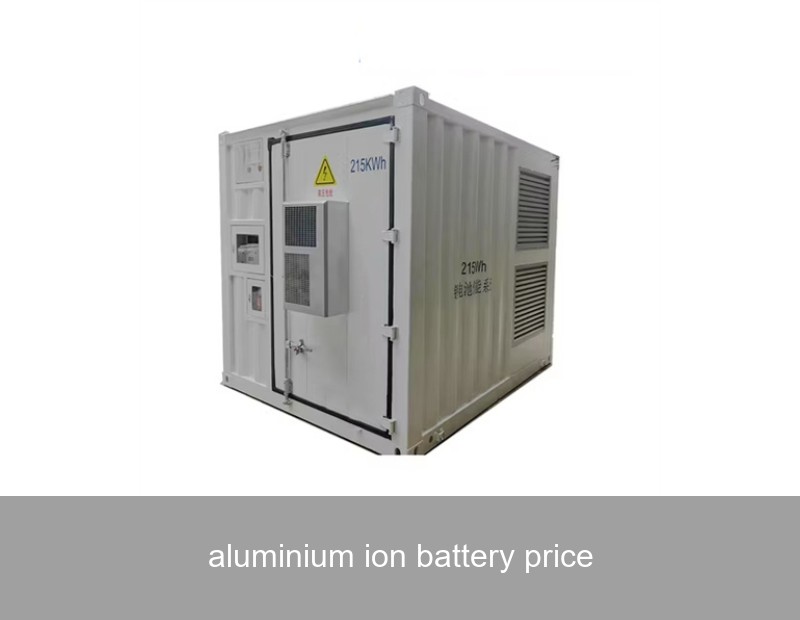
As the world accelerates its transition to renewable energy, a quiet revolution is brewing in the labs and, increasingly, on the grid. You've likely heard the buzz: a new contender promises to challenge the dominance of lithium-ion batteries. We're talking, of course, about aluminium-ion technology. But beyond the exciting headlines about ultra-fast charging and enhanced safety, one question dominates the conversation for businesses and homeowners alike: what is the realistic aluminium ion battery price, and when will it be viable? Let's move past the hype and examine the current cost landscape, the factors driving it, and what it means for your energy storage decisions today and tomorrow.
Table of Contents
The Current Price Reality: Lab Promise vs. Market Cost
It's crucial to separate the promising cost *potential* from the current commercial reality. While aluminium is the third most abundant element in the Earth's crust, making it inherently cheaper than lithium or cobalt, the current aluminium ion battery price at a commercial scale remains largely undefined. Most available data comes from research prototypes. The cost isn't just about raw materials; it encompasses the entire ecosystem: electrode design (often using graphite), electrolyte formulation, cell manufacturing, and system integration.
For comparison, lithium-ion battery pack prices have plummeted to around $139 per kWh as of 2023, according to BloombergNEF[1]. A nascent technology like aluminium-ion simply cannot compete with this mature, gigawatt-scale production yet. Early estimates suggest initial commercial prices could be 30-50% higher than established lithium-ion solutions, primarily due to low manufacturing volumes and unoptimized supply chains.
Key Drivers Behind Aluminium Ion Battery Price
Understanding what will ultimately determine the cost per kWh of this technology is key to forecasting its market entry. Let's break down the primary factors:
- Material Abundance & Cost: The aluminium anode material is cheap and plentiful. The real cost variables lie in the cathode (e.g., specialized carbon structures) and the ionic liquid electrolyte, which can be expensive to produce in high purity.
- Energy Density: Current prototypes offer lower energy density (Wh/kg) than top-tier lithium-ion. This means you need a larger, heavier battery for the same energy capacity, increasing system costs for space-constrained applications.
- Manufacturing Scale: This is the single biggest hurdle. Lithium-ion benefits from over three decades of scaled production optimization. Building gigafactories for a new chemistry requires massive capital investment.
- Cycle Life & Performance: Aluminium-ion boasts exceptional cycle life (potentially tens of thousands of cycles), which can drastically reduce the levelized cost of storage over the system's lifetime, even if the upfront price is higher.
| Factor | Aluminium-ion (Projected) | Lithium-ion (LFP - Current) |
|---|---|---|
| Key Material Cost | Very Low (Al) | Moderate (Li, Fe, P) |
| Energy Density | Lower (~70-150 Wh/kg) | Higher (~120-180 Wh/kg) |
| Cycle Life | Extremely High (>10,000) | High (3,000 - 6,000) |
| Manufacturing Maturity | Pilot / Early Commercial | Extremely Mature |
| Primary Safety Advantage | Non-flammable electrolyte | Thermally stable cathode (LFP) |

Image Source: Unsplash (User: @alexandertrenkin)
A Real-World Perspective: Grid Stability in Germany
Let's ground this discussion with a real need. In Germany, the rapid growth of wind and solar has created immense demand for frequency regulation services—short, rapid bursts of energy to keep the grid at 50 Hz. A 2022 study by the Fraunhofer Institute highlighted the need for storage systems with very fast response times and exceptional cycle durability[2].
This is a potential sweet spot for aluminium-ion technology. While lithium-ion batteries are deployed for this, their degradation from constant, rapid cycling is a cost factor. A battery that can withstand 10,000+ deep cycles with minimal degradation, like aluminium-ion promises, could offer a lower total cost of ownership for such demanding applications, even at a higher initial aluminium ion battery price. Pilot projects in this space will be critical to generating real-world cost and performance data.
Highjoule's Approach: Delivering Value with Today's Technology
At Highjoule, we monitor emerging technologies like aluminium-ion with great interest. Our commitment is to provide our commercial, industrial, and residential clients with the most reliable and economically viable storage solutions today. While we track the development of next-gen chemistries, our current focus is on maximizing the value and intelligence of proven technologies.
Our EnerGrid IQ series for commercial & industrial applications and HomeSphere systems for residences leverage advanced lithium iron phosphate (LFP) batteries. We pair them with our proprietary energy management software, which optimizes every cycle for longevity and cost savings—whether through solar self-consumption, peak shaving, or backup power. The goal is to drive down your effective cost of stored energy through superior engineering, smart software, and lifecycle management, building a bridge to the future.
When aluminium-ion technology achieves commercial maturity, demonstrates a clear total cost advantage, and meets our rigorous safety and reliability standards, Highjoule will be at the forefront of integrating it into our intelligent storage platforms.
The Future Cost Trajectory: What to Expect
So, when will the aluminium ion battery price become competitive? The path will likely mirror that of lithium-ion but potentially faster for niche applications. We expect:
- Niche Market Entry (2025-2028): Initial deployment in specialized applications where cycle life and safety are paramount, and a premium price is acceptable (e.g., specific grid services, military use).
- Cost Parity for Specific Use Cases (2028-2035): As manufacturing scales and cathode/electrolyte innovations materialize, the levelized cost could reach parity with lithium-ion for high-cyclability applications.
- Broad Market Competition (Post-2035): Potential for lower raw material costs to finally translate into lower upfront prices, enabling broader residential and EV adoption.

Image Source: Unsplash (User: @thisisengineering)
Making Your Storage Decision Today
The energy storage market is dynamic. Waiting for the "next big thing" can mean missing out on substantial savings and energy independence available right now. The right strategy is to invest in a flexible, intelligent system that can meet your current needs while being adaptable to future advancements.
At Highjoule, we believe in practical sustainability. This means implementing the best solution for your budget and goals today, with a clear roadmap for the future. Our systems are designed with upgradeability and technology-agnostic software in mind.
Given the current trajectory, is your organization's energy strategy focused on immediate, proven ROI, or are you planning for a specific future application where ultra-high cycle life is the absolute priority?
 Inquiry
 Online Chat