


AI Based Energy Solutions: The Intelligent Path to Grid Stability and Savings
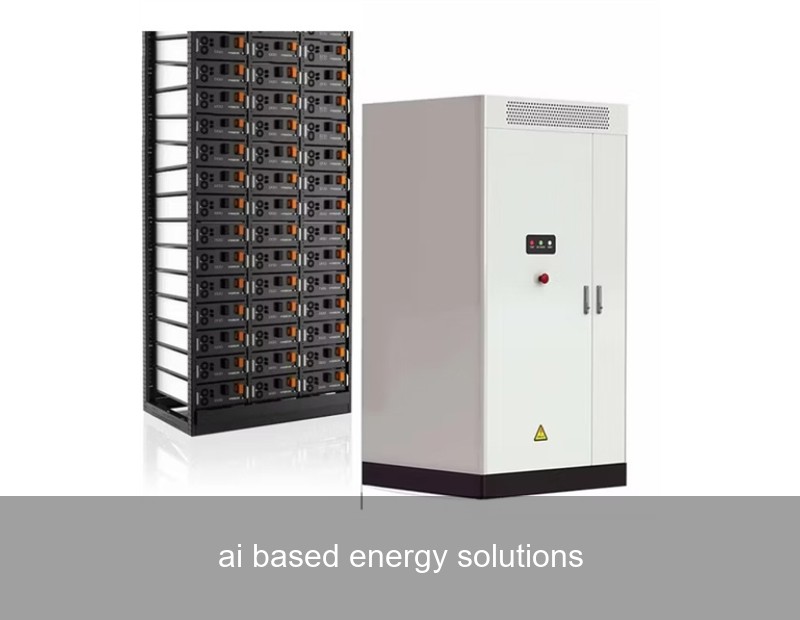
Have you ever wondered how we can keep the lights on as our power grids become more complex, integrating vast amounts of intermittent solar and wind? The answer is increasingly powered not just by electrons, but by algorithms. AI based energy solutions are emerging as the critical brain behind the modern grid, transforming how we generate, store, and consume electricity. For businesses and homeowners in Europe and the US facing volatile energy prices and sustainability goals, this isn't just tech jargon—it's the key to unlocking unprecedented control, efficiency, and cost savings. At Highjoule, we've been at the forefront of this evolution since 2005, embedding intelligence directly into our advanced battery storage systems to deliver resilient and smart power management.
Table of Contents
The Challenge: A Grid in Flux
The energy landscape is undergoing a seismic shift. The rapid adoption of renewable sources is fantastic for decarbonization, but it introduces a fundamental challenge: variability. The sun doesn't always shine, and the wind doesn't always blow. This creates a rollercoaster of supply that traditional, inflexible grids struggle to handle. The result? Grid instability, costly peak demand charges for consumers, and potential curtailment of clean energy because the grid can't absorb it all.
Consider this data point: In 2023, California's grid operator, CAISO, had to curtail over 2.4 million megawatt-hours of primarily solar and wind energy—enough to power over 250,000 homes for a year. This is clean energy literally going to waste. Simultaneously, during evening peaks when solar fades, utilities must fire up expensive and polluting peaker plants. The financial toll is significant; commercial facilities in regions like Texas or Germany can see over 50% of their electricity bills come from demand charges alone.

This is the core problem that AI based energy solutions are designed to solve. They move us from reactive energy management to predictive and adaptive control.
How AI Takes the Guesswork Out of Energy
At its heart, AI in energy is about prediction and optimization. Machine learning models digest vast datasets—historical consumption, real-time weather forecasts, grid tariff schedules, even building occupancy patterns—to make intelligent decisions about when to store energy, when to use it, and when to potentially sell it back to the grid.
- Predictive Analytics: AI algorithms forecast local solar/wind generation and building energy load hours or days ahead with remarkable accuracy.
- Autonomous Optimization: The system automatically decides the most economical strategy for your battery. Should it charge from cheap solar at noon, discharge during the expensive evening peak, or hold reserves for a potential grid outage?
- Grid Services Participation: Advanced systems can aggregate to form Virtual Power Plants (VPPs), where AI bids stored energy into grid balancing markets, creating a new revenue stream for the asset owner.
Think of it as having a brilliant, 24/7 energy trader and grid engineer embedded in your storage system. This isn't a distant future concept; it's technology deployed today.
Case Study: AI in Action at a German Industrial Park
Let's look at a real-world application. A medium-sized manufacturing park in North Rhine-Westphalia, Germany, was facing annual electricity costs exceeding €500,000, with sharp peaks driven by simultaneous machinery startup. Their goals were clear: reduce costs, increase on-site consumption of their rooftop solar PV, and contribute to grid stability.
The park installed a 1 MWh battery storage system integrated with an AI-driven energy management platform. The AI's role was to learn the consumption patterns of each hall, predict solar production, and understand the complex German electricity market (EPEX Spot) and grid fee structures.
| Metric | Before AI-Optimized Storage | After 12 Months of Operation |
|---|---|---|
| Peak Demand Charge | Reduced by 34% | |
| On-Site Solar Self-Consumption | Increased from 35% to 78% | |
| Revenue from Grid Frequency Regulation (aFRR) | €0 | €28,500 annually |
| Overall Energy Cost Savings | €112,000 annually |
The AI achieved this by performing "peak shaving"—discharging the battery just before predicted load spikes—and by automatically selling small packets of stored energy to the grid operator during moments of frequency imbalance, a service financially compensated. This case exemplifies the dual value of modern AI based energy solutions: major cost reduction and active income generation.
The Highjoule Approach: Built-in Intelligence for Every Scenario
At Highjoule, we believe intelligence shouldn't be an expensive add-on; it should be the foundation. Our product philosophy is to deliver AI based energy solutions that are seamlessly integrated, secure, and adaptable.

For our commercial and industrial clients, our H-Series C&I储能系统 comes standard with our proprietary Neuron OS. This onboard AI brain continuously analyzes energy flows, tariff data from over 50 global utilities, and weather APIs. It autonomously executes the most cost-effective strategy, and its algorithms improve over time through continuous learning. For larger deployments like microgrids, our GridSynch Platform uses AI to orchestrate multiple generation sources (solar, wind, gensets) and storage units as a single, resilient entity, ensuring priority loads are always powered.
For homeowners, particularly in markets like California or Italy with time-of-use rates, our Residential PowerStack with SmartLearn technology simplifies this complexity. The system learns the family's daily routine and, combined with solar production forecasts, pre-charges the battery from the grid when rates are lowest (e.g., 2 AM) to ensure ample, cheap power is available during the expensive evening peak (4-9 PM). The homeowner enjoys savings without ever needing to program a schedule.
Our services extend beyond hardware. Highjoule's Performance Guardian is a remote monitoring and AI-driven analytics service. It proactively identifies system performance deviations, predicts potential maintenance needs, and ensures our customers' energy assets are always performing at their financial and operational peak. This represents the full-circle promise of a true AI based energy solution: install, optimize, and perpetually refine.
The Future of AI and Energy: A Symbiotic Relationship
The convergence of AI and energy storage is accelerating. We are moving towards even more granular, real-time grid interactions and peer-to-peer energy trading within communities. The next frontier is the integration of electric vehicles (EVs) as mobile storage assets, where AI will optimally schedule EV charging and bidirectional discharging (V2G) based on the user's travel needs and grid signals.
Furthermore, as climate change increases the frequency of extreme weather events, AI-enhanced storage systems will become critical for resilience. They can predict outage risks based on storm paths and automatically "island" critical facilities or homes, ensuring continuity for essential services. The expertise of providers like Highjoule, with deep domain knowledge in both electrochemistry and software, becomes paramount in developing these robust, life-supporting systems.
The question is no longer if AI will manage our energy systems, but how quickly we can adopt it to maximize economic and environmental benefits. Is your organization merely consuming energy, or is it ready to intelligently manage it as a dynamic asset?
 Inquiry
 Online Chat