


Aggreko Energy: How Much Does Temporary or Mobile Power Really Cost?
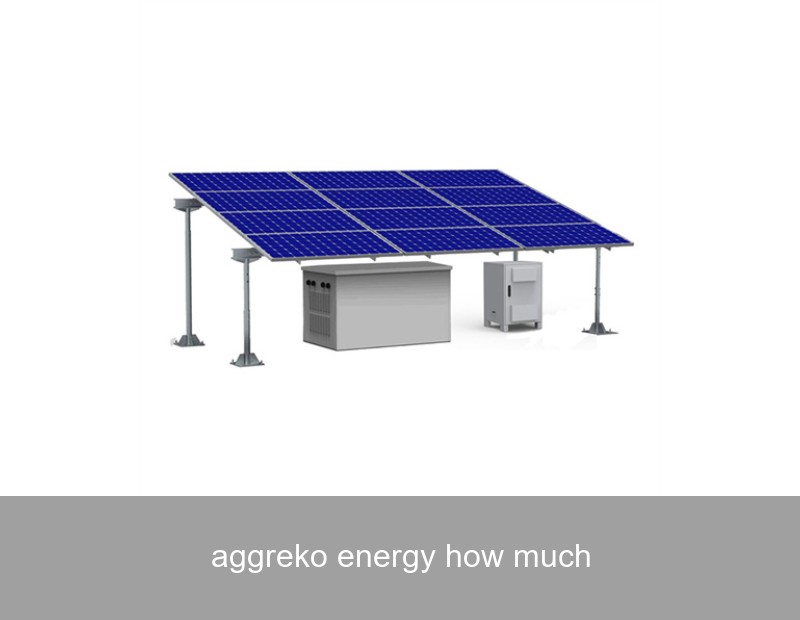
If you're managing a construction project, powering a festival, or ensuring business continuity during an outage, you've likely asked the question: "Aggreko energy, how much?" It's a natural starting point. However, the true cost of temporary or mobile power solutions extends far beyond the daily or weekly rental rate. In today's landscape, where energy reliability, sustainability, and total cost of ownership are paramount, understanding the full picture is critical for making an informed decision. This article breaks down the real costs—both obvious and hidden—and explores how modern, intelligent alternatives like advanced Battery Energy Storage Systems (BESS) are redefining value in mobile and semi-permanent power.
Table of Contents
The Real Cost Breakdown: More Than Just a Rental Fee
When you inquire, "Aggreko energy, how much?" the initial quote often covers the generator unit itself. But let's pull back the curtain. The total expenditure comprises several key components:
- Base Rental Fee: The advertised cost for the generator, often based on kW capacity and duration.
- Fuel Consumption & Delivery: This is a massive variable. Diesel generators run 24/7, and fuel costs can easily double the base rental, especially with volatile diesel prices. You're also paying for delivery and refueling logistics.
- Transportation & Logistics: Getting heavy equipment to and from site involves specialized trucks, permits, and labor.
- Operation & Maintenance (O&M): While often included, it's baked into the price. This includes routine checks, fluid changes, and repairs.
- Environmental & Social Costs: Noise pollution, local emissions (CO2, NOx), and the carbon footprint are increasingly tangible costs, both for your ESG reporting and community relations.

Image Source: Unsplash - Typical temporary diesel generator setup with fuel dependency.
The Data: Quantifying the Hidden Expenses
Let's put numbers to the narrative. According to industry analyses, fuel can account for 60-75% of the total lifetime cost of running a diesel generator. For a standard 200kVA unit running at 75% load, fuel consumption can be around 40 liters per hour. In a region like Germany, with diesel prices fluctuating around €1.70 per liter, that's nearly €1,600 per day in fuel alone for continuous operation. Add the rental fee, and your daily total quickly surpasses €2,500. Furthermore, a IEA report on CO2 emissions highlights that diesel generators emit approximately 2.6 kg of CO2 per liter of fuel burned, adding a significant carbon liability.
Case Study: A European Festival's Power Journey
Consider the "Valley Sounds" music festival in southern France. In 2022, they used a traditional temporary power package centered around multiple 500kVA diesel generators. Their post-event analysis was revealing:
| Cost Category | Amount (EUR, 2022) | Notes |
|---|---|---|
| Generator Rental (10 days) | 28,000 | Including basic maintenance |
| Diesel Fuel | 62,000 | ~37,000 liters consumed |
| Fuel Logistics & Security | 8,500 | Night refueling, storage |
| Noise Mitigation Measures | 3,000 | Extra sound-dampening walls |
| Total Direct Cost | 101,500 | |
| Estimated CO2 Emissions | 98 tonnes | From generator use alone |
This real data underscores how the question "Aggreko energy, how much?" leads to a six-figure answer where fuel is the dominant cost driver. The festival organizers also faced complaints from a nearby village about constant low-frequency noise, a social cost that's hard to quantify but very real.
The Modern Alternative: Smart Battery Energy Storage
The market is evolving. The answer to cost and complexity isn't just a different rental company; it's a different technology. Containerized Battery Energy Storage Systems (BESS) are now a viable, often superior, solution for many temporary and semi-permanent applications. Here’s why:
- Zero Fuel Cost: Once connected to a grid connection or paired with solar PV, operational "fuel" costs drop to near zero.
- Silent & Emission-Free Operation: Eliminates noise permits, community friction, and on-site emissions.
- Instantaneous Response & Peak Shaving: BESS can provide power in milliseconds and can be used to "shave" peak loads from a limited grid connection, potentially reducing connection upgrade costs.
- Predictable Costing: A daily rental rate covers almost all costs—no surprise fuel bills.
For example, a BESS can be charged overnight from a quiet, small grid connection or a temporary solar array, then discharge silently throughout the event day. The U.S. Department of Energy notes that lithium-ion battery cell costs have fallen dramatically, making this technology more accessible for rental fleets.

Image Source: Unsplash - A modern, containerized battery energy storage system for flexible power.
Highjoule: Your Partner in Sustainable, Intelligent Power
This is where Highjoule's expertise transforms the equation. Since 2005, we've moved beyond simply providing hardware to delivering intelligent, integrated power solutions. For clients seeking an alternative to traditional temporary power, our HJ MobilePower+ product line is a game-changer.
Our all-in-one mobile BESS units are designed for rapid deployment. They come pre-integrated with our advanced energy management system (EMS), which allows for:
- Dual-Input Charging: Charge from the grid or directly from renewable sources like our foldable, high-efficiency solar arrays.
- Smart Load Management: The EMS prioritizes power flow, ensuring critical loads are always supported and optimizing for cost and carbon savings.
- Remote Monitoring & Control: Our cloud-based platform gives you real-time visibility into state-of-charge, power flows, and system health from anywhere in the world.
For a manufacturing plant facing a two-week grid upgrade, a Highjoule HJ MobilePower+ system provided silent, fume-free backup power, charged from their own rooftop solar during the day. This not only saved them over 40% compared to a diesel generator quote but also allowed their production to continue without an environmental penalty.
Making the Right Choice for Your Project
So, how do you decide? When evaluating "how much," shift your mindset from "rental price" to "total project value." Ask these questions:
- Duration & Load Profile: Is it a short burst or a months-long project? Are loads constant or do they have sharp peaks? BESS excels for shifting energy and covering peaks.
- Site Constraints: Are there strict noise ordinances (common in urban EU/US), air quality regulations, or limited space for fuel storage?
- Sustainability Goals: Does your company have public carbon reduction targets? The emissions savings from a BESS can be a direct contribution.
- Grid Availability: Is there even a weak grid connection available for charging? If not, a hybrid solution (BESS + minimal generator) may be the most efficient path.
The future of temporary power is intelligent, flexible, and clean. It's about delivering energy where and when it's needed, without the baggage of the past.
Ready to Calculate Your Real Cost?
We invite you to move beyond the initial quote. What would the true total cost—in euros, in carbon, and in community impact—be for your next project if you chose a traditional path? More importantly, what could you save and gain with a smarter solution? Contact Highjoule's solutions team today for a complimentary, data-driven project analysis. Let's build your power plan around value, not just volume.
 Inquiry
 Online Chat