


Advanced Microgrid Solutions: Powering Resilience and Sustainability
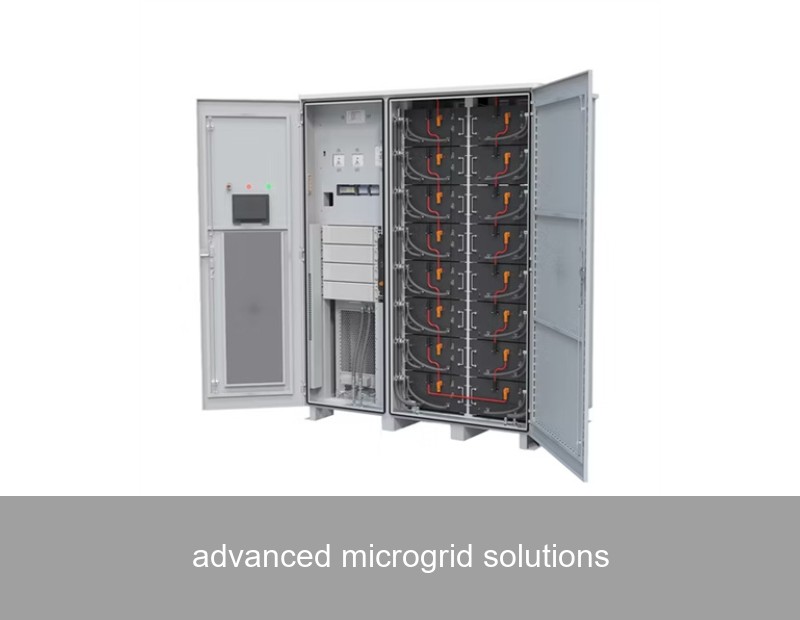
Imagine a community that keeps its lights on and critical services running, even when the main power grid goes dark. Or an industrial facility that slashes its energy costs and carbon footprint with intelligent, self-managed power. This isn't a distant future—it's the reality enabled by advanced microgrid solutions. These sophisticated, localized energy networks are transforming how we generate, store, and consume electricity. For businesses, municipalities, and communities facing rising energy costs, reliability concerns, and ambitious sustainability goals, modern microgrids offer a compelling answer. As a leader in this space since 2005, Highjoule designs and delivers intelligent microgrid systems that are redefining energy independence across the globe.
Table of Contents
- What Are Advanced Microgrids?
- The Key Components of a Modern Microgrid
- Why Move Beyond the Main Grid? Key Benefits
- Real-World Impact: A Case Study from California
- Highjoule's Role in Your Microgrid Journey
- The Future of Distributed Energy
What Are Advanced Microgrids? Beyond Basic Backup
At its core, a microgrid is a localized group of electricity sources and loads that can operate both connected to the traditional wide-area grid (the "macrogrid") and, crucially, autonomously as an "island." But advanced microgrid solutions are far more than just backup generators. They integrate renewable energy sources (like solar PV), sophisticated battery energy storage systems (BESS), and smart control software to form a resilient, efficient, and sustainable energy ecosystem. Think of it as a self-governing energy community that makes real-time decisions to optimize performance, cost, and reliability.

Image Source: Unsplash - A modern microgrid integrates solar generation and battery storage.
The Key Components of a Modern Microgrid
Building a robust microgrid requires seamless integration of several critical technologies:
- Distributed Generation: This is the "engine room," typically featuring solar PV arrays, wind turbines, or combined heat and power (CHP) units. Renewables are now the cornerstone of most new microgrid designs.
- Advanced Energy Storage: The heart of modern flexibility. Lithium-ion battery systems store excess renewable energy for use when the sun isn't shining or the grid is down. Highjoule's H-Cube BESS, for instance, offers scalable, containerized storage with superior cycle life and safety, forming the perfect buffer for microgrid operations.
- Intelligent Control System: The "brain" of the operation. This software platform continuously monitors supply, demand, weather, and grid conditions, making millisecond decisions to balance the system, minimize costs, and ensure stability during islanding.
- Load Management: Smart switches and meters that can intelligently shed non-critical loads or shift demand to match generation, enhancing overall efficiency.
Why Move Beyond the Main Grid? The Tangible Benefits
The shift towards advanced microgrid solutions is driven by powerful, measurable advantages that address today's most pressing energy challenges.
| Challenge | How Advanced Microgrids Help | Outcome |
|---|---|---|
| Grid Outages & Reliability | Seamless islanding capability provides continuous power to critical loads. | Operational resilience, avoided downtime costs. |
| High & Volatile Energy Costs | Maximizes self-consumption of cheap solar, reduces peak demand charges via storage. | Significant reduction in electricity bills (often 20-40%). |
| Sustainability Goals | Integrates high penetrations of renewables, reduces reliance on fossil-fuel grid power. | Lower carbon emissions, meeting ESG and regulatory targets. |
| Grid Modernization | Can provide grid services (frequency regulation, voltage support) when connected. | New revenue streams and a more stable public grid. |
The data is compelling. According to a report by the National Renewable Energy Laboratory (NREL), microgrids can improve local reliability by up to 99.999% (five-nines) for critical facilities, while integrating renewables at levels far beyond what the main grid can often accommodate.
Real-World Impact: A Case Study from Northern California
Let's move from theory to practice. Consider a mid-sized winery in Sonoma County, California—a region prone to Public Safety Power Shutoffs (PSPS) due to wildfire risk. For this business, a multi-hour outage during fermentation or refrigeration could ruin an entire vintage, representing millions in lost revenue.
The Phenomenon: Increasingly frequent and prolonged grid outages threatening a precision-dependent business.
The Data & Solution: The winery partnered with Highjoule to deploy a turnkey advanced microgrid solution. The system includes a 750 kW rooftop solar array, a 1.2 MWh Highjoule H-Cube battery storage system, and our proprietary GridSynergy AI controller. The system was designed to island the entire facility for a minimum of 8 hours.
The Outcome: In the last 18 months, the winery has experienced 6 grid outages, the longest lasting 11 hours. The microgrid seamlessly islanded each time, maintaining 100% operational continuity. Financially, the system reduces their annual energy bill by over 35% through solar self-consumption and demand charge management. They've also avoided an estimated $850,000 in potential product loss. "It's no longer just insurance; it's become a core, profit-protecting asset," noted the facility's manager.

Image Source: Unsplash - Wineries are ideal candidates for solar-powered microgrids.
Highjoule's Role in Your Microgrid Journey
Designing and implementing a reliable microgrid is complex. It requires deep expertise in power electronics, system integration, and long-term performance optimization. This is where Highjoule's nearly two decades of experience becomes your greatest asset. We don't just supply components; we deliver comprehensive, intelligent microgrid solutions.
Our process begins with a detailed feasibility analysis, modeling your energy profiles, site constraints, and financial goals. We then engineer the system around our core technology pillars:
- Highjoule H-Cube BESS: Our modular, UL-certified battery storage platform provides safe, scalable energy reserves. Its advanced thermal management ensures performance in diverse climates, from Scandinavian winters to Mediterranean summers.
- GridSynergy AI Platform: This is the intelligence layer. It doesn't just react—it forecasts weather, energy prices, and load patterns to optimize dispatch schedules for maximum savings and resilience.
- Integrated System Design & Support: We handle the entire integration of solar inverters, switchgear, and protection systems, providing a single point of responsibility. Our 24/7 monitoring and proactive maintenance ensure your system delivers for decades.
Whether for a remote industrial site in Scandinavia, a hospital campus in Germany, or a residential community in Texas, Highjoule tailors the solution to the specific technical and economic landscape of the project.
The Future of Distributed Energy: Where Are Microgrids Headed?
The evolution is towards interconnected, transactive energy networks. We're moving from single-owner microgrids to microgrid clusters or "grids of grids," where neighboring microgrids can trade excess power with each other, enhancing regional stability. Furthermore, the rise of electric vehicles (EVs) adds both a new challenge (increased load) and an opportunity (mobile storage resources). Future-ready advanced microgrid solutions, like those Highjoule is developing, will incorporate smart EV charging infrastructure, treating fleets of EVs as a dispatchable grid asset.
As noted by the International Energy Agency (IEA), the acceleration of decentralised, digitalised renewables integration is a cornerstone of net-zero pathways. Microgrids are at the forefront of this transition.
Ready to Explore Your Energy Independence?
The journey to a more resilient, sustainable, and cost-effective energy future starts with a conversation. What would uninterrupted power mean for your critical operations? How much could you save by intelligently managing your energy generation and consumption? Highjoule's experts are here to help you map your path. What's the first vulnerability or cost you'd like your energy system to address?
 Inquiry
 Online Chat