


Acumuladores Planet Energy: The Smart Storage Systems Powering a Sustainable Future
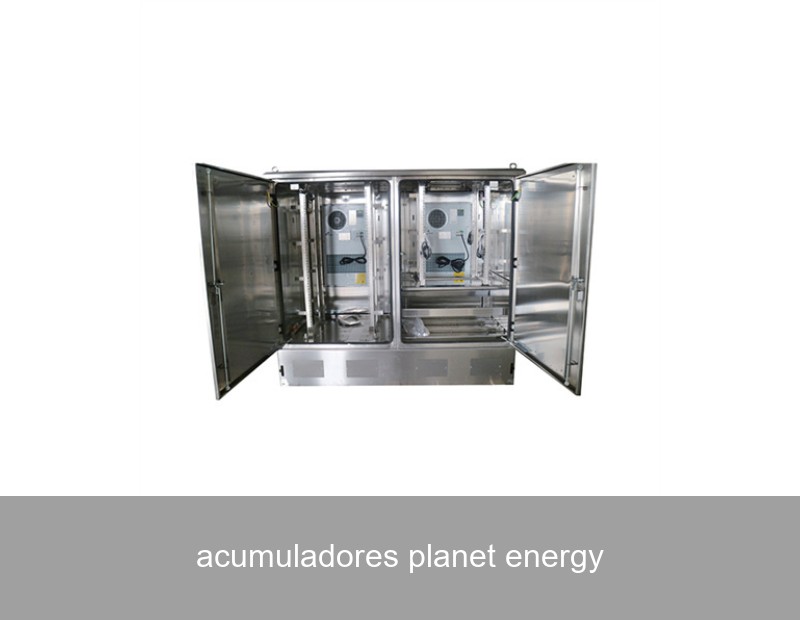
Imagine a world where the sun doesn't set on solar power, and the wind's energy is available on a calm day. This isn't science fiction; it's the promise of modern energy storage, often termed as the planet's new energy accumulators. As Europe and the U.S. aggressively pursue renewable targets, a critical question emerges: how do we capture and time-shift this abundant but intermittent power? The answer lies in sophisticated acumuladores planet energy – advanced battery energy storage systems (BESS) that act as the linchpin for a resilient, clean grid. For businesses and communities, this isn't just about being green; it's about energy independence, financial savings, and operational continuity.
What Are "Planet Energy Accumulators"?
Think of them as the "savings account" for our planet's energy. Instead of spending (using) renewable electricity the instant it's generated, we deposit it into high-capacity, intelligent storage systems. These acumuladores planet energy are far more than simple batteries. They are integrated systems comprising lithium-ion or other advanced chemistry battery racks, sophisticated power conversion systems (PCS), thermal management, and, crucially, intelligent energy management software (EMS). This brain of the operation decides when to store, when to discharge, and how to optimize every kilowatt-hour for economic or grid-stability purposes.
The Grid Strain Phenomenon: More Renewables, New Problems
The energy transition is in full swing. In 2023, renewables like wind and solar accounted for a record 30% of global electricity generation, according to the IEA. Yet, this success breeds a new challenge: the "duck curve." This phenomenon, first noted in California, describes the steep drop in net grid demand during sunny afternoons when solar floods the market, followed by a sharp evening ramp-up as the sun sets. This drastic swing puts immense strain on traditional power plants, can lead to curtailment (wasting) of renewable energy, and threatens grid stability.
Image Source: CAISO (California Independent System Operator) - Illustrative representation of the Duck Curve.
This is where the accumulator concept becomes vital. By charging during the midday solar surplus and discharging during the evening peak, these systems flatten the curve, turning a grid liability into a valuable asset.
The Data: Quantifying the Storage Imperative
The numbers speak volumes about the critical role of storage. The U.S. Energy Information Administration (EIA) projects that battery storage capacity will surge by 89% in the U.S. alone in 2024. In Europe, the European Association for Storage of Energy (EASE) estimates that to meet its 2030 climate goals, the EU needs approximately 200 GW of energy storage, up from around 60 GW today. This isn't just about capacity; it's about value. A study by the National Renewable Energy Laboratory (NREL) found that adding storage to solar PV can increase the value of solar by up to 30% by enabling more effective time-of-use arbitrage and grid services.
| Region | 2023 Capacity (GW) | 2030 Forecast (GW) | Primary Driver |
|---|---|---|---|
| United States | ~17 GW | ~80 GW | IRA incentives, Grid Modernization |
| Germany | ~5.5 GW | ~25 GW | Energiewende, Phase-out of Coal |
| United Kingdom | ~3.5 GW | ~20 GW | Frequency Response Market, Net Zero Target |
Case Study: A Bavarian Industrial Park's Journey to Resilience
Let's make this concrete. A mid-sized manufacturing park in Bavaria, Germany, faced volatile energy costs and concerns over grid reliability during winter peaks. Their 5 MW rooftop solar array often produced more than they could use at noon, selling at low prices, while they bought expensive power in the early evening.
Their solution was a turnkey acumuladores planet energy system. The installation featured a 4 MWh Highjoule H-Cube commercial storage system, integrated seamlessly with their existing solar PV. Highjoule's AI-driven energy management platform, HELIOS, orchestrates the entire operation. Here are the results after 18 months:
- Self-Consumption Increase: Solar self-consumption rose from 35% to over 80%, drastically reducing grid imports.
- Cost Savings: Achieved a 42% reduction in overall electricity costs through strategic arbitrage and peak shaving.
- Revenue Generation: The system participates in Germany's primary control reserve market, generating approximately €45,000 in annual ancillary service revenue.
- Backup Power: The system provides critical process backup for up to 2 hours, preventing costly production halts.
This case exemplifies how a modern accumulator is a multi-revenue asset, not just a cost center.
Building Your Planet Energy Accumulator: Highjoule's Integrated Approach
As a global leader since 2005, Highjoule specializes in transforming the concept of acumuladores planet energy into reliable, profitable reality. Our philosophy is that hardware and software must be co-engineered for optimal performance.
For commercial and industrial clients, our H-Cube series offers a modular, containerized solution scalable from 500 kWh to 20+ MWh. Its liquid-cooling technology ensures longevity and safety, crucial for demanding applications. For residential and small business clusters, the Highjoule Home+ system integrates solar, storage, and an EV charger into one elegant, user-friendly platform managed via a simple app.

Image Source: Highjoule.com - Highjoule H-Cube Commercial Energy Storage System.
The true differentiator is HELIOS, our proprietary energy management system. It doesn't just react; it forecasts weather, energy prices, and load patterns. It makes autonomous decisions to maximize your financial return, whether through utility bill savings, participating in demand response programs, or providing grid services. We provide a full suite of services from initial feasibility and financial modeling to installation, grid connection support, and long-term performance monitoring.
Key Components of a Highjoule Accumulator System
- Advanced Battery Modules: Using LFP (Lithium Iron Phosphate) chemistry for safety, longevity (10,000+ cycles), and stable performance.
- Bi-Directional Inverter: High-efficiency conversion between AC and DC power, ensuring minimal energy loss during storage and retrieval.
- Predictive Energy Management Software (HELIOS): The AI brain that optimizes for cost, consumption, and carbon footprint.
- Grid-Grade Safety Systems: Multi-layer protection including active thermal management, fault detection, and isolation.
The Future of Energy Storage: Beyond the Battery
The evolution of acumuladores planet energy continues. We are actively researching and integrating second-life EV batteries into stationary storage applications, promoting a circular economy. The future also points towards Virtual Power Plants (VPPs), where thousands of distributed Highjoule systems can be aggregated to act as a single, dispatchable power plant, providing critical grid stability and democratizing energy markets. Furthermore, the integration of green hydrogen as a long-duration storage medium alongside batteries will be key for seasonal storage and decarbonizing heavy industry.
So, as you look at your energy bills, sustainability goals, or community's resilience plan, ask yourself: Is my operation merely consuming energy, or is it ready to intelligently accumulate and manage it for a sustainable and profitable future? What would energy independence look like for your home or business?
 Inquiry
 Online Chat