


Understanding the 80Ah Lithium-Ion Battery: Power, Applications, and Smart Energy Solutions
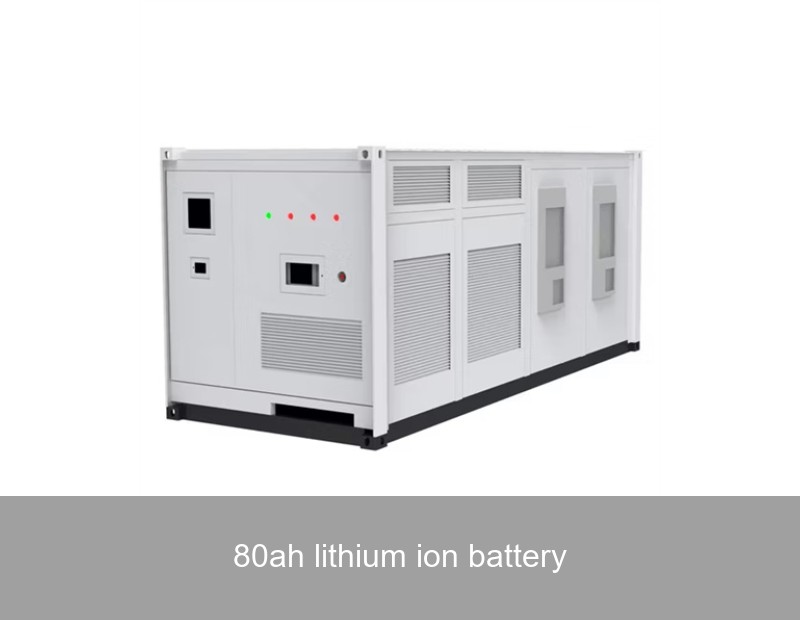
In the quest for reliable, sustainable power, one term you're likely encountering more often is the "80Ah lithium-ion battery." But what does this specification truly mean for your home, business, or community energy project? An 80Ah (Ampere-hour) rating signifies a robust energy capacity, capable of delivering 80 amps of current for one hour, or proportional combinations like 8 amps for 10 hours. This makes it a versatile powerhouse, finding its place in everything from premium recreational vehicles and marine applications to the heart of modern solar-plus-storage systems. As grid instability rises and the demand for clean energy grows, understanding this key component is the first step toward true energy independence. For over 18 years, Highjoule has been at the forefront, designing intelligent energy storage systems that leverage such advanced battery technology to deliver security, savings, and sustainability.
Table of Contents
- Why 80Ah? Decoding Capacity and Real-World Power
- Beyond the RV: The Expanding Role of 80Ah Batteries in Modern Energy
- The Data: Efficiency, Lifespan, and Total Cost of Ownership
- Case Study: Peak Shaving for a German Mittelstand Business
- Choosing the Right System: More Than Just a Battery
- Highjoule's Integrated Approach: Intelligence Meets Storage
- The Future of Storage and Your Next Step
Why 80Ah? Decoding Capacity and Real-World Power
Let's demystify the "80Ah" label. Think of it as the size of your energy fuel tank. A higher Ah rating generally means more stored energy. An 80Ah lithium iron phosphate (LiFePO4) battery, the dominant chemistry for stationary storage due to its safety and longevity, typically operates at 12.8V. This gives it a usable energy capacity of roughly 1 kilowatt-hour (kWh).
What can you power with 1 kWh? It could run a modern refrigerator for 3-4 hours, power a 50-inch LED TV for 15 hours, or keep essential lights and routers running during an outage for an entire evening. The real power, however, comes from scalability. Multiple 80Ah batteries can be connected in parallel to increase capacity (Ah) or in series to increase voltage, creating tailored systems for diverse needs.

Image: Modular battery systems allow for flexible scaling. (Source: Unsplash, representative image)
Beyond the RV: The Expanding Role of 80Ah Batteries in Modern Energy
While perfect for off-grid mobile applications, the 80Ah form factor is a foundational building block in larger, grid-connected systems. Its modular nature makes it ideal for:
- Residential Solar Storage: Homeowners pair 2-4 of these units with their solar panels to maximize self-consumption, store excess daytime production, and provide backup power.
- Commercial & Industrial (C&I) Peak Shaving: Businesses use large banks of 80Ah batteries to reduce demand charges—a significant portion of utility bills based on the highest 15-minute power draw in a month. The system discharges during these peak periods, slashing costs.
- Microgrids & Critical Backup: For remote communities or facilities like clinics and data centers, strings of 80Ah batteries provide a stable, resilient power source, often integrated with diesel generators and renewables.
The Data: Efficiency, Lifespan, and Total Cost of Ownership
The shift to lithium-ion, particularly LiFePO4, is driven by hard data. Compared to traditional lead-acid batteries, the difference is stark.
| Parameter | 80Ah LiFePO4 Battery | 100Ah Lead-Acid Battery (Equivalent Usable Capacity) |
|---|---|---|
| Usable Depth of Discharge (DoD) | 90-100% | ~50% |
| Round-Trip Efficiency | >95% | 70-85% |
| Cycle Life (to 80% capacity) | 3,500 - 6,000 cycles | 300 - 1,200 cycles |
| Approx. Lifespan (Years, with daily cycling) | 10-15+ years | 2-5 years |
This data, sourced from industry analyses like those by the U.S. Department of Energy, reveals a critical insight: while the upfront cost of lithium-ion may be higher, its Total Cost of Ownership (TCO) is significantly lower over a decade. You're buying more usable energy, losing less to heat, and replacing the system far less frequently. The higher cycle life directly translates to long-term value and sustainability.
Case Study: Peak Shaving for a German Mittelstand Business
Let's look at a real-world application in our core European market. A mid-sized bakery in Bavaria, Germany, faced steep monthly demand charges from its utility. Their operations—ovens, refrigeration, lighting—created sharp peaks in power draw, especially in the early morning.
The Challenge: Reduce peak demand by at least 30 kW to cut utility costs without disrupting production.
The Highjoule Solution: A custom 50 kWh battery energy storage system (BESS) was designed using a modular array of high-quality 80Ah LiFePO4 cells. The system was integrated with the facility's main electrical panel and controlled by Highjoule's proprietary Adaptive Peak Shaving Algorithm.
- Peak Demand Reduction: 35 kW on average, exceeding the target.
- Annual Savings: €8,200 in demand charges.
- ROI Period: Achieved in under 5 years, with a system warranty covering 10 years.
- Added Benefit: The system also provides seamless backup power for critical refrigeration, protecting inventory.

Image: Commercial energy storage helps businesses like bakeries manage high power demands. (Source: Unsplash, representative image)
This case demonstrates that an 80Ah-based system isn't just about capacity; it's about intelligent discharge control. The right battery is a tool, and the brain controlling it unlocks the true value.
Choosing the Right System: More Than Just a Battery
Selecting an 80Ah battery is just the beginning. A safe, efficient, and long-lasting storage solution is an integrated ecosystem. Key components include:
- Battery Management System (BMS): The essential "brain" that monitors cell voltage, temperature, and state of charge, ensuring safety, balance, and longevity.
- Hybrid Inverter/Charger: The "heart" that manages energy flow between solar panels, the battery, the grid, and your home's circuits. It converts DC to AC and vice versa.
- Thermal Management: Proper cooling (and sometimes heating) is critical for performance and safety, especially in extreme climates.
- System Integration & Software: The "nervous system" that allows you to monitor, control, and optimize your energy use via an app, and enables smart grid functions.
Highjoule's Integrated Approach: Intelligence Meets Storage
At Highjoule, we don't just supply batteries; we engineer complete, intelligent power solutions. Our H-Series Commercial & Industrial and Nexus Home Energy platforms are built around high-density, UL/Certified battery modules, many utilizing the robust 80Ah-class LiFePO4 cell architecture for optimal balance of power and size.
What sets our systems apart is the Highjoule Energy Operating System (EOS). This cloud-connected software layer uses predictive analytics and real-time data to make intelligent decisions. For a homeowner, it learns consumption patterns and weather forecasts to optimize solar self-consumption. For a business, it automatically dispatches stored energy during the most expensive utility rate periods, as seen in our bakery case study. We provide a single point of responsibility—from design and permitting to installation support and long-term performance monitoring.
The Future of Storage and Your Next Step
The evolution of the 80Ah lithium-ion battery mirrors the broader energy transition: towards modular, efficient, and intelligent systems. As virtual power plants (VPPs) become more common, these distributed assets will play a crucial role in grid stability, allowing communities to share and trade energy locally.
So, whether you're a homeowner tired of blackouts, a business owner scrutinizing operational costs, or a project developer planning a microgrid, the question is no longer just "what size battery do I need?" The more pertinent question is: How can I transform my stored energy from a passive asset into an active, intelligent tool for resilience and savings?
What is the primary energy challenge you're looking to solve—is it backup power, reducing a specific peak demand charge, or maximizing a solar investment? Defining that goal is the first step toward a solution that truly powers your potential.
 Inquiry
 Online Chat