


Understanding the 5kVA BESS Price in Nepal: Your Guide to Smart Energy Investment
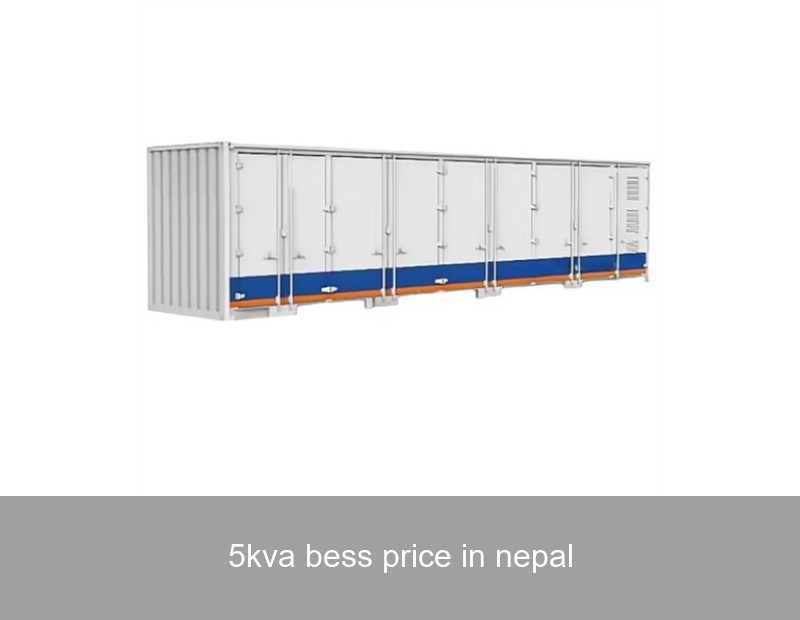
If you're running a business, managing a farm, or powering a home in Nepal, you're no stranger to load-shedding. The frequent power cuts aren't just an inconvenience; they disrupt productivity, spoil goods, and stall economic growth. In this challenging landscape, a 5kVA Battery Energy Storage System (BESS) has emerged as a critical solution for reliable backup and solar energy optimization. But when researching, the immediate question that arises is: what determines the 5kVA BESS price in Nepal? The figure you see isn't just for a battery box; it's an investment in resilience, efficiency, and long-term savings. This article will demystify the costs, showcase real impact, and guide you toward a smart purchase that powers your potential through Nepal's unique energy challenges.
What is a 5kVA BESS and Why is it a Game-Changer?
Let's break it down simply. A 5kVA BESS is an integrated power system. The "5kVA" refers to its power rating—it can deliver up to 5 kilovolt-amperes (roughly 4-4.5 kW) of electricity at any given moment. This capacity is ideal for powering essential loads in a small to medium business (like a clinic, workshop, or retail store), a larger home, or a critical agricultural operation. The "BESS" part—the Battery Energy Storage System—is the brain and muscle. It's not just a battery; it includes the battery bank (often lithium-ion now), a smart inverter/charger, a battery management system (BMS) for safety and longevity, and often sophisticated energy monitoring software.
In Nepal, where grid stability is a concern and solar potential is immense, a BESS transforms your energy setup. It stores excess solar energy generated during the day for use at night or during grid outages, maximizing your solar investment. It provides seamless, instant backup—no more scrambling for a diesel generator when the lights go out. This dual function makes it a cornerstone for true energy independence.
Decoding the 5kVA BESS Price in Nepal: Key Cost Factors
The quoted 5kVA BESS price in Nepal can vary significantly. Understanding the components behind the price tag ensures you compare apples to apples and invest in quality.
- Battery Technology & Capacity (kWh): This is the largest cost driver. Are you considering advanced Lithium Iron Phosphate (LiFePO4) batteries or older lead-acid? LiFePO4, while having a higher upfront cost, offers 3-5 times longer lifespan, deeper discharge capability, and requires no maintenance. The storage capacity (measured in kWh, e.g., 10kWh) defines how long your system can run. A 5kVA inverter paired with a 10kWh battery offers a different value proposition than one paired with 5kWh.
- Inverter Charger Quality: The inverter is the heart. A high-quality hybrid inverter from a reputable brand ensures efficient conversion from DC (battery/solar) to AC (your appliances), seamless grid/solar/battery switching, and robust surge protection for sensitive electronics.
- System Intelligence & Software: Can you monitor and control your system via a smartphone app? Can it be programmed for time-of-use optimization, a feature increasingly relevant as Nepal's grid modernizes? This smart layer adds value.
- Installation, Wiring, and Balance of System (BOS): Professional installation by certified technicians, proper cabling, safety disconnects, and mounting structures are crucial for safety and performance and are part of the total cost.
- Brand, Warranty, and After-Sales Service: A system backed by a strong local warranty (e.g., 10 years on batteries) and a provider with a reliable service network across Nepal provides peace of mind that outweighs a marginally cheaper, unsupported option.

Image Source: Unsplash (Representative image of a modern BESS installation)
A Real-World Case: Kathmandu Valley Tea Processing Unit
Let's move from theory to practice. Consider a medium-sized tea processing unit in the outskirts of Kathmandu. Their cold storage and drying machines are critical; a 4-hour daily load-shedding during peak processing season risked spoiling inventory, costing an estimated NPR 800,000 annually in lost product and diesel generator fuel.
In 2023, they installed a 5kVA/15kWh Highjoule H-Ion Cube system, integrated with their existing rooftop solar. The system was designed to prioritize solar energy, store excess, and provide instant backup. The 5kVA BESS price in Nepal for this turnkey solution was an investment, but the results were clear within a year:
| Metric | Before BESS | After BESS Installation |
|---|---|---|
| Daily Diesel Cost | NPR 4,500 | NPR 0 |
| Annual Product Loss | ~NPR 800,000 | Negligible |
| Grid Electricity Bill | NPR 120,000/month | NPR 65,000/month (solar offset) |
| System Availability | ~75% | >99.5% |
The project's payback period was calculated at under 4 years, considering the savings on diesel, reduced grid consumption, and prevented losses. This case, mirrored by many SMEs across Nepal, shows that the true cost of a BESS is not just its sticker price, but the total cost of *not* having one.
Highjoule's Smart Solutions for the Nepali Market
At Highjoule, with nearly two decades of global experience in advanced energy storage, we understand that Nepal's energy landscape demands robust, intelligent, and climate-adaptive solutions. Our systems, like the H-Ion Series designed for commercial and industrial applications, are engineered for the challenges of varied climates and grid conditions found across Nepal.
What does this mean for your evaluation of the 5kVA BESS price in Nepal? It means you're investing in a system built with Tier-1 LiFePO4 cells for maximum safety and cycle life, hybrid inverters with high efficiency ratings (>98%) to squeeze every rupee of value from your solar energy, and an integrated Energy Management System (EMS). Our EMS can be configured for Nepal's specific context—managing backup thresholds, optimizing solar self-consumption, and preparing for future grid interaction features. When you partner with Highjoule, you're not just buying hardware; you're accessing global expertise localized for Nepal, with technical support and warranty services provided through our trusted network of partners in the region.
Beyond Price: Calculating Long-Term Value & ROI
Focusing solely on the lowest upfront 5kVA BESS price in Nepal can be a costly mistake. A value-focused assessment considers:
- Total Cost of Ownership (TCO): Include expected battery replacements over 15-20 years. A LiFePO4 system may have zero replacements, while lead-acid may need 3-4, drastically changing the long-term math.
- Operational Savings: Quantify your current losses during outages (perishable goods, idle labor, lost sales) and diesel/generator maintenance costs.
- Increased Solar Self-Consumption: A BESS can increase the portion of your own solar energy you use from ~30-40% to over 80%, dramatically reducing your grid bill. The IEA notes the critical role of storage in unlocking solar potential in developing economies.
- Business Continuity & Asset Protection: How much is guaranteed power for your servers, medical equipment, or refrigeration worth? This is often the most compelling "value" argument.
Choosing the Right 5kVA BESS: A Practical Checklist
Armed with this knowledge, use this checklist when evaluating systems and quotes:
- [ ] Technology: Does it use modern LiFePO4 chemistry?
- [ ] Warranty: What is the warranty on batteries and inverter (in years and cycles)? Is it backed by a local entity?
- [ ] Depth of Discharge (DoD): A 90%+ DoD means you can use almost all the stored energy without harming the battery.
- [ ] Scalability: Can you easily add more battery modules later if your needs grow?
- [ ] Monitoring: Is there a user-friendly, real-time monitoring platform (app/web)?
- [ ] Grid & Solar Integration: Is it a true hybrid system that can manage solar, grid, and battery simultaneously?
- [ ] Installation Partner: Is the installer certified and experienced with a proven track record?
Image Source: Unsplash (Representative image of an energy management interface)
The Future of Energy Independence in Nepal
The conversation around energy in Nepal is rapidly evolving from mere backup to intelligent energy management. As the grid improves and possibly introduces time-based tariffs, a smart BESS will allow you to buy grid power when it's cheapest and use your stored solar when it's most expensive. The initial 5kVA BESS price in Nepal is, therefore, your entry ticket into a future-proof energy setup. It's an asset that starts saving money and securing your operations from day one.
Given Nepal's ambitious renewable energy goals, supported by policies and international funding, investing in storage is aligning with the nation's energy future. Resources like the Asian Development Bank's projects in Nepal's energy sector highlight the push for sustainable, reliable power infrastructure where storage plays a key role.
So, what is the first, most critical step you will take to move from being at the mercy of the load-shedding schedule to becoming the master of your own reliable, clean energy supply?
 Inquiry
 Online Chat