


Demystifying the 5kWh Solar Energy Storage Cabinet Price: A Smart Investment Guide
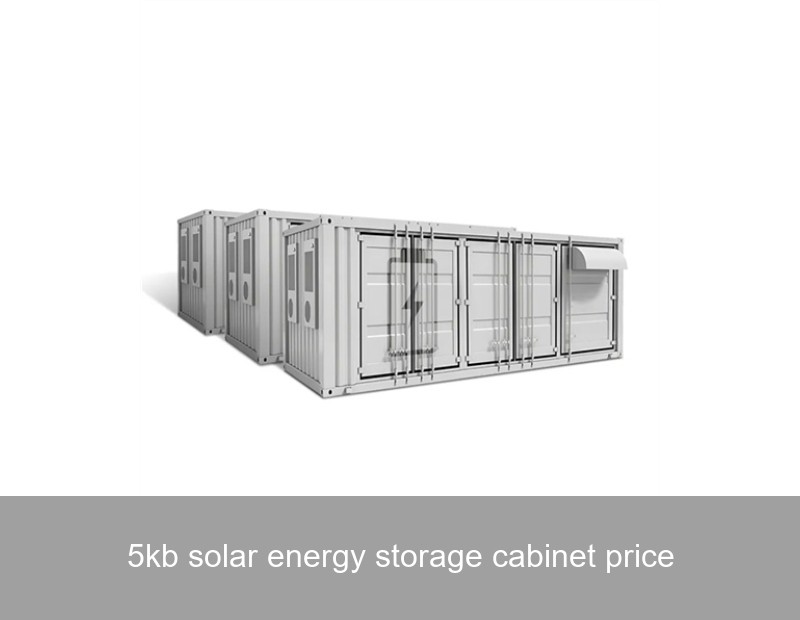
You've made the excellent decision to harness solar power, and now you're considering the next logical step: storing that clean energy for when you need it most. A common starting point for many homeowners and small businesses is a 5kWh solar energy storage cabinet. But when you start researching, the price can seem like a puzzle. Why do costs vary so much? Is it just about the battery cells, or is there more to the story? As a product technology expert at Highjoule, I'm here to guide you through the factors that truly define value and performance in this crucial investment.
Table of Contents
- The Real Breakdown of a 5kWh Storage Cabinet Price
- Beyond the Battery: The Intelligence Inside the Cabinet
- Total Cost of Ownership: The Long-Term Price Perspective
- A Real-World Case: The German Household Shift
- The Highjoule Approach: Engineered for Value and Resilience
- Asking the Right Questions for Your Investment
The Real Breakdown of a 5kWh Storage Cabinet Price
Let's clear up a common misconception first. When discussing a 5kWh solar energy storage cabinet price, we're not just talking about a box of batteries. You're investing in an integrated system. The upfront cost typically encompasses several key components:
- Battery Cells & Chemistry: This is the core energy reservoir. Lithium Iron Phosphate (LFP) is the dominant, safest choice for homes today. While raw cell costs fluctuate, the quality, brand, and manufacturing standards (like UL or IEC certification) significantly impact price.
- Battery Management System (BMS): Think of this as the brain and guardian of your battery. A high-quality BMS meticulously monitors cell voltage, temperature, and health, ensuring safety, maximizing lifespan, and optimizing performance. A cheaper, less sophisticated BMS is a major risk point.
- Power Conversion System (PCS / Inverter): This is the translator between your solar panels, your battery (DC power), and your home appliances (AC power). Its efficiency rating (e.g., 97% vs. 94%) directly affects how much harvested energy you actually get to use. An integrated, compatible inverter often offers better performance than a mismatched setup.
- Cabinet, Thermal Management & Safety Hardware: The physical enclosure isn't just for looks. It houses critical cooling systems (passive or active) and safety disconnects. A robust design ensures stable operation in your garage or basement through seasonal temperature swings.
- Software & Connectivity: Modern storage is smart. The accompanying energy management software allows you to monitor production, consumption, and savings in real-time, set preferences for backup or cost-saving modes, and receive firmware updates.
According to a U.S. Department of Energy report, the declining cost of batteries is a major driver, but system integration, smart controls, and installation are substantial parts of the total value proposition.
Beyond the Battery: The Intelligence Inside the Cabinet
This is where the price differentiation becomes clear. Two cabinets with similar 5kWh nameplate capacities can perform vastly differently over their lifetime. The key metrics to scrutinize are:
| Metric | What It Means | Impact on Value |
|---|---|---|
| Round-Trip Efficiency | The percentage of energy put in that you can get back out (e.g., 9.5 kWh in, 9 kWh out = ~95% efficiency). | Higher efficiency means less wasted solar energy, leading to greater bill savings and faster ROI. |
| Depth of Discharge (DoD) & Cycle Life | DoD is how much of the battery's capacity can be safely used. Cycle life is the number of charge/discharge cycles it can perform at a specified DoD before significant degradation. | A system rated for 100% DoD and 6,000 cycles offers far more usable energy over its life than one rated for 90% DoD and 4,000 cycles. |
| Power Rating (kW) | How much electrical power the system can deliver at once. A 5kWh battery with a 5kW power rating can run more large appliances simultaneously than one with a 2.5kW rating. | Critical for backup power during outages; determines if you can run your fridge, lights, and a heat pump simultaneously. |
So, a slightly higher initial 5kWh solar energy storage cabinet price for a unit with superior efficiency, deeper cycling capability, and higher power output almost always translates to a lower cost per kilowatt-hour over the system's 15+ year lifespan.
Total Cost of Ownership: The Long-Term Price Perspective
The most important price isn't the sticker price—it's the Total Cost of Ownership (TCO). TCO factors in:
- Installation & Integration: A modular, pre-integrated cabinet designed for easy installation can reduce labor costs significantly.
- Warranty & Support: A comprehensive 10-year warranty that guarantees both capacity retention (e.g., 70% after 10 years) and parts/labor is invaluable. It's a direct reflection of the manufacturer's confidence in their product.
- Energy Bill Savings: The core purpose! By storing excess solar for use at night and during peak utility rate periods (like California's high-priced evenings), the system pays for itself over time.
- Grid Independence & Resilience: For many in areas with frequent outages (like parts of the US Midwest or after extreme weather events in Europe), the value of reliable backup power is a major, though hard-to-quantify, component of the ROI.

Image: A modern, wall-mounted home energy storage system. Credit: Unsplash.
A Real-World Case: The German Household Shift
Let's look at concrete data from a key market. In Germany, with high electricity prices and strong solar adoption, a typical single-family home with a 8kWp solar array added a 5kWh storage unit in 2022.
- Goal: Maximize self-consumption of solar power and provide basic backup.
- System Cost (approx.): €4,500 - €6,500 (including cabinet, hybrid inverter, and professional installation).
- Result: The household increased its self-consumption rate from ~30% to over 70%. This translated to a reduction in grid electricity purchases of approximately 2,500 kWh annually. At the German household electricity price of around €0.40/kWh (2023 average), this creates annual savings of €1,000.
- Payback Period: A simple calculation puts the payback in the 5-7 year range, well within the system's warranty period. Every kilowatt-hour used after that is nearly free energy for the life of the system.
This case shows that the 5kWh solar energy storage cabinet price is an investment that generates a tangible, predictable financial return, while also increasing energy security.
The Highjoule Approach: Engineered for Value and Resilience
At Highjoule, with nearly two decades of engineering expertise, we design our residential storage solutions, like the Highjoule HES Series, with the TCO principle at their core. We understand that a competitive price must be built on uncompromising quality and intelligence.
Our 5kWh modular cabinets are built with automotive-grade LFP cells and feature a proprietary, multi-layer BMS that operates with surgical precision. The integrated hybrid inverter boasts a round-trip efficiency of over 96.5%. But the real differentiator is our Adaptive Learning Energy Operating System (ALEOS). This software doesn't just store and release energy; it learns your household's patterns, forecasts weather, and can integrate with dynamic utility tariffs to automatically optimize for maximum savings or comfort.
For our commercial and microgrid clients, this intelligence scales. Our larger systems provide not just backup, but active grid services, turning a storage asset into a revenue stream. Whether for a home, a business, or a community project, Highjoule's focus is on delivering a system where the long-term value far exceeds the initial investment.
Asking the Right Questions for Your Investment
Instead of just asking "what's the price?", empower yourself to ask your installer or supplier these targeted questions about their 5kWh offering:
- "What is the guaranteed end-of-warranty capacity (e.g., what percentage of the original 5kWh is guaranteed after 10 years)?"
- "What is the continuous power rating in kW, and what can that realistically power in my home during an outage?"
- "Is the system's software updateable, and does it allow for smart load management or integration with future time-of-use rates?"
- "Is the cabinet rated for outdoor installation, and what is its operating temperature range?"
Given that your energy needs and local grid policies are unique, what specific goal—be it slashing your peak demand charges, achieving near-total energy independence, or simply having peace of mind during storm season—is most important for you to address with your solar storage system?
 Inquiry
 Online Chat