


Demystifying the 50 kWh Lithium-Ion Battery Price in Sweden for Your Sustainable Future
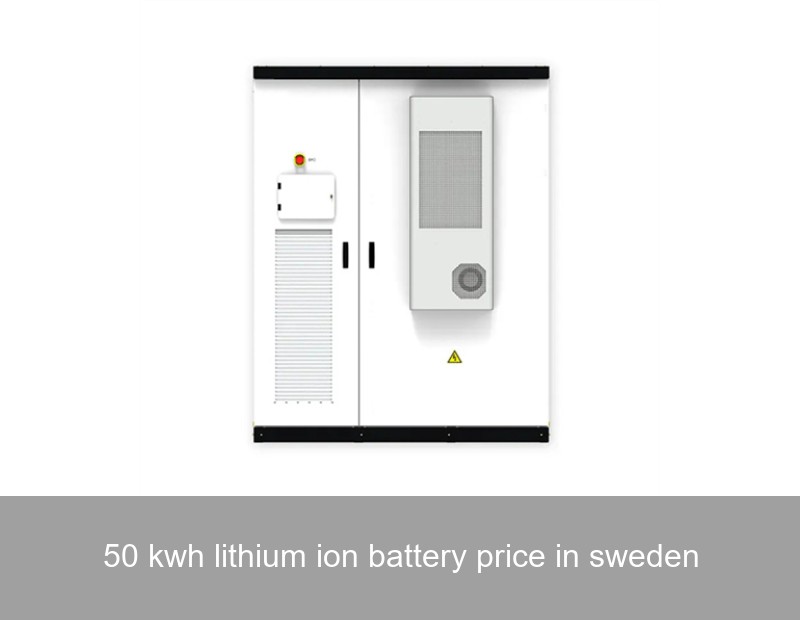
If you're a homeowner or business operator in Sweden researching energy independence, you've likely typed "50 kWh lithium ion battery price in Sweden" into a search engine. The figure that comes back can be startling—a significant upfront investment. But here's the crucial perspective shift: you're not just buying a battery; you're investing in a sophisticated energy management system that will reshape your relationship with the grid, your energy bills, and your carbon footprint. This article will guide you through what truly influences that price tag in the Swedish context and how to evaluate its long-term value.
Understanding the 50 kWh Lithium-Ion Battery Price in Sweden
First, let's address the core question directly. A standalone 50 kWh lithium-ion battery system in Sweden can have a broad price range, typically between 300,000 SEK to 600,000 SEK before potential subsidies. Why such a wide range? The "battery" is rarely a single item. The price encompasses the battery modules, the sophisticated Battery Management System (BMS), the hybrid or AC-coupled inverter, climate-controlled enclosure, professional installation, grid-connection permits, and software for monitoring and control. It's akin to asking for the price of a "house"—the final cost depends on the quality of components, design complexity, and builder expertise.
The Price Breakdown: More Than Just a Number
To understand the value, we must dissect the cost. A high-quality system from a provider like Highjoule is engineered for the Scandinavian climate and energy ecosystem.
- Core Components (40-50%): This includes the lithium-ion cells (NMC or LFP chemistry), with LFP gaining popularity for its longer lifespan and superior safety profile. The inverter, which converts DC battery power to AC for your home, is a critical piece of technology.
- Balance of System & Integration (25-35%): This covers the BMS, safety disconnects, wiring, and the enclosure. Proper thermal management is non-negotiable in Sweden, where winter cold can impact battery performance.
- Installation & Professional Services (20-30%): Certified electrical work, system design, obtaining necessary permissions from your local nätägare (grid owner), and commissioning the system. This ensures safety, warranty validity, and optimal performance.

Image source: Unsplash - Representative image of a modern home energy storage system.
The Swedish Market: A Perfect Storm for Energy Storage
Sweden presents a unique and compelling case for battery storage. The combination of excellent solar potential in summer, high electricity prices, and ambitious national climate goals creates a powerful financial incentive. According to data from Energimyndigheten (Swedish Energy Agency), electricity prices for households have seen volatility, making self-consumption of solar power more attractive than ever. Furthermore, programs like “Solcellsstöd” (solar PV subsidies) and tax reductions for energy storage installations directly improve the return on investment. A 50 kWh system is perfectly sized for larger villas, agricultural operations, or small commercial facilities, allowing them to store excess summer solar generation for use during dark, expensive winter evenings.
A Real-World Case Study: Stockholm's Green Warehouse
Let's look at a concrete example. A medium-sized logistics warehouse outside Stockholm, with a 120 kW rooftop solar array, was facing high peak-demand charges and wanted to stabilize its operations. They installed a 52 kWh Highjoule H-Stack Commercial battery system integrated with their existing solar. The results, monitored over one year, were impressive:
| Metric | Before Installation | After Installation |
|---|---|---|
| Grid Energy Consumption (Peak Hours) | 65% | 28% |
| Solar Self-Consumption Rate | 55% | 92% |
| Peak Demand Charge Reduction | 0% | 40% |
| Estimated Payback Period | N/A | 6.8 Years |
The system not only provided significant savings but also served as a backup power source for critical refrigeration units. This case highlights how the "price" transforms into an asset that generates tangible operational savings and risk mitigation.
The Highjoule Solution: Smart, Sustainable, and Cost-Effective
At Highjoule, with nearly two decades of global experience, we understand that the true cost of a battery system is measured over its 15-20 year lifespan. Our approach to the 50 kWh market in Sweden focuses on long-term value and intelligence.
Our H-Stack Residential and Commercial series are built with Lithium Iron Phosphate (LFP) chemistry, renowned for its safety and ability to withstand more charge cycles. What sets a Highjoule system apart is its integrated Energy Management System (EMS). This AI-driven software doesn't just store energy; it learns your consumption patterns, forecasts weather and electricity prices (leveraging Sweden's spot market, Elspot), and automatically decides when to charge from solar or the grid, when to discharge, and when to sell back to the grid for maximum profit.
Image source: Unsplash - Depicting a home with integrated solar and battery storage.
For our Swedish customers, this means our systems are designed to handle the seasonal extremes—optimizing for the midnight sun's abundance and the winter's scarcity. We provide a complete service package: from initial energy audit and custom design to installation by certified partners, grid application support, and lifelong remote monitoring and support.
Making Your Investment: Key Considerations
Before focusing solely on the 50 kWh lithium ion battery price in Sweden, ask yourself and potential suppliers these key questions:
- Chemistry & Warranty: Is it LFP? What is the guaranteed end-of-warranty capacity (e.g., 70% after 10 years)?
- Integration Capability: Does it seamlessly integrate with my existing or planned solar PV? Can it work with multiple energy sources (grid, solar, wind)?
- Software Intelligence: Does the system have smart, forecast-driven controls to maximize economic return, or is it just a simple storage device?
- Local Support & Compliance: Is the provider experienced with Swedish regulations and Elforsk recommendations? Do they offer local service?
Remember, the cheapest upfront option can become the most expensive long-term investment if it underperforms or fails prematurely. Investing in a robust, intelligent system like Highjoule's ensures you capture the full value of Sweden's energy transition. For further independent information on battery technologies, you can refer to resources from the International Energy Agency (IEA).
Given your specific energy consumption patterns and future goals, what would be the first step you'd want to take to determine if a 50 kWh battery system is the right key to unlocking your energy resilience and savings?
 Inquiry
 Online Chat