


Unlocking Energy Independence: The Power of a 48V 200Ah Lithium Battery
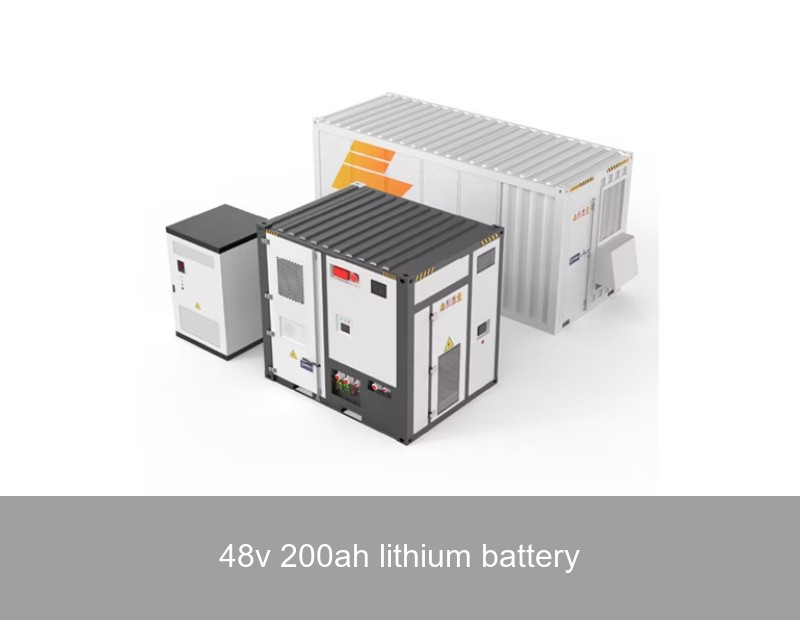
Have you ever calculated the true cost of grid dependency, especially during a power outage or peak rate hours? For homeowners and businesses across Europe and the U.S., this question is moving from theoretical to urgent. The solution increasingly lies in sophisticated energy storage, and a particular configuration is becoming the backbone of modern off-grid and backup power systems: the 48V 200Ah lithium battery. This isn't just a battery; it's a compact power station, offering a robust 9.6 kWh of usable energy. But what makes this specific voltage and capacity so special, and how can it transform your relationship with energy? Let's explore.
Table of Contents
- Why 48V? The Sweet Spot for Power Systems
- Beyond Capacity: What 200Ah Really Means for You
- Lithium vs. The Old Guard: A Data-Driven Comparison
- Real-World Power: A Case Study from Rural Spain
- Choosing Your System: Key Features for Long-Term Value
- The Highjoule Difference: Engineered for Reliability
- Your Energy Future: What's the Next Step?
Why 48V? The Sweet Spot for Power Systems
Voltage in energy storage isn't arbitrary. Think of it like plumbing: higher voltage is like a wider pipe, allowing more energy (water) to flow with less current (pressure). A 48V system strikes a perfect balance between efficiency, safety, and cost.
- Efficiency Gains: Compared to lower 12V or 24V systems, a 48V battery significantly reduces energy loss as heat during transmission. This means more of the solar energy you harvest or grid power you store actually powers your appliances.
- Cost-Effectiveness: Higher voltage allows for thinner, less expensive copper wiring throughout your installation, reducing material and labor costs.
- Scalability: The 48V standard is the foundation for most modern inverters and hybrid solar systems, making it future-proof. You can easily add more 48V battery units in parallel to grow your storage capacity as your needs evolve.
This technical sweet spot is why the industry, from residential solar setups to telecom backup, has largely standardized on 48V. It's the efficient, scalable backbone that makes robust energy independence possible.
Beyond Capacity: What 200Ah Really Means for You
Ampere-hours (Ah) is the measure of a battery's capacity, but it's the combination with voltage that tells the full story. A 48V 200Ah lithium battery delivers 48V x 200Ah = 9,600 Watt-hours or 9.6 kWh of energy.
Let's make that tangible. What can 9.6 kWh power?
| Appliance | Average Power | Approx. Runtime on 9.6 kWh |
|---|---|---|
| Refrigerator | 150W | 64 hours |
| LED Lighting (Whole Home) | 200W | 48 hours |
| Laptop | 50W | 192 hours |
| Wi-Fi Router | 10W | 960 hours |
| Well Pump (1/2 HP) | 900W (intermittent) | ~100 cycles |
In reality, you'd power a mix of these. For many households, a 9.6 kWh system can cover critical loads—lights, refrigeration, communication, and essential pumps—for a full day or more during an outage. For a business, it might ensure seamless backup for servers or point-of-sale systems.

Image: A clean, modern lithium battery installation. Source: Unsplash (Photographer: Kindel Media)
Lithium vs. The Old Guard: A Data-Driven Comparison
The "lithium" in 48V 200Ah lithium battery is non-negotiable. While lead-acid batteries were the traditional choice, Lithium Iron Phosphate (LiFePO4) chemistry has redefined expectations. Let's look at the data.
- Cycle Life: A quality LiFePO4 battery delivers 3,500 - 6,000 cycles to 80% depth of discharge (DoD). A lead-acid battery manages 300 - 1,200 cycles at 50% DoD. Over 10 years, you might replace lead-acid 3-4 times while the lithium unit endures.
- Depth of Discharge (DoD): Lithium allows you to safely use 90-100% of its rated capacity daily. Regularly discharging lead-acid beyond 50% drastically shortens its life. Effectively, a 10 kWh lead-acid system only offers 5 kWh of usable energy.
- Efficiency & Speed: Lithium batteries boast round-trip efficiency over 95%, meaning minimal energy is wasted. They also charge 3-5 times faster than lead-acid, crucial for capturing all available solar energy on a short winter day.
The U.S. Department of Energy highlights lithium-ion's superior energy density and lifespan as key drivers for modern storage. The higher upfront cost is offset by a vastly lower cost per cycle over its lifetime.
Real-World Power: A Case Study from Rural Spain
Let's move from theory to practice. Consider a small agritourism business in the Andalusian countryside, Spain. Their challenge: unreliable grid power affecting guest experience and operational continuity.
Phenomenon: Frequent, unscheduled outages (2-4 hours, several times a month).
Solution: A 15 kW solar array coupled with a 48V 400Ah (19.2 kWh) lithium battery bank, built from two parallel 48V 200Ah lithium battery units.
Data & Results (12-month period):
- Energy Self-Consumption: Increased from 40% to 92%. Excess solar now charges the batteries, not just exported at lower rates.
- Grid Independence During Outages: Achieved 100%. The system automatically powers the entire property for up to 18 hours on battery alone.
- Financial Impact: Reduced grid electricity purchases by 78% and eliminated losses from booking cancellations due to power issues.
This case exemplifies the transformative impact. The modular 48V design allowed the business to start with a 9.6 kWh core and expand seamlessly as their confidence and needs grew.
Choosing Your System: Key Features for Long-Term Value
Not all 48V 200Ah lithium batteries are created equal. Look for these non-negotiable features:
- Built-in Battery Management System (BMS): The brain of the battery. A premium BMS protects against overcharge, deep discharge, overheating, and cell balancing. It's your primary guarantee of safety and longevity.
- LiFePO4 Chemistry: Insist on Lithium Iron Phosphate. It offers superior thermal and chemical stability compared to other lithium types, making it the safest choice for home and business use.
- Modular Design & Scalability: Can the battery be easily paralleled? Your future self will thank you for choosing a system that can grow with your energy demands.
- Warranty & Cycle Life: Seek a warranty that guarantees both a period (e.g., 10 years) and a minimum number of cycles (e.g., 6,000). This reflects true confidence in the product's durability.

Image: Precision engineering and testing ensure battery reliability. Source: Unsplash (Photographer: ThisisEngineering)
The Highjoule Difference: Engineered for Reliability
At Highjoule, we've been engineering advanced energy storage solutions since 2005. We understand that a 48V 200Ah lithium battery is more than a component; it's the heart of your energy resilience. Our H-Joule Sentinel Series embodies this philosophy.
Our Sentinel 48V 200Ah LiFePO4 battery is engineered for the demands of European and North American markets. It features:
- Military-Grade LiFePO4 Cells: Sourced from tier-one suppliers, ensuring unmatched cycle life and safety.
- AI-Optimized BMS: Our proprietary BMS doesn't just protect; it learns usage patterns to optimize performance and lifespan, communicating seamlessly with Highjoule and third-party inverters.
- True Plug-and-Play Scalability: Design your system with one module, and add more at any time with simple, tool-free parallel connections. Our cloud-based platform lets you monitor and manage your entire fleet of batteries from a single dashboard.
- Full-System Integration: Highjoule provides more than just batteries. We offer integrated systems—combining our batteries with compatible inverters, solar controllers, and monitoring software—to deliver a seamless, high-performance power solution for homes, businesses, and microgrids.
Our focus is on delivering intelligent, efficient, and sustainable power solutions that you can trust for the long haul.
Your Energy Future: What's the Next Step?
The potential of a 48V 200Ah lithium battery system is clear: greater independence, resilience, and control over your energy costs. But the journey starts with your specific context. What does your "critical load" list look like? How many hours of backup would bring you peace of mind? Is your goal purely backup, or to maximize the self-consumption of your rooftop solar?
We invite you to start that conversation. What's the first appliance you'd want to keep running when the grid goes down?
 Inquiry
 Online Chat