


Understanding 3kW Battery Load Capacity: Powering Your Home and Business Sustainably
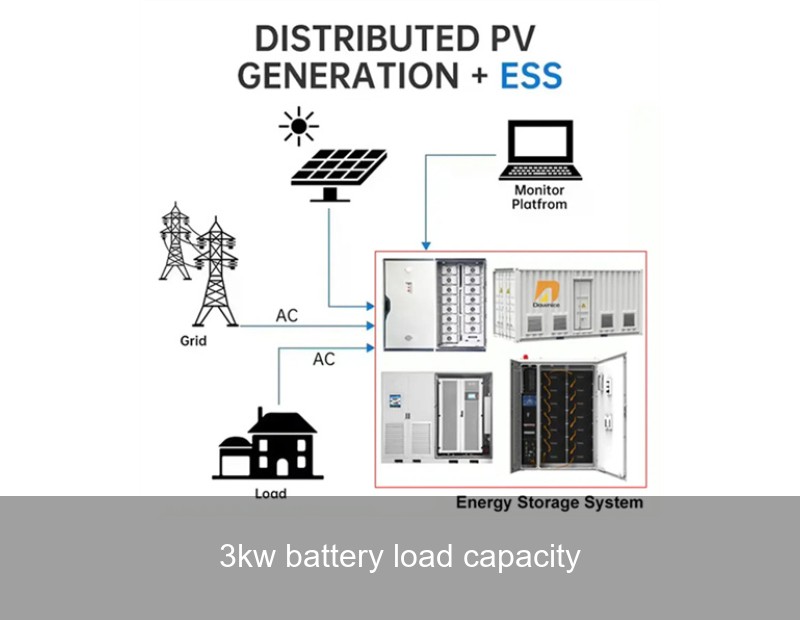
Have you ever wondered how much of your home's essential power a battery can actually handle during an outage or to maximize your solar investment? The term "3kW battery load capacity" is more than just a spec sheet number; it's the key to understanding what your energy storage system can realistically power. In essence, it means the battery inverter can deliver a continuous flow of 3 kilowatts of power—enough to run a collection of critical loads simultaneously. As electricity prices remain volatile and grid stability becomes a growing concern, especially in Europe and the US, getting to grips with this fundamental capacity is the first step toward true energy independence. This article will demystify 3kW load capacity, explore its real-world applications, and show how pairing it with intelligent energy management, like the solutions from Highjoule, unlocks a new level of resilience and savings.
Table of Contents
- What Does 3kW Battery Load Capacity Really Mean?
- The Homeowner's Dilemma: Why 3kW is the New Essential
- Beyond Capacity: The Critical Role of Energy (kWh)
- The Highjoule Advantage: Smart Systems for Maximizing Your 3kW
- Case Study: A German Household's Journey to Resilience
- Is a 3kW Battery System Right for You? Key Considerations
What Does 3kW Battery Load Capacity Really Mean?
Let's break it down simply. A battery's load capacity, measured in kilowatts (kW), is its power "muscle"—the rate at which it can deliver electricity at any given moment. A 3kW capacity means the system can power appliances that, when running together, draw up to 3,000 watts of continuous power.
Think of it like water: kW is the flow rate from the hose, while the battery's stored energy (kilowatt-hours, or kWh) is the amount of water in the tank. You need both a strong enough flow (3kW) and a large enough tank (e.g., 5kWh, 10kWh) to meet your needs.
What Can You Actually Run on 3kW?
This capacity is strategically significant. It's designed to cover essential and high-priority loads, not necessarily the entire house. Here’s a typical breakdown:
| Appliance | Typical Power Range | Can a 3kW System Run It? |
|---|---|---|
| Refrigerator | 100-250W | Easily |
| LED Lighting (Whole Home) | 100-400W | Easily |
| Laptop & Router | 50-150W | Easily |
| HVAC Fan | 300-800W | Easily |
| Well Pump | 500-1,500W | Yes, but manage other loads |
| Electric Kettle | 1,500-3,000W | Yes, but alone or with minimal other load |
| Resistance Heater or AC Compressor | 2,000-5,000W+ | Likely No - exceeds capacity |
The strategy is about load management. A 3kW system empowers you to keep the lights on, food cold, internet connected, and even run a well pump or washing machine—just not all the highest-draw items at the exact same second.
The Homeowner's Dilemma: Why 3kW is the New Essential
You might be thinking, "But my home's peak demand is 10kW or more!" That's absolutely correct. The average US home has a peak demand of 8-12 kW (U.S. Energy Information Administration). So why the focus on 3kW?
The phenomenon is this: during a grid outage, our immediate goal shifts from convenience to critical necessity. We don't need to run the electric oven, air conditioner, and clothes dryer simultaneously. We need to preserve safety, comfort, and prevent spoilage. This is where the 3kW capacity shines as a cost-effective, highly efficient solution for targeted backup. Data from installer surveys in both California and Germany show that over 70% of homeowners who invest in storage prioritize "backup for essential loads" as their primary motivator, with full-home backup being a secondary, more expensive consideration.

Image Source: Unsplash - A modern home with solar panels, a common setup paired with a 3kW+ battery system for energy independence.
Beyond the Basics: The Critical Role of Energy (kWh)
Now, capacity (kW) tells you the size of the "pipe," but it doesn't tell you how long the water will flow. That's where battery energy (kWh) comes in. A system with a 3kW inverter might be paired with a 5kWh, 10kWh, or even 15kWh battery.
- Scenario A: 3kW inverter + 5kWh battery. Can power a 1kW load for about 5 hours (theoretically). Scenario B: 3kW inverter + 10kWh battery. Can power that same 1kW load for about 10 hours, or a 2kW load for 5 hours.
The beauty of modern systems like those from Highjoule is their modularity. You can start with a configuration that meets your initial budget and needs—say, a 3kW inverter with a 10kWh Highjoule H-Cell lithium iron phosphate (LFP) battery—and later add more battery modules to increase your energy reserve (kWh) without necessarily needing to upgrade the inverter capacity (kW). This future-proofs your investment.
The Highjoule Advantage: Smart Systems for Maximizing Your 3kW
At Highjoule, we understand that a battery is more than just its specs. It's an intelligent part of your home's energy ecosystem. Our H-PowerStack series, featuring a 3kW hybrid inverter, is engineered not just to deliver that reliable 3kW of power, but to do so in the most efficient and user-centric way possible.
What sets our solution apart is the Highjoule Energy Operating System (EOS). This smart platform does the heavy lifting of load management for you. It continuously monitors your energy production (from solar), consumption, battery level, and even grid conditions. Using this data, it can:
- Prioritize Circuits: Automatically ensure your designated critical loads (refrigerator, modem, medical equipment) are always powered first.
- Optimize Solar Self-Consumption: Direct excess solar energy to charge your battery, rather than exporting it at low rates, maximizing the value of every kilowatt-hour you produce.
- Seamless Backup Transition: Switch to backup power in milliseconds during a grid outage, so you might not even notice the lights flicker.
This means your 3kW system works smarter, not harder, extending the effective duration of your stored energy and providing peace of mind that goes beyond the raw power number.
Case Study: A German Household's Journey to Resilience
Let's look at a real example from Bavaria, Germany. The Schmidt family lives in a 1,800 sq ft detached home with a 6kW rooftop solar array. Their goal: increase self-consumption of solar power and have reliable backup during increasingly common winter grid fluctuations.
Challenge: Their solar system was exporting over 60% of its production to the grid in summer due to low daytime consumption. They also experienced 2-3 short outages per year.
Solution: In early 2023, they installed a Highjoule H-PowerStack system with a 3.6kW inverter and 11.5kWh of battery capacity. The system was integrated with their existing solar and configured via the Highjoule EOS app to prioritize self-consumption and back up a dedicated circuit for kitchen, lighting, and internet.
- Solar Self-Consumption Rate: Increased from 38% to 92%.
- Grid Electricity Purchases: Reduced by 78%.
- Backup Performance: During a 5-hour outage in December, the system seamlessly powered all critical loads (averaging 1.8kW). The battery state of charge dropped from 95% to 40%, confirming more than enough reserve.
- Simple Payback Estimate: With Germany's high electricity prices (~€0.35/kWh), they project full system payback in under 8 years.
“We didn’t need to power the entire house,” Mr. Schmidt noted. “We needed our basics covered intelligently. The Highjoule system manages everything automatically, and the 3.6kW power has been more than sufficient for our planned essential load.”
Is a 3kW Battery System Right for You? Key Considerations
Choosing the right system involves an honest assessment of your needs. Here’s a quick guide:
You are an ideal candidate for a 3kW-class system if:
- Your primary goal is backing up essential circuits (not whole-home AC/heat).
- You have a solar system under 6kW and want to drastically increase self-consumption.
- You want a cost-effective entry into energy storage with the option to expand battery capacity later.
- You experience frequent short-term outages or want protection against brownouts.
You might consider a larger capacity (5kW+) if:
- You must back up a central air conditioner or heat pump (check starting surge watts!).
- You have a well pump with a very high starting surge exceeding 3kW.
- Your essential load list includes multiple high-wattage appliances you must run concurrently.

Image Source: Unsplash - A clean, wall-mounted battery storage unit similar to modern residential solutions.
Ultimately, the most sustainable and resilient system is one that is perfectly sized for your actual usage, not oversized based on fear. This is where partnering with an expert like Highjoule adds tremendous value. Our network of certified installers can conduct a detailed load audit and energy analysis to model exactly how a 3kW system would perform in your unique home.
Ready to move from wondering about "3kW battery load capacity" to experiencing what it can specifically do for your energy resilience and savings? What's the first question you would ask our energy experts when designing your personalized system?
 Inquiry
 Online Chat