


Understanding the 350 Ah BESS Battery Price: A Guide to Value and Performance
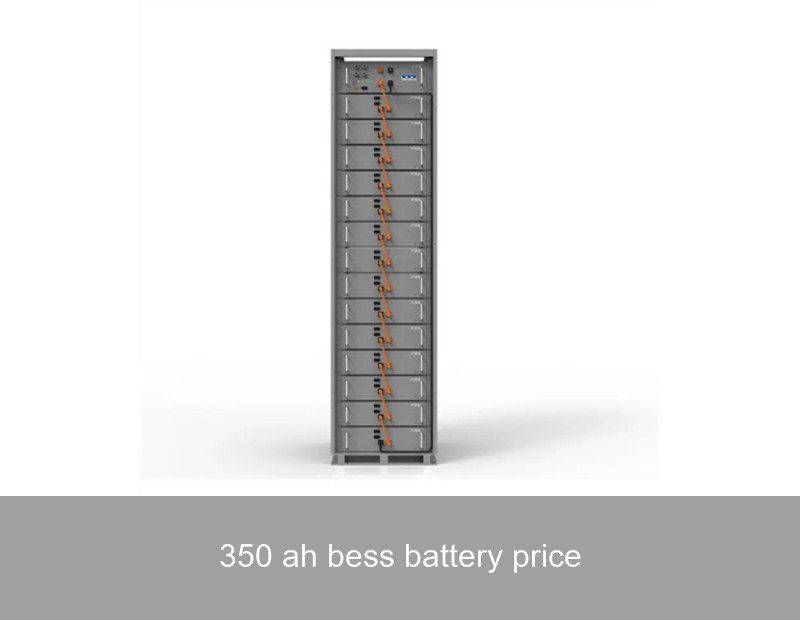
If you're exploring Battery Energy Storage Systems (BESS) for your commercial or industrial needs, you've likely encountered the term "350 Ah battery" and a wide range of associated prices. The initial quote for a 350 ah bess battery price can be a significant point of focus, but it's just the starting line. The true cost is deeply intertwined with the system's longevity, safety, intelligence, and the total value it delivers over its lifetime. In this article, we'll dissect the factors that influence pricing and help you understand what you're really paying for when investing in robust, reliable energy storage.
Table of Contents
- The Price Puzzle: More Than Just a Number
- Key Factors Driving the Cost of a 350 Ah BESS
- The Real Metric: Total Cost of Ownership (TCO)
- Case Study: A German Manufacturing Plant
- The Highjoule Approach: Engineering for Lifetime Value
- Making Your Investment Decision
The Price Puzzle: More Than Just a Number
Let's be clear: a 350 Ah (Ampere-hour) rating specifies the battery's capacity—how much energy it can store. However, the price you see for a system built around such cells varies dramatically. Why can two systems with the same nominal capacity have a 30-50% price difference? The answer lies beneath the surface. You're not just buying a battery; you're investing in an integrated energy solution that includes battery chemistry, power conversion, thermal management, sophisticated software, and the manufacturer's expertise in making it all work seamlessly for decades.

Image Source: Unsplash - Representative image of a professional BESS installation.
Key Factors Driving the Cost of a 350 Ah BESS
To navigate the market, you need to know what you're evaluating. Here are the core components that shape the 350 ah bess battery price:
- Cell Chemistry & Quality: Lithium Iron Phosphate (LFP) is now the dominant chemistry for stationary storage due to its safety, longevity, and stability. However, not all LFP cells are equal. Premium-grade cells from tier-one suppliers, which offer better cycle life and consistency, command a higher cost.
- System Integration & Power Electronics: The battery management system (BMS), inverter, and system-level controls are the "brain" of the operation. A high-precision BMS ensures each cell operates within its safe and optimal window, dramatically extending life. The inverter's efficiency (e.g., 98.5% vs. 96%) directly impacts how much of your stored energy you can actually use.
- Thermal Management: This is a critical yet often underestimated component. An active liquid cooling system, like those used by Highjoule in our H-Ion C&I Series, maintains an ideal temperature range. This prevents degradation in hot weather and maintains performance in the cold, ensuring you get the full 350 Ah capacity and cycle life you paid for, year after year.
- Software & Intelligence: Can your system automatically optimize for time-of-use arbitrage, participate in demand response programs, or integrate with onsite solar? Intelligent software unlocks revenue streams and savings that can offset the initial capital expenditure.
- Certifications & Safety: UL 9540, IEC 62619, and other regional certifications are non-negotiable for safe operation and insurance. Systems with comprehensive safety architectures (from cell to system level) involve more rigorous design and testing, which is reflected in the price.
The Real Metric: Total Cost of Ownership (TCO)
Shifting focus from upfront price to Total Cost of Ownership is where savvy businesses find real value. TCO accounts for:
| Cost Factor | Cheap System Risk | High-Quality System Benefit |
|---|---|---|
| Cycle Life (e.g., 6,000 vs 3,000 cycles) | Needs replacement 2x faster, doubling long-term cost. | Lasts 15+ years, lowering annualized cost. |
| Round-Trip Efficiency (RTE) | 88% RTE means more energy loss, higher electricity bills. | 95%+ RTE (like Highjoule's systems) maximizes every kWh stored. |
| Degradation Rate | May lose 20% capacity in 3 years, shrinking your usable 350 Ah. | < 2% per year degradation preserves asset value and performance. |
| Maintenance & Downtime | Reactive fixes, unexpected downtime, and higher O&M costs. | Predictive analytics and robust design minimize OPEX. |
As you can see, a lower initial 350 ah bess battery price might lead to a much higher TCO, making the investment less economical over time.
Case Study: Reducing Peak Demand Charges in a German Manufacturing Plant
Let's look at a real-world application. A mid-sized automotive parts manufacturer in Bavaria faced steep peak demand charges, which could constitute up to 50% of their monthly electricity bill. Their peak load often spiked to 1.2 MW for short durations.
Solution & Data: The plant installed a bespoke Highjoule H-Ion C&I ESS with a capacity of 840 kWh (utilizing 350 Ah-class LFP modules) and a 500 kW inverter. The system's intelligent controller was programmed to "peak shave," discharging the battery during short, high-demand periods to keep the facility's draw from the grid below a 900 kW threshold.
Results: Within the first year:
- Peak Demand Charges Reduced by 28%: This translated to annual savings of over €62,000.
- ROI Period: The projected payback period, including Germany's favorable support for energy efficiency investments, is under 5 years.
- Reliability: The system's active cooling ensured consistent performance even during a historic heatwave, preventing any thermal throttling.
This case demonstrates how the right BESS, priced for quality and intelligence, becomes a strategic asset that generates direct financial returns, not just an expense. You can read more about the importance of demand charge management from the U.S. Department of Energy.

Image Source: Unsplash - Engineer monitoring system performance.
The Highjoule Approach: Engineering for Lifetime Value
At Highjoule, with nearly two decades of experience, we engineer our systems with TCO as the primary design criterion. When you evaluate a Highjoule solution, the 350 ah bess battery price reflects a holistic package built for endurance and intelligence.
Our H-Ion C&I Series products, which utilize high-density LFP cells, are more than just containers of batteries. They are integrated power plants featuring:
- Proprietary Adaptive BMS: Goes beyond monitoring to actively balance and condition cells, pushing cycle life beyond standard warranties.
- Liquid Cooled Cabinet Design: Ensures uniform temperature, enabling higher performance density and unparalleled safety compared to air-cooled counterparts.
- Highjoule Energy OS: Our platform allows for seamless integration with solar PV, grid services, and building management systems. It turns your storage asset into a dynamic tool for energy arbitrage and resilience.
We provide end-to-end services from initial feasibility and design to commissioning and long-term remote monitoring, ensuring your investment is optimized from day one. For a deeper dive into battery technologies, the academic resource Joule offers excellent peer-reviewed insights.
Making Your Investment Decision
So, when you receive a quote for a system centered on a 350 Ah battery, we encourage you to ask these crucial questions:
- What is the guaranteed cycle life and end-of-life capacity (e.g., 6,000 cycles to 80% remaining capacity)?
- What is the actual system round-trip efficiency under real operating conditions?
- What is the thermal management strategy, and how does it affect performance in my local climate?
- Does the software allow for the revenue or savings strategies I plan to use (e.g., frequency regulation, solar self-consumption maximization)?
- What is the total scope of services included: engineering, grid interconnection support, commissioning, and warranty response?
The journey to energy independence and cost control is exciting. The right partner doesn't just sell you hardware; they provide a pathway to a more resilient and profitable energy future. What specific energy challenge—be it demand charges, renewable integration, or backup power—is driving you to look at a 350 Ah BESS solution today?
 Inquiry
 Online Chat