


Understanding the 300 Watts Solar Panel Price in the Philippines: A Smart Buyer's Guide
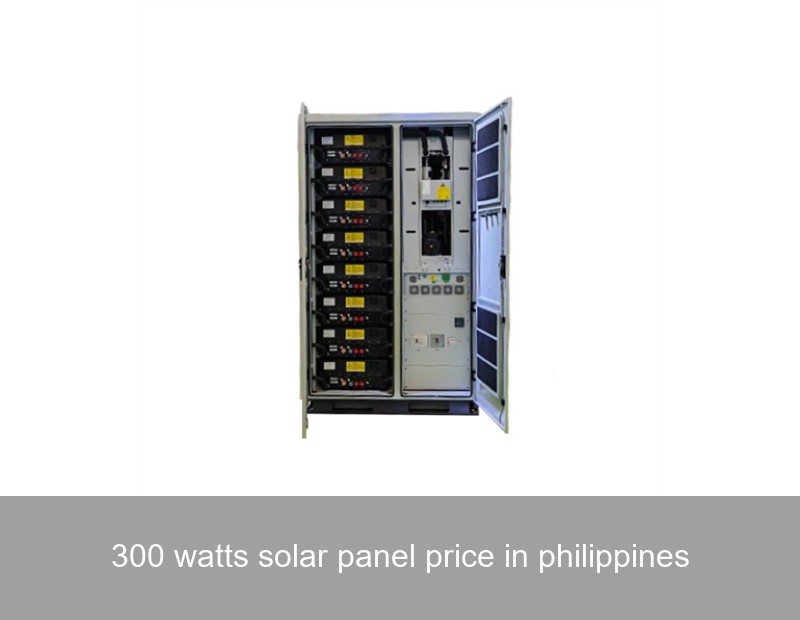
Thinking about harnessing the abundant Philippine sunshine? You're not alone. Many homeowners and businesses are turning to solar to combat rising electricity costs and gain energy independence. A common starting point is the versatile 300-watt solar panel. But when you search for "300 watts solar panel price in Philippines", you're met with a wide range. Why such variation? The truth is, the panel itself is just one piece of the puzzle. This guide will demystify the costs, highlight what truly matters for a reliable system, and show you how to invest wisely for decades of clean, affordable power.
Table of Contents
- The Real Price Breakdown: More Than Just a Panel
- The Hidden Cost of "Cheap": Quality vs. Initial Price
- Case Study: A Manila Household's Journey to Savings
- Thinking Beyond the Panel: The System is Key
- Highjoule's Integrated Approach: Intelligence Meets Durability
- Making the Right Investment for Your Needs
The Real Price Breakdown: More Than Just a Panel
As of 2024, a standalone 300-watt monocrystalline solar panel in the Philippines can range from PHP 4,500 to PHP 8,000. This initial figure is tempting to focus on, but it's deceptive. Installing a functional, safe, and grid-tied solar power system requires a complete ecosystem of components. Let's break down the typical cost structure for a residential 3kW system (using about ten 300W panels):
| System Component | Approximate Cost Share | Why It Matters |
|---|---|---|
| Solar Panels (e.g., 10 x 300W) | 25-30% | The energy harvesters; efficiency and durability dictate long-term yield. |
| Inverter & Power Electronics | 20-25% | The brain of the system; converts DC to AC power. Its quality dictates overall system efficiency and reliability. |
| Mounting Structure, Cabling, & Safety Gear | 15-20% | Ensures physical security, electrical safety, and withstands harsh weather. |
| Installation, Permits, & Engineering | 25-35% | Professional expertise guarantees code compliance, optimal performance, and warranty validity. |
As you can see, fixating on the per-panel cost is like buying a high-performance car engine without the chassis, wheels, or transmission. The value is in the integrated system's performance.
The Hidden Cost of "Cheap": Quality vs. Initial Price
The Philippine climate is a true test for solar equipment: intense UV radiation, heavy monsoon rains, high humidity, and salty coastal air. A panel quoted at PHP 4,500 may use lower-grade silicon, have weaker encapsulation, or offer a shorter, non-international warranty. This can lead to:
- Faster Degradation: Premium panels degrade at about 0.3-0.5% per year, while cheaper ones can degrade at 1% or more. Over 25 years, that's a significant loss in energy production.
- Higher Failure Risk: Poor quality increases the risk of micro-cracks, hot spots, and inverter failure, leading to costly repairs.
- Lower Efficiency: Less efficient panels produce less power per square meter, meaning you might need more roof space to meet your energy goals.
The real metric isn't "price per panel" but "levelized cost of energy (LCOE)" – the total cost of ownership divided by the total energy produced over the system's life. A higher initial investment in quality often results in a lower LCOE.

Image Source: Unsplash (Professional solar installation in a tropical climate)
Case Study: A Manila Household's Journey to Savings
Let's look at a real-world example from Quezon City. The Santos family had a monthly average electricity bill of PHP 8,000. In early 2023, they installed a 4.2kW system (using fourteen 300-watt premium panels) with a hybrid inverter and a small battery backup for critical loads.
- Total System Cost: PHP 320,000 (fully installed, including permits).
- Immediate Impact: Their daytime bill was reduced to nearly zero, relying on the grid only at night. With net metering, their monthly bill averaged PHP 1,200 within the first year.
- Annual Savings: Approximately PHP 81,600.
- Payback Period: Just under 4 years. For the remaining 20+ years of the system's life, the electricity they produce is virtually free.
This case highlights that the investment is in future electricity cost avoidance. The Santos family chose quality components and a certified installer, ensuring their savings are protected for decades.
Thinking Beyond the Panel: The System is Key
Modern solar isn't just about panels on the roof. It's an intelligent energy ecosystem. The inverter technology is particularly crucial. A basic string inverter, while affordable, can see its entire output drop if one panel is shaded. More advanced solutions like power optimizers or microinverters mitigate this, ensuring each panel performs independently. For true energy resilience, especially in areas with occasional outages, integrating battery storage is the next step. This allows you to use solar power at night and keep essential appliances running during grid failures.
Highjoule's Integrated Approach: Intelligence Meets Durability
This is where a holistic approach from an experienced provider like Highjoule makes all the difference. Since 2005, we've moved beyond just supplying components to delivering intelligent, integrated energy solutions. For the Philippine market, we offer systems built around resilience and smart management.
Our HES (Highjoule Energy System) platform pairs high-efficiency, durable 300-watt+ solar panels with our AI-driven hybrid inverters and scalable lithium-ion battery storage. The system's intelligence constantly optimizes energy flow: using solar in real-time, charging batteries with excess power, and drawing from the grid only when it's the most economical. For commercial and industrial clients, this level of control is transformative for managing demand charges and ensuring operational continuity.
We understand that a one-size-fits-all solution doesn't work. Whether it's a residential setup in Cebu, a commercial installation for a Manila factory looking to cut operational costs, or a off-grid microgrid for a remote island community, our expertise lies in engineering the right combination of generation, storage, and control.
Image Source: Unsplash (Modern home energy storage system)
Making the Right Investment for Your Needs
So, how should you approach your solar project? Start by asking the right questions:
- What is my true energy goal? Is it just bill reduction, or also backup power and energy independence?
- What is the long-term reputation of the brands and the installer? Look for providers with a track record and strong warranties backed by international standards.
- Does the proposal include a detailed performance simulation and financial analysis? You should see projected annual yields and savings.
- Is the system designed for future expansion, like adding more batteries or panels?
Remember, you are not just buying a product; you are entering a 25+ year partnership for your property's energy infrastructure. The cheapest option today could become the most expensive mistake tomorrow.
Ready to See Your Personalized Solution?
While the "300 watts solar panel price in Philippines" is a common search, the conversation we should be having is about your specific energy profile, roof space, and resilience needs. What would a 30%, 50%, or even 100% reduction in your electricity bill mean for your household or business budget this year and in the decade to come?
 Inquiry
 Online Chat