


3 Phase On-Grid Solar BESS: The Ultimate Guide for Commercial & Industrial Energy Independence
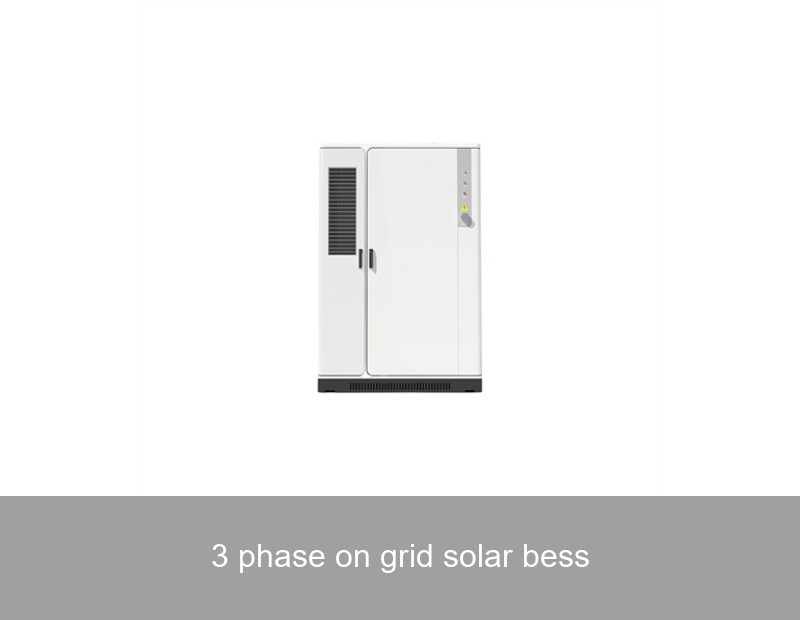
Have you ever looked at your commercial facility's electricity bill and felt a surge of frustration? You're generating clean solar power, but grid instability, peak demand charges, and the sheer scale of your three-phase electrical system seem to limit your savings and control. You're not alone. Across Europe and the U.S., businesses are hitting a ceiling with traditional solar setups. The solution? Integrating a sophisticated 3 phase on grid solar BESS (Battery Energy Storage System). This isn't just an add-on; it's the brain and brawn that transforms your solar array into a resilient, profit-optimizing power plant. Let's explore how this technology works and why it's becoming non-negotiable for forward-thinking enterprises.
Table of Contents
- What is a 3 Phase On-Grid Solar BESS?
- The Challenge: Solar Intermittency & Costly Grid Dependence
- The Solution: How a 3-Phase BESS Creates Value
- Real-World Case Study: A German Manufacturing Plant
- Choosing the Right System: Key Technical Considerations
- The Future of Three-Phase Power Management
What is a 3 Phase On-Grid Solar BESS?
Let's break down the jargon. A 3 phase on grid solar BESS is an integrated energy system designed for facilities powered by a three-phase electrical supply—the standard for almost all commercial, industrial, and large-scale residential properties. It combines photovoltaic (PV) solar panels with a centralized battery storage system and sophisticated inverter/controller technology, all while remaining connected to the main utility grid ("on-grid"). Unlike simple single-phase home systems, a three-phase BESS actively manages power across all three phases (L1, L2, L3), ensuring balanced loads, superior power quality, and the ability to handle heavy machinery and large loads seamlessly.

Think of it as a high-performance energy bank and manager. During sunny hours, surplus solar energy that isn't immediately used charges the batteries instead of being sold back to the grid at low rates. Later, during expensive peak tariff periods or when the grid is unstable, the system discharges stored energy to power your operations. This load shifting and peak shaving are where significant financial returns are realized.
The Challenge: Solar Intermittency & Costly Grid Dependence
The phenomenon is clear: solar generation peaks midday, but energy demand for many businesses often spikes in the early morning and late afternoon. This creates a mismatch. Without storage, excess midday solar is exported to the grid, often for minimal compensation (e.g., feed-in tariffs), while expensive grid power is purchased during high-demand periods.
The data tells a compelling story. According to the U.S. Energy Information Administration (EIA), commercial electricity prices in the U.S. can vary by region, but demand charges—fees based on your highest power draw in a billing period—can constitute up to 50% of a commercial bill. In Europe, volatile wholesale energy markets, as tracked by ENTSO-E, have made price predictability a major challenge for industries.
Furthermore, three-phase equipment is sensitive to power quality issues—voltage sags, swells, or imbalances—which can lead to equipment stress, downtime, and maintenance costs. Relying solely on the grid or a basic solar system leaves you exposed to these financial and operational risks.
The Solution: How a 3-Phase BESS Creates Value
A properly sized and integrated 3 phase on grid solar BESS directly attacks these challenges. Here’s its value proposition, structured in a logical progression:
- Energy Arbitrage & Bill Savings: Store cheap, self-produced solar energy, avoid buying expensive grid power during peaks. This directly slashes energy charges and demand charges.
- Enhanced Self-Consumption: Increase the proportion of your own solar energy used on-site from maybe 30-40% to over 70-80%, maximizing your ROI on solar panels.
- Backup Power & Resilience: While a pure on-grid system typically shuts off during a blackout (for safety), a BESS can be configured to provide critical backup power to essential loads, ensuring operational continuity.
- Grid Services & Revenue (Future-Proofing): Advanced systems can participate in grid-balancing programs (like Frequency Response), potentially creating a new revenue stream.
- Power Quality Management: The inverter system can provide voltage support and phase balancing, protecting sensitive machinery and improving overall electrical system health.
Real-World Case Study: A German Manufacturing Plant
Let's ground this in reality. A mid-sized automotive component manufacturer in Bavaria, Germany, was facing annual electricity costs exceeding €500,000, with sharp peaks at shift changes. They had a 600 kWp rooftop solar array but were only consuming 35% of its generation directly.
The Project: In 2023, they deployed a 3 phase on grid solar BESS featuring a 350 kWh lithium iron phosphate (LFP) battery and a 250 kW three-phase bi-directional inverter. The system was specifically programmed for peak shaving and optimizing self-consumption.
The Data-Driven Results (First 12 Months):
| Metric | Before BESS | After BESS | Change |
|---|---|---|---|
| Solar Self-Consumption | 35% | 82% | +134% |
| Peak Grid Demand | 450 kW | 280 kW | -38% |
| Annual Electricity Costs | ~€500,000 | ~€320,000 | €180,000 saved |
| ROI Period | Estimated at 4.2 years (with incentives) | ||
The plant manager noted, "The system pays for itself not just through savings, but by giving us predictable energy costs and shielding us from grid volatility. It's now a core part of our production infrastructure."
Choosing the Right System: Key Technical Considerations
Not all BESS are created equal, especially for demanding three-phase applications. Here’s what to evaluate:
- Battery Chemistry: LFP (Lithium Iron Phosphate) is now the dominant choice for commercial storage due to its superior safety, longevity (6,000+ cycles), and stability, compared to older NMC chemistries.
- Inverter Capability: The heart of the system. It must be a true three-phase inverter with high efficiency (>98%), the ability to manage bidirectional AC-DC flow, and advanced grid-forming capabilities for future flexibility.
- Energy Management System (EMS): This is the intelligence. A good EMS uses AI and weather forecasting to optimize charge/discharge schedules based on your load profile, tariff structure, and even grid carbon intensity.
- Scalability & Modularity: Can the system start at 200 kWh and be easily expanded to 1 MWh as your needs grow? Modular design is key for future-proofing your investment.

Highjoule's Role in Advanced Commercial & Industrial Storage
This is where Highjoule's nearly two decades of expertise comes into play. Since 2005, we have specialized in designing and deploying intelligent, high-power 3 phase on grid solar BESS solutions for exactly the scenarios described above. Our H-Series Commercial ESS is engineered from the ground up for the rigors of industrial three-phase environments.
What sets our systems apart is the Highjoule SynergyOS™ energy management platform. It doesn't just react; it predicts and optimizes. By integrating real-time data on your production schedule, local weather, and dynamic electricity prices (where available), SynergyOS™ autonomously makes decisions to minimize costs and maximize ROI. Furthermore, our systems are built with UL 9540 and IEC 62619 certifications as standard, ensuring the highest levels of safety for your people and property. We provide a complete turnkey service—from initial energy audit and financial modeling to system design, installation, and ongoing performance monitoring—ensuring you realize the full potential of your energy investment.
The Future of Three-Phase Power Management
The evolution of the 3 phase on grid solar BESS is moving towards becoming a true grid-interactive asset. We're looking at systems that can autonomously trade energy in local flexibility markets, form resilient microgrids with neighboring facilities, and dynamically adjust their operation to support the grid's decarbonization goals. The line between a consumer and a prosumer is blurring.
Is your current energy setup a cost center you simply manage, or is it ready to become a strategic, value-generating asset that contributes to both your bottom line and your sustainability targets? The technology to make the shift is here, proven, and financially compelling.
What would the impact be on your operational budget if you could lock in 70-80% of your electricity at a fixed, predictable cost for the next 15 years?
 Inquiry
 Online Chat