


Decoding the 26Ah Solar Battery Price: A Guide to Value and Performance
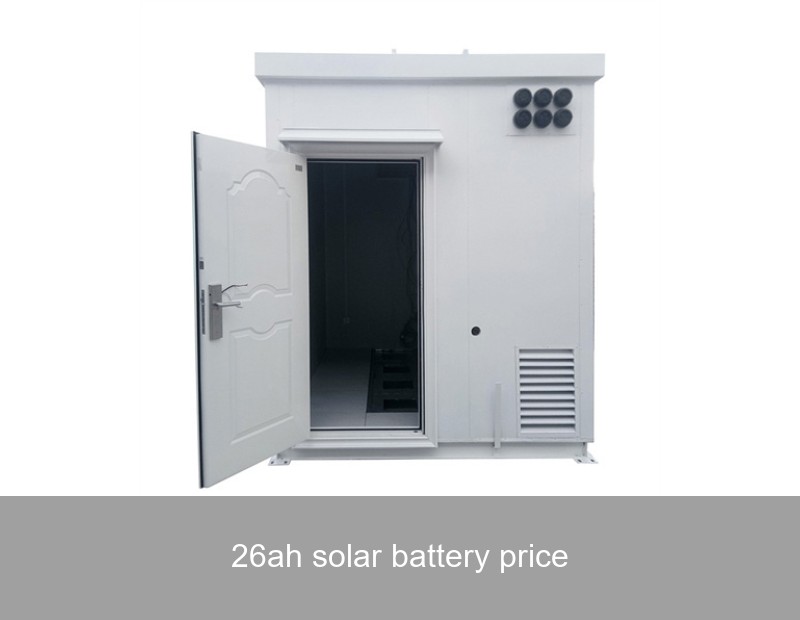
If you're researching solar energy storage, you've likely typed "26ah solar battery price" into a search engine. It's a common starting point. But here's a crucial insight from the industry: focusing solely on that initial sticker price can lead you down a costly path. The true cost of a solar battery isn't just what you pay today; it's about the value, reliability, and energy independence it delivers over its entire 10 to 15-year lifespan. As a leader in advanced energy storage, Highjoule understands that your investment is about securing predictable power, not just purchasing a component. Let's unpack what influences that price and how to ensure you get the best return.
Understanding the 26Ah Solar Battery and Its Role
A 26Ah (Amp-hour) battery denotes its capacity. In simple terms, it can deliver 26 amps of current for one hour before needing a recharge. In a solar context, this capacity is part of a larger system that includes the battery's voltage (often 12V, 24V, or 48V). The real useful metric is energy in kilowatt-hours (kWh). For instance, a 12V 26Ah battery stores about 0.31 kWh of energy. While individual 26Ah batteries are often used in smaller, off-grid setups or as part of a larger bank, modern home and business storage typically uses integrated systems with capacities ranging from 5 kWh to 20+ kWh.
So, when you see a "26ah solar battery price," you might be looking at a modular unit for a caravan, a backup for a critical appliance, or a building block for a custom off-grid system. The price per unit is just one piece of the puzzle.
What Really Drives the 26Ah Solar Battery Price?
The price variation you encounter isn't random. It's a direct reflection of the technology, quality, and intelligence built into the unit. Here are the core factors:
- Battery Chemistry: This is the biggest differentiator. Traditional lead-acid batteries (AGM, Gel) will have a lower upfront cost but a shorter lifespan and lower depth of discharge. Lithium-ion batteries, particularly Lithium Iron Phosphate (LiFePO4), command a higher initial "26ah solar battery price" but offer significantly longer life cycles, greater efficiency, and safer operation. They almost always provide a lower total cost of ownership.
- Brand & Quality Assurance: Reputable brands invest in rigorous testing, high-quality cells, and robust Battery Management Systems (BMS). The BMS is the brain that protects the battery, ensuring safety and longevity. A cheaper, no-name battery often lacks these critical protections, risking premature failure or safety hazards.
- Features & Integration: Can the battery communicate with your inverter and solar panels? Is it stackable for future expansion? Smart, integrated systems that offer seamless monitoring via an app will be priced higher than a basic "dumb" battery.
- Warranty and Support: A 10-year performance warranty from an established company like Highjoule adds to the product's value but also reflects in its price. It's a promise of reliability you won't get with unbranded alternatives.

Image Source: Unsplash - Photo of battery cells
Looking Beyond the Price Tag: Value & Performance
Let's translate these factors into long-term value. Consider two hypothetical 26Ah batteries: a budget lead-acid option and a premium LiFePO4 option from a quality provider.
| Feature | Budget Lead-Acid Battery | Premium LiFePO4 Battery (e.g., Highjoule) |
|---|---|---|
| Upfront Price (Example) | $80 - $120 | $200 - $300 |
| Usable Depth of Discharge (DoD) | ~50% | >90% |
| Cycle Life (to 80% capacity) | 500 - 1,000 cycles | 3,500 - 6,000+ cycles |
| Efficiency | ~80% | >95% |
| 10-Year Total Cost of Ownership | Higher (may need 2-3 replacements) | Lower (single, long-lasting unit) |
As you can see, the true 26ah solar battery price is calculated over years, not just at checkout. The premium lithium option delivers more usable energy, lasts significantly longer, and wastes less of your harvested solar power.
A Real-World Case Study: The German Bakery
Let's move from theory to practice. Consider a small artisan bakery in Bavaria, Germany. Their challenge: peak electricity demand charges were eroding profits, and a single power outage could spoil inventory. They needed reliable, cost-effective backup.
Phenomenon: High grid costs and grid instability impacting a small business.
Data & Action: Instead of purchasing individual batteries based solely on a "26ah solar battery price," they installed a Highjoule HES-10 integrated storage system (a 10 kWh LiFePO4 system) alongside their existing solar panels. The system was programmed for peak shaving—using stored solar energy during high-price afternoon hours—and providing seamless backup.
Result: Within the first year, the bakery reduced its grid energy consumption during peak times by 70%, slashing its demand charges. It also survived two grid outages without interrupting operations. The Fraunhofer ISE reports that commercial solar-plus-storage can achieve levelized costs of electricity (LCOE) below grid prices in many European regions, and this bakery is a living example. Their investment is projected to pay for itself in under 7 years, securing both energy costs and production continuity for the long term.
The Highjoule Approach: Smart Power, Sustainable Value
At Highjoule, we don't just sell batteries; we deliver intelligent energy ecosystems. For over 18 years, we've engineered solutions that make renewable energy reliable and economical for homes, businesses, and microgrids. Our products are designed to transcend the basic "26ah solar battery price" conversation.
For residential and commercial clients, our HES Series (Home Energy Storage) and CESS Series (Commercial & Industrial Energy Storage System) are built with proprietary LiFePO4 technology and an AI-driven energy management platform. This system doesn't just store energy; it learns your consumption patterns, optimizes for time-of-use rates, and integrates with grid services where possible. It’s about maximizing your solar investment and energy autonomy.
For specialized applications requiring modular solutions, our battery modules offer the reliability and safety of Highjoule engineering in scalable formats. Whether it's a 26Ah unit for a specific need or a multi-kilowatt-hour array, the principles of safety, longevity, and smart management remain constant.

Image Source: Unsplash - Photo of home with solar and storage
Making the Right Choice for Your Energy Needs
So, how should you proceed with your search?
- Define Your Goal: Is it full home backup, lowering electricity bills, or powering a remote cabin? Your goal dictates the required capacity (kWh), not just the Ah rating.
- Calculate Total Cost of Ownership: Factor in lifespan, warranty, efficiency, and potential replacement costs. Ask for LCOE calculations from your installer.
- Prioritize Safety and Integration: Ensure any battery has a sophisticated BMS and is compatible with your existing or planned solar inverter. Resources like the U.S. Department of Energy's guide on storage are excellent for understanding safety standards.
- Choose a Partner, Not Just a Product: Work with a certified installer who can design a system around your needs and provide long-term support from a trusted manufacturer like Highjoule.
Your Next Step
We've explored why the listed "26ah solar battery price" is a beginning, not an end. The future of energy is intelligent, resilient, and sustainable. What specific energy challenge—be it unpredictable bills, frequent outages, or a desire for true energy independence—is motivating you to look into solar storage today?
 Inquiry
 Online Chat